
How to Choose the Right Agricultural Gearbox for High-Torque Farming Applications?
2026-01-07
High-torque farming operations are common in North American and European agriculture, especially when running rotary cutters, feed mixers, manure spreaders, and heavy-duty tillage implements. These machines operate under fluctuating loads, frequent shock torque, and extended duty cycles. Choosing an underspecified drive system often leads to premature bearing wear, seal failure, and gear tooth pitting. In practical field terms, torque capacity, thermal stability, and housing rigidity matter more than nominal horsepower ratings. Our experience working with commercial farms shows that load spikes during start-up and uneven soil conditions are the primary causes of drivetrain failure, not continuous operation.
When evaluating an Agricultural Gearbox, farmers and equipment builders should focus on real torque transmission capability rather than brochure figures. In row-crop regions and livestock operations, reliability during peak season determines profitability. Our engineering team designs solutions that match regional farming habits, PTO standards, and implement geometry, ensuring long service life in demanding environments.
What Torque Ratings and Gear Ratios Matter Most in Field Applications?
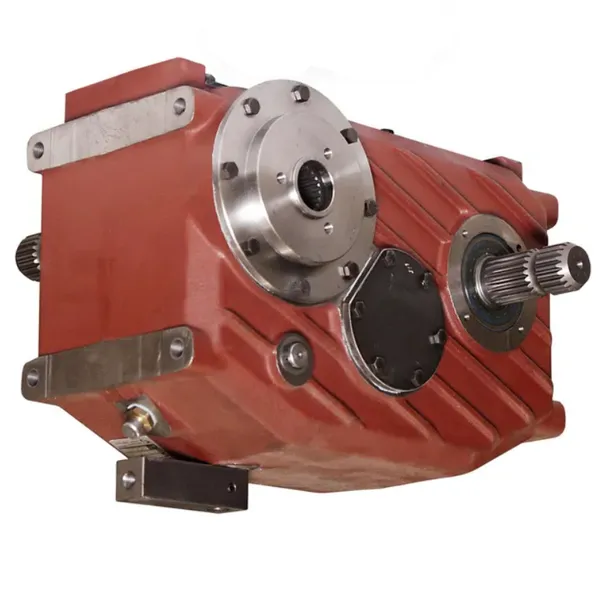
Torque rating is the core parameter that determines whether a gearbox can survive high-load applications such as balers or rotary slashers. Rated torque should always exceed peak operating torque by a safe margin to accommodate shock loads. Gear ratio selection is equally important because it directly affects implement speed and power delivery. In American-style farming equipment, common ratios range from 1:1.46 to 1:3, while European implements often favor higher reduction ratios for precision control.
At Raydafon Technology Group Co.,Limited, our factory engineers gear profiles based on actual field torque curves rather than theoretical limits. Our design philosophy prioritizes hardened alloy steel gears, optimized tooth contact, and low-noise meshing for long-term durability. Our customers benefit from stable power output even when operating in muddy fields or on uneven terrain. Selecting the right agricultural gearbox ratio helps reduce fuel consumption and protects downstream components.
| Rated Torque Range | 600 Nm to 3000 Nm |
| Common Gear Ratios | 1:1.46, 1:1.93, 1:3 |
| Gear Material | Alloy Steel, Carburized and Ground |
| Housing Type | Cast Iron or Ductile Iron |
How Do Housing Design and Sealing Affect Long-Term Reliability?
Housing strength and sealing quality determine whether a gearbox can withstand dust, moisture, and vibration. In corn belts and dairy regions, equipment is frequently exposed to fertilizer residue, manure, and pressure washing. Thick-walled cast housings resist deformation under load, maintaining correct gear alignment. High-quality oil seals prevent contamination and retain lubrication during continuous operation.
Our manufacturing process emphasizes precision machining of bearing seats and sealing grooves. Our factory uses CNC machining centers to ensure consistent tolerances across production batches. By selecting a robust Agricultural Gearbox housing, operators reduce oil leakage and minimize unplanned downtime. This approach reflects our commitment to building equipment suited for real farm conditions rather than controlled test environments.
| Housing Material | Ductile Iron EN-GJS |
| Seal Type | Double-Lip NBR or FKM |
| Lubrication | EP Gear Oil ISO VG 220 |
| Mounting Options | Flange, Foot, or Shaft Mount |
Which Compatibility Factors Should Be Checked Before Installation?
Compatibility goes beyond shaft size. PTO spline standards, rotation direction, mounting orientation, and lubrication access must align with the implement design. North American tractors typically follow ANSI PTO standards, while European machines use DIN profiles. Mismatched splines or incorrect rotation can cause vibration and rapid wear.
Our technical team works closely with OEMs to confirm interface dimensions and load paths before production. Raydafon Technology Group Co., Limited, supports custom shaft configurations and reinforced bearing arrangements for high-torque duty. Choosing a compatible Agricultural Gearbox simplifies installation and reduces adjustment time during peak seasons. Our focus on application-specific design ensures smooth integration into existing equipment platforms.
How Does Manufacturing Quality Influence Service Life in Tough Conditions?
Manufacturing quality directly affects service life when machines operate daily under heavy loads. Heat treatment consistency, gear grinding accuracy, and assembly cleanliness determine whether a gearbox lasts years or fails prematurely. In high-torque farming, micro-defects quickly propagate under stress.
Our production system combines material traceability, in-process inspection, and final load testing. Our factory follows strict quality control procedures to ensure every unit meets torque and noise specifications. Raydafon Technology Group Co.,Limited supplies gearboxes that perform reliably across diverse agricultural regions. Selecting a well-built Agricultural Gearbox is an investment in uptime and operational stability.
FAQ: How to Choose the Right Agricultural Gearbox for High-Torque Farming Applications?
Q1: How to Choose the Right Agricultural Gearbox for High-Torque Farming Applications?
Start by evaluating the maximum peak torque and load conditions to ensure the gearbox can handle sudden shocks and continuous heavy-duty operation.
Q2: What Gear Ratio and Torque Features Should I Consider for High-Torque Farming Applications?
Choose a gearbox with the proper reduction ratio and reinforced gears to maintain stable implement speed and prevent drivetrain stress under heavy loads.
Q3: How Do I Ensure Compatibility of an Agricultural Gearbox with My Tractor and Implements?
Check PTO spline standards, mounting orientation, rotation direction, and lubrication access to guarantee smooth installation and long-term reliability.
Conclusion: What Makes a Smart Gearbox Choice for Modern Farms?
High-torque farming places unique demands on drivetrain components, and careful selection prevents costly downtime during critical seasons. By evaluating torque capacity, housing integrity, compatibility, and manufacturing quality, operators can ensure reliable performance in demanding applications. Our commitment to practical engineering and field-tested solutions allows us to support farmers and equipment builders worldwide. For tailored recommendations, technical data, or quotation support, contact our team today and let us help you select the right solution for your operation.