

How to Ensure Quality and Strength When Sourcing Stainless Steel Nuts?
2026-01-15
In industrial sourcing, material integrity determines whether fasteners perform reliably under long term stress. When evaluating Stainless Steel Nuts, buyers in North America and Europe usually focus on tensile strength, corrosion resistance, and thread consistency. Our experience shows that stainless grades such as A2 304 and A4 316 are preferred for structural, marine, and outdoor applications because they balance strength with rust resistance. In our daily production workflow, raw material verification begins with mill certificates and chemical composition checks to ensure stable nickel and chromium content.
At Ningbo Qihong Stainless Steel Co., Ltd., we follow ASTM and DIN standards closely, ensuring that each batch meets regional mechanical requirements. Our procurement team sources billets from audited steel mills only, allowing our supply chain to remain consistent even during peak demand cycles. This approach allows our customers to maintain predictable performance across multiple projects without unexpected failures.
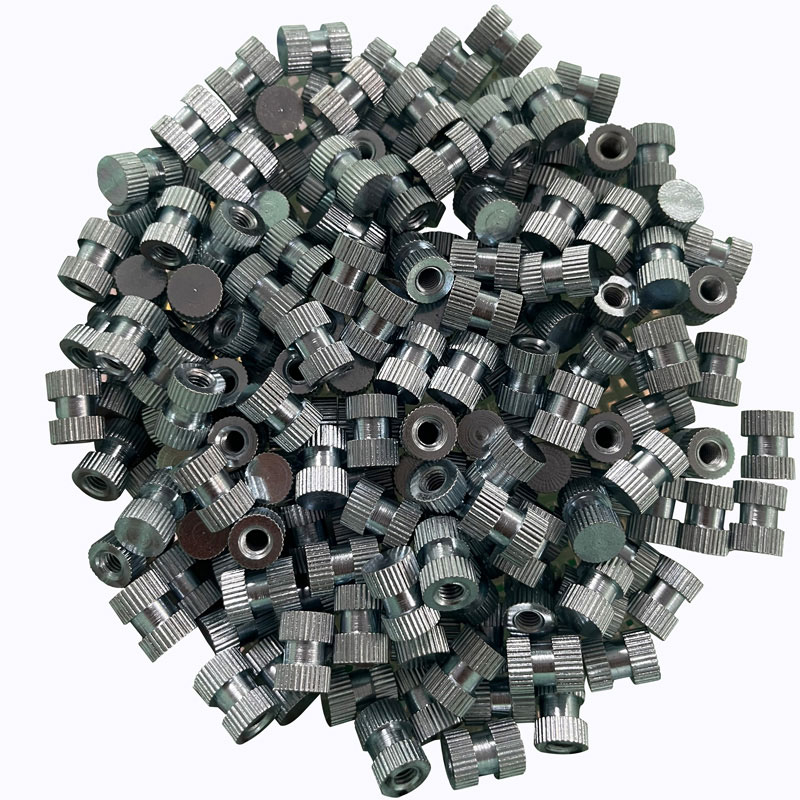
How Do Material Grades and Mechanical Parameters Affect Service Life?
Choosing the right grade is critical when sourcing Stainless Steel Nuts for demanding environments. Different grades behave differently under torque, vibration, and temperature variation. Our factory focuses on producing fasteners that meet real world operating conditions rather than theoretical limits. Our internal testing process validates yield strength and proof load to ensure that performance remains stable during assembly and operation.
| Material Grade | Standard | Proof Load | Corrosion Resistance | Typical Applications |
| A2 304 | DIN 934 | 700 MPa | Good | Construction, Machinery |
| A4 316 | ASTM F594 | 700 MPa | Excellent | Marine, Chemical Equipment |
By matching material grade with application requirements, our clients reduce maintenance costs and extend service life. Our engineering team regularly supports buyers during specification confirmation, helping avoid under designed or over specified fasteners.
How Does Manufacturing Precision Influence Thread Strength?
Thread accuracy directly affects preload distribution and fatigue resistance. When producing Stainless Steel Nuts, machining tolerance and rolling methods determine how evenly force is transferred during tightening. Our factory uses cold forging combined with CNC thread rolling to achieve smooth thread profiles and consistent pitch diameter.
Ningbo Qihong Stainless Steel Co., Ltd. maintains strict in process inspections at each stage, from blank forming to final threading. Our operators measure thread gauges continuously, ensuring compatibility with standard bolts used across European and American markets. This controlled process allows our customers to assemble faster while reducing the risk of cross threading or premature wear.
How Can Testing and Inspection Reduce Quality Risks?
Quality assurance does not end at production. For Stainless Steel Nuts used in load bearing assemblies, inspection data is as important as material selection. Our quality control system includes hardness testing, salt spray testing, and torque performance verification. Our inspection records remain traceable for every shipment, allowing buyers to meet compliance audits with confidence.
| Test Item | Method | Purpose | Frequency |
| Hardness | Rockwell | Verify Strength | Each Batch |
| Salt Spray | ASTM B117 | Corrosion Resistance | Monthly |
| Thread Gauge | GO NO GO | Fit Accuracy | 100 Percent |
Our testing process ensures that products perform consistently in real installation conditions. Our documentation system supports long term partnerships by providing transparency and repeatability.
How Do Application Scenarios Influence Sourcing Decisions?
End use applications determine sourcing priorities. Stainless Steel Nuts used in food processing demand smooth surfaces and easy cleaning, while outdoor infrastructure projects prioritize weather resistance. Our sales team works closely with buyers to understand installation environments, torque requirements, and regulatory expectations. This collaborative approach allows our customers to avoid mismatched specifications and project delays.
At Ningbo Qihong Stainless Steel Co., Ltd., our factory supports both standard and custom sizes, enabling flexible sourcing for OEM and MRO buyers. Our production planning system helps maintain stable lead times even for mixed specification orders.
How to Ensure Quality and Strength When Sourcing Stainless Steel Nuts? FAQ
Q1: How can buyers verify strength consistency before placing bulk orders?
Buyers should request mechanical test reports, sample inspection, and proof load data. Reviewing batch level documentation ensures that performance remains consistent across deliveries.
Q2: Why is corrosion testing important for long term installations?
Corrosion testing simulates real environmental exposure, helping predict service life in humid, coastal, or chemical environments and reducing unexpected replacement costs.
Q3: What role does supplier process control play in final product quality?
Process control ensures that raw materials, machining accuracy, and inspections remain stable. A supplier with documented procedures can deliver predictable results across multiple orders.
In summary, sourcing Stainless Steel Nuts requires a structured evaluation of material grades, manufacturing precision, and quality assurance systems. By working with a supplier that emphasizes testing, traceability, and application driven design, buyers can secure reliable performance and long term value. Contact our team today to discuss specifications, request samples, or receive a tailored quotation for your next project.