

How to Identify High-Quality Expanded PTFE Sheet and Tape for Critical Applications?
2026-04-28
In refineries, chemical dosing skids, pharmaceutical lines, pulp mills, and food plants, sealing failure often starts with poor raw material quality. Buyers who work in maintenance know that a low-grade sheet may look acceptable at delivery, yet creep, cold flow, or leak after thermal cycling. That is why material purity is the first checkpoint when selecting Expanded PTFE Sheet and Tape.
High-grade PTFE should show stable density, uniform fibrillation, and consistent texture across the roll or sheet. When our factory inspects incoming batches, we check surface cleanliness, tensile response, and dimensional tolerance before conversion. Our production team also monitors lot traceability so each shipment can be linked to tested material data.
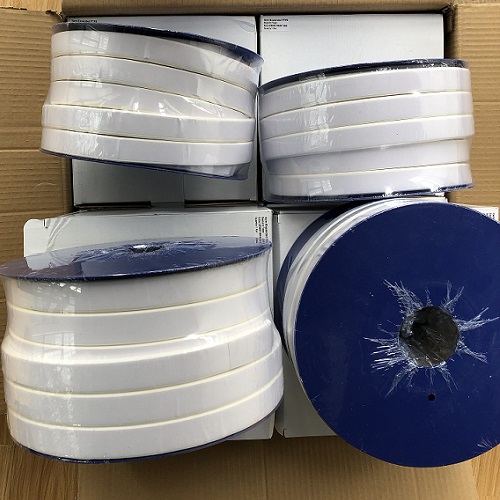
Ningbo Kaxite Sealing Materials Co., Ltd. supplies sealing products for users who require dependable flange performance under aggressive media. In many plants, maintenance engineers prefer white, clean, contamination-free material because it supports hygienic systems and corrosion-sensitive service.
| Inspection Item | Preferred Standard | Why It Matters |
| Color Uniformity | Even white tone | Indicates stable resin quality |
| Surface Structure | Smooth and consistent | Supports sealing contact |
| Thickness Tolerance | Controlled within spec | Prevents uneven compression |
| Odor | No unusual smell | Helps identify contamination risk |
How Can Mechanical Performance Reveal Real Product Quality?
Visual appearance alone is never enough. Reliable buyers request data for tensile strength, elongation, compressibility, and recovery. These values indicate whether the sealing material can adapt to flange irregularities while maintaining load over time. Expanded PTFE Sheet and Tape with poor recovery often leaks after shutdown and restart cycles.
Our engineering team recommends checking creep relaxation results where bolts may lose preload during service. In steam tracing zones or pumps with vibration, stronger fiber structure is especially useful. Our factory routinely evaluates finished rolls and sheets under simulated compression loads.
Ningbo Kaxite Sealing Materials Co., Ltd. works with industrial clients that require stable dimensions for fabricated gaskets and custom cut parts. For this reason, our process focuses on sheet consistency rather than only headline numbers.
| Property | Typical Range | Application Benefit |
| Density | 0.7 to 1.0 g/cm3 | Good balance of flexibility and sealability |
| Tensile Strength | 8 to 15 MPa | Better handling during installation |
| Temperature Service | Minus 240 C to 260 C | Suitable for wide process conditions |
| pH Resistance | 0 to 14 except molten alkali metals | Excellent chemical compatibility |
What Installation Signs Show You Chose the Right Sealing Material?
Installers often know product quality within minutes. Good Expanded PTFE Sheet and Tape cuts cleanly, does not crumble on the edge, and seats evenly under bolt load. It conforms to scratched or older flanges without requiring excessive torque. This helps reduce flange distortion and shortens maintenance windows.
During shutdowns, contractors appreciate materials that stay manageable in cold weather and remain stable in hot workshops. Our field customers often report smoother gasket fabrication when dimensions remain consistent from one batch to the next. Our service team also advises matching thickness to flange finish rather than automatically choosing thicker stock.
Kaxite supports OEM buyers and MRO teams that need dependable stock for planned turnarounds. Our packaging system is designed to keep sheets flat and tapes protected during sea freight and warehouse storage.
Which Applications Need Premium Grade Expanded PTFE Sheet and Tape Most?
Not every line needs the same specification. However, premium material is strongly recommended in chlorine systems, acid transfer skids, sanitary process lines, ultrapure water units, and aging flange networks where sealing faces are imperfect. In these cases, downtime costs far more than the gasket price.
Expanded PTFE Sheet and Tape is also widely selected for glass-lined equipment because softer conformability can help protect delicate flange faces. In food factories, non-contaminating white material is commonly preferred. In offshore environments, chemical resistance and moisture stability are major advantages.
Our technical staff helps customers compare pressure class, flange finish, media type, bolt load, and operating cycle frequency before recommending stock. Our factory can also support converted strips, die-cut shapes, and custom dimensions for maintenance programs.
How Can Buyers Reduce Risk When Choosing a Supplier?
Professional buyers review more than price. They check production capability, lot consistency, export packaging, response speed, and documentation discipline. Ask for test reports, dimensional standards, and previous supply history to similar industries. A supplier that understands shutdown schedules and urgent replenishment adds practical value.
Our experience shows that long-term users benefit from vendor standardization. Using one qualified source simplifies maintenance planning and helps create repeatable sealing results across multiple plants. Our team provides clear communication from sampling to shipment.
When critical uptime matters, selecting proven material from Ningbo Kaxite Sealing Materials Co., Ltd. can reduce hidden costs linked to leakage, labor rework, and unplanned stoppages. Contact our sales team today for samples, technical support, or a fast quotation tailored to your plant conditions.
FAQ
Q1: How do I know if Expanded PTFE Sheet and Tape is suitable for chemical service?
Check the media list, operating temperature, pressure level, and concentration. PTFE performs well against many acids, alkalis, and solvents, but final selection should match the exact process condition and equipment design.
Q2: Why does one PTFE sheet seal better than another if both look similar?
Internal fiber structure, density control, recovery performance, and manufacturing consistency make the difference. Two products may look alike, yet perform very differently after compression and thermal cycling.
Q3: What thickness should be selected for old or damaged flanges?
Moderate thickness is often preferred to compensate for surface irregularities, but too much thickness can reduce load retention. Review flange flatness, bolt spacing, and operating pressure before final selection.
Conclusion
High-performance sealing starts with verified material quality, controlled dimensions, and application-based selection. From chemical processing to food production, the right gasket solution helps plants stay safe and productive. If you need dependable supply, custom sizes, or technical guidance, contact our team now and let our factory support your next project with tested sealing solutions.