

How to Maintain Expanded PTFE Sheets for Optimal Performance?
2026-02-28
Why Is Proper Handling Critical Before Installation?
Correct handling determines how long sealing materials perform under real operating conditions. In refineries, chemical processing plants, food-grade production lines, and water treatment systems across North America and Europe, gasket reliability often comes down to storage discipline and pre-installation inspection. When maintenance teams handle an Expanded PTFE Sheet without attention to compression behavior and surface integrity, premature creep or leakage may occur.
At Ningbo Kaxite Sealing Materials Co., Ltd., our factory follows strict quality inspection before shipment, but field handling remains equally important. Always store sheets flat in a dry warehouse environment between 5°C and 30°C, away from direct UV exposure and heavy loads. Avoid folding or rolling tightly, as this can disturb the micro-fibrillated structure that gives the material its conformability.
Before cutting gaskets, our technicians recommend checking flange surface finish, bolt alignment, and torque tools calibration. Surface irregularities above industry standards such as ASME B16.5 flange tolerances may compromise sealing even if the material quality is excellent. Our approach emphasizes preparation as much as material selection.
What Operating Conditions Must Be Monitored During Service?
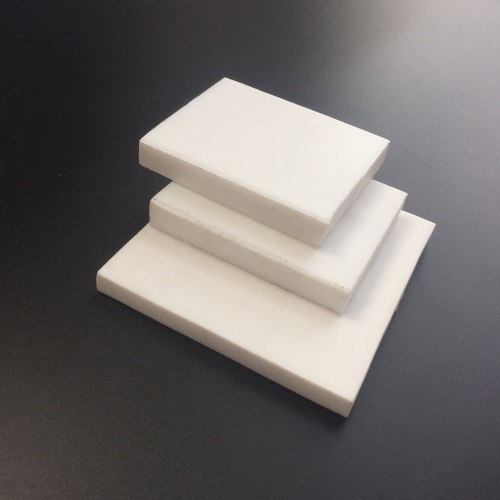
Long-term performance depends on continuous monitoring of pressure, temperature, and media compatibility. In industrial maintenance terminology, sealing reliability is directly linked to service envelope compliance. When an Expanded PTFE Sheet operates within its rated limits, it delivers excellent chemical resistance, low creep relaxation, and strong sealing resilience.
Below are typical technical parameters supplied by Ningbo Kaxite Sealing Materials Co., Ltd. These values reflect controlled laboratory conditions and standard ASTM testing protocols used in the U.S. and EU markets.
| Property | Typical Value | Test Standard |
| Density | 0.7 to 0.9 g/cm3 | ASTM F1315 |
| Temperature Range | -240°C to 260°C | Continuous Service |
| Maximum Pressure | Up to 150 bar | Installation Dependent |
| Tensile Strength | 8 to 15 MPa | ASTM F152 |
| Compressibility | 30 to 45 percent | ASTM F36 |
| Recovery | Minimum 15 percent | ASTM F36 |
| pH Range | 0 to 14 | Chemical Resistance |
Maintenance supervisors should document operating pressure spikes, thermal cycling frequency, and bolt load retention. Our experience shows that flange bolt retorque after initial heat-up cycle is critical in steam and aggressive media systems. Our engineering team often advises field operators to use calibrated torque wrenches following a star-pattern tightening method to prevent uneven gasket compression.
How Should Cleaning and Inspection Be Performed?
During shutdown intervals, preventive inspection prevents unexpected downtime. When removing a used gasket made from Expanded PTFE Sheet, avoid using sharp metal scrapers that can damage flange faces. Instead, apply non-metallic tools or brass scrapers and approved solvent cleaners that do not attack PTFE structure.
Inspection checkpoints should include:
- Check for cold flow signs along flange edges
- Inspect for extrusion in high-pressure joints
- Evaluate bolt load relaxation marks
- Verify flange parallelism and surface finish
Our factory recommends documenting gasket thickness before and after service to evaluate compression set trends. If permanent deformation exceeds acceptable limits defined in plant maintenance manuals, replacement should be scheduled immediately. In demanding chemical plants, our clients typically replace gaskets during every major turnaround to ensure process safety compliance.
When Is Replacement Necessary to Prevent Leakage?
Predictive maintenance strategies rely on measurable indicators. Although an Expanded PTFE Sheet offers exceptional chemical inertness, mechanical stress and thermal cycling eventually reduce elasticity. Replacement becomes necessary when leakage traces, bolt relaxation beyond tolerance, or flange corrosion are detected.
Below is a recommended preventive maintenance schedule used in heavy industrial environments.
| Application Type | Inspection Interval | Replacement Recommendation |
| Chemical Processing Lines | Every 3 months | During annual shutdown |
| Steam Pipelines | Every 6 months | Every 12 to 18 months |
| Food and Beverage Systems | Quarterly | Based on hygiene audits |
| Water Treatment Facilities | Biannual | When compression loss observed |
Ningbo Kaxite Sealing Materials Co., Ltd. supports distributors and EPC contractors with consistent material traceability. Our production line ensures uniform fiber expansion and controlled density to reduce variability between batches. Our commitment to stable supply helps maintenance planners standardize replacement cycles across multiple sites.
How Can Proper Installation Extend Service Life?
Correct installation directly influences lifecycle cost. The microstructure of Expanded PTFE Sheet allows excellent conformability, but over-compression can cause unnecessary creep. Our installation guidance includes using clean flange faces, correct gasket dimensioning, and cross-pattern torque tightening in incremental steps.
Our factory supplies sheets in multiple thicknesses ranging from 0.5 mm to 6.0 mm, with custom roll widths available for industrial converters. Our team recommends selecting thickness based on flange surface roughness and pressure class. For ASME Class 150 flanges, moderate compression load typically achieves optimal sealing. Higher pressure classes require careful torque calculation to avoid over-stressing bolts.
By combining controlled torque, regular inspection, and proper storage, plant operators can maximize service life and reduce emergency shutdowns. Our technical advisors frequently work with maintenance managers to review flange design and gasket selection to ensure consistent field performance.
FAQ
How often should Expanded PTFE Sheets be inspected in industrial pipelines?
Inspection frequency depends on operating severity. In high-temperature steam systems, quarterly inspections are advisable. For moderate water service lines, semi-annual checks may be sufficient. Inspection should always follow pressure spikes, equipment vibration events, or maintenance shutdowns to confirm compression integrity and flange alignment.
Can Expanded PTFE Sheets be reused after disassembly?
Reusing gaskets is generally not recommended in critical service. Once compressed, the material experiences structural deformation that may compromise sealing reliability. In non-critical low-pressure systems, reuse may appear feasible, but industry best practice in North American and European plants is single-use replacement to ensure safety compliance.
What is the most common cause of leakage despite correct material selection?
Improper bolt torque distribution is the leading cause. Uneven compression creates localized stress zones that lead to creep and extrusion. Using calibrated torque tools, following star-pattern tightening, and performing hot retorque procedures significantly reduce leakage risk even in aggressive chemical environments.
Proper maintenance is not only about material quality but also about disciplined installation, monitoring, and replacement planning. By applying structured inspection routines and operating within rated service limits, facilities can achieve stable sealing performance and minimize downtime. Our team at Ningbo Kaxite Sealing Materials Co., Ltd. is ready to support your project with technical data, customized dimensions, and reliable supply. Contact our sales engineers today to discuss specifications and request a detailed quotation tailored to your application requirements.