

How to Select Block Machine Pallets for High-Volume Production Lines?
2026-08-27
1. What Is the Real Cost of a Pallet Over Its Lifetime?
The purchase price is the least important number on the quote. In our factory, we calculate total cost per block, not cost per pallet. A typical steel Block Machine Pallet costs 85 to 120 dollars. A low quality pallet may cost 60 dollars but lasts only 6 months in a two shift operation. A high quality pallet costs 110 dollars and lasts 5 years. Over five years, the low quality pallet must be replaced 10 times—total cost 600 dollars. The high quality pallet costs 110 dollars once. Which is cheaper? This is the fundamental calculation that procurement teams often miss. At Quangong Machinery Co., Ltd., we have tracked pallet performance across 40 plants. The data shows that the lowest cost per block consistently comes from pallets with higher initial investment but longer service life.
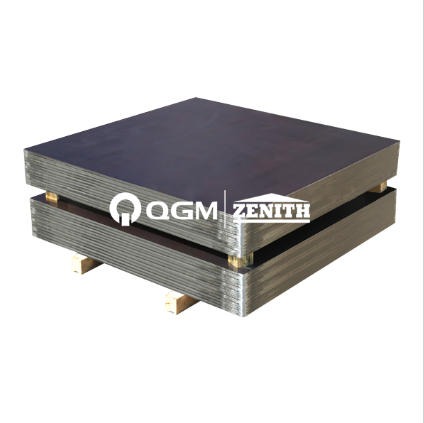
The table below breaks down the cost comparison for a typical high-volume line producing 500,000 blocks per month.
| Pallet type | Unit price | Expected lifespan | Cost per 100,000 blocks | Annual pallet cost |
| Low quality steel | $65 | 6 months | $2.60 | $1,300 |
| Mid quality steel | $95 | 24 months | $1.58 | $790 |
| High quality steel (Quangong) | $115 | 60 months | $0.77 | $385 |
| Wooden pallet | $25 | 2 months | $5.00 | $2,500 |
The high quality Block Machine Pallet costs more upfront but delivers the lowest cost per block by a significant margin. This is the first rule of selection: optimize for total cost, not purchase price.
2. How Does Pallet Material Affect Production Consistency?
High-volume production cannot tolerate variation. If each pallet behaves differently, every block is a gamble. Wooden pallets absorb moisture and warp, changing thickness throughout the day. Low grade steel pallets soften with heat and develop a bow. Only properly engineered steel Block Machine Pallets maintain their flatness within 0.3 mm over millions of cycles. In our factory, we use Q345B steel with a hardness of 48 to 52 HRC. This combination resists wear from concrete abrasion and retains its shape under repeated vibration. We test every pallet on a laser flatness gauge before shipment. When a customer in Thailand switched from mixed pallets to our uniform Block Machine Pallet, their block height variation dropped from 1.8 mm to 0.4 mm. This reduced their mortar consumption by 7 percent and improved their customer satisfaction scores. Consistency is not a luxury—it is a business requirement for high-volume operations.
3. What Dimensions and Thickness Are Suitable for Your Machine?
The dimensions of a Block Machine Pallet must match the vibrator table and the mold size. Standard sizes are 1400 x 1100 mm, 1300 x 1000 mm, and 1200 x 900 mm. But the critical dimension is thickness. If the pallet is too thin, it deflects under pressure; if too thick, it does not sit flush on the vibrator. Our factory recommends a thickness of 14 mm for high-volume lines producing hollow blocks, and 16 mm for solid blocks or heavy pavers. The table below lists our recommended thickness based on production type.
| Production type | Recommended pallet thickness | Reason | Expected cycle life |
| Hollow blocks (light density) | 14 mm | Sufficient strength, lighter handling | 8 – 10 million cycles |
| Solid blocks / pavers | 16 mm | Higher resistance to impact from heavy aggregates | 10 – 12 million cycles |
| Large format slabs | 18 mm | Prevents deflection under wide loads | 8 – 10 million cycles |
We also recommend checking the hole pattern on your existing pallets. Some machines use a specific bolt hole arrangement for the lifting mechanism. At QGM, we offer custom drilling to match any machine model. We have a database of over 200 machine specifications, so we can supply a Block Machine Pallet that fits without modification.
4. What Surface Treatment Extends Pallet Life in High-Volume Conditions?
The surface of a Block Machine Pallet is the contact point with concrete. Over time, the abrasive action of sand and cement wears down the surface, creating a rough texture that transfers to the block bottom. This is called "pickup" and it destroys block quality. To prevent this, our factory applies a hard chrome plating or a nickel composite coating to the top surface. The coating increases surface hardness to 65 HRC and reduces the coefficient of friction. In a high-volume line running 24 hours a day, a coated pallet lasts 4 times longer than an uncoated one. We also recommend using a release agent spray every 200 cycles, which further reduces wear. One of our customers in Indonesia extended their pallet life from 14 months to 56 months simply by switching to our coated Block Machine Pallet and implementing a regular release agent schedule. The coating adds 18 percent to the initial cost but reduces long term spend by over 60 percent.
5. How Should You Evaluate a Pallet Supplier for High-Volume Demands?
Not all suppliers are equipped for high-volume production. When evaluating a supplier, ask three questions. First, what is their production capacity? If they cannot deliver 500 pallets per month, they cannot support a high-volume line. Second, what is their quality control process? Ask for their inspection records and their flatness tolerance. Third, what is their lead time for reorders? A reliable supplier should be able to produce additional pallets within 14 days. At Quangong Machinery Co., Ltd., we maintain a safety stock of 500 pallets for our high-volume customers, so we can respond to urgent needs. We also provide a 36 month warranty against warpage and a 24 month warranty against surface wear. A supplier that does not offer a warranty is signaling that they do not trust their own product. High-volume production requires a partner who stands behind every pallet.
Frequently Asked Questions About Selecting Block Machine Pallets for High-Volume Lines
Final Summary
Selecting the right Block Machine Pallet for a high-volume production line is a strategic decision. The factors that matter are total cost per block, material consistency, dimensional accuracy, surface treatment, and supplier reliability. Making the right choice will reduce downtime, improve block quality, and lower your long term costs. Our factory has produced and supplied over 100,000 pallets to high-volume plants worldwide. Quangong Machinery Co., Ltd. is ready to help you make an informed selection.