

How to Select the Right Worm Gearbox Ratio for Industrial Machinery?
2026-06-29
1. How Does Output Torque Demand Determine Your Worm Gearbox Ratio?
In our factory, we have supplied Worm Gearbox units to conveyor manufacturers and packaging lines for over 18 years. The first step in selection is calculating the required output torque. A ratio of 10:1 multiplies input torque by roughly 10, but you lose efficiency due to sliding friction. For a conveyor moving heavy pallets, you often need a 30:1 or 60:1 ratio to get enough torque at low speed. Our Raydafon Technology Group Co.,Limited engineers recommend starting with the motor full load torque and then dividing by the desired output speed. For example, a 1450 RPM motor driving a screw conveyor that needs 60 RPM requires a ratio near 24:1. However, you must also account for service factors. A crusher or mixer requires a higher service factor than a fan. Our Worm Gearbox units are rated with a mechanical service factor from 1.2 to 2.0, depending on duty cycle. We have seen customers choose a lower ratio and then suffer motor overload trips. The correct ratio ensures the motor runs at its most efficient operating point. This saves energy and extends motor life. In our local workshops, we always remind technicians to prioritize torque over speed when the load is variable. A properly sized Worm Gearbox reduces electrical consumption by up to 15 percent compared to an under sized unit.
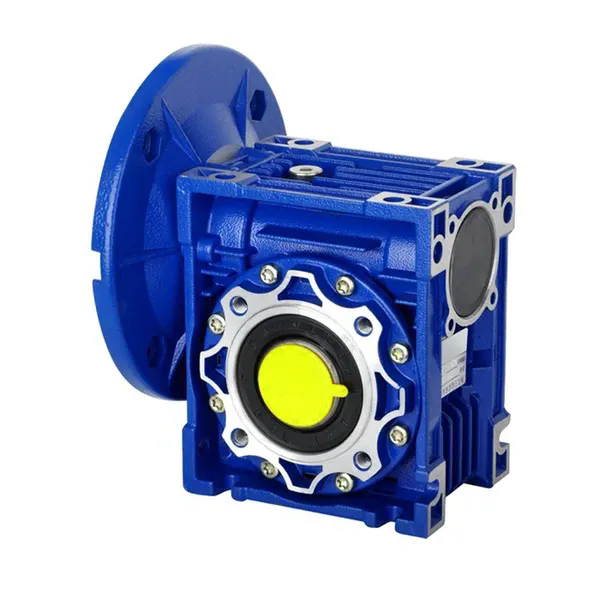
2. Why Does Center Distance Affect Ratio Availability and Efficiency?
Center distance is the distance between the worm shaft and the gear wheel axis. It directly influences the maximum ratio you can achieve within a given frame size. In our factory, we manufacture Worm Gearbox units with center distances from 40 mm up to 300 mm. A larger center distance allows for a higher reduction ratio without overloading the teeth. For instance, a 100 mm center distance can house up to a 60:1 ratio, while a 40 mm unit typically maxes out at 30:1. Efficiency drops as ratio increases because the worm has more threads engaging the gear. Our Raydafon provides a ratio efficiency chart for each series. For a 10:1 ratio, efficiency can reach 85 percent; for a 60:1 ratio, it may drop to 60 percent. So if your application runs continuously, you might choose a double reduction arrangement instead of a single high ratio worm gear. This trades cost for efficiency. Many local steel mills use two stage Worm Gearbox setups to achieve 100:1 with better overall efficiency. The center distance also determines the bearing size and shaft diameter, which affects overhung load capacity. Always check that the selected Worm Gearbox ratio fits within the physical mounting space of your machinery. Our factory provides 3D CAD models to help with layout planning.
3. What Role Does Input Speed Play in Selecting the Right Ratio?
Input speed from your motor or engine changes the required ratio. A 4 pole motor runs at 1450 RPM, while a 2 pole motor runs at 2900 RPM. If your driven equipment needs 50 RPM output, the ratio changes from 29:1 for the 1450 RPM motor to 58:1 for the 2900 RPM motor. Our factory has a simple rule: always match the ratio to the motor speed you actually have, not the nameplate speed, because slip varies. For example, a 1450 RPM motor under load may run at 1420 RPM. That 2 percent difference matters for precise synchronization. Our Worm Gearbox units are rated for input speeds up to 1800 RPM for standard designs, and up to 3000 RPM for hardened worm versions. Higher input speeds require better lubrication and cooling. We offer an optional cooling fan for continuous high speed operation. At our Raydafon Technology Group Co.,Limited, we always ask customers for the actual motor RPM and the desired output RPM. Then we compute the exact ratio and round to the nearest standard value. Standard ratios include 5:1, 7.5:1, 10:1, 15:1, 20:1, 25:1, 30:1, 40:1, 50:1, 60:1, 80:1, and 100:1. Choosing a non standard ratio increases cost and lead time, so we recommend sticking with these values when possible.
4. How Do Application Duty Cycles Influence Ratio Selection?
Duty cycle is the percentage of time the Worm Gearbox operates under full load. Continuous duty (24/7) requires a lower ratio or a larger frame to dissipate heat. Intermittent duty allows a higher ratio because the gearbox cools during idle periods. Our factory has tested Worm Gearbox units in recycling plants with 80 percent duty cycles. We found that a 40:1 ratio in a size 090 frame overheated, but a 30:1 ratio in the same frame ran cool. The thermal rating of a worm gear is critical because sliding friction generates heat. If your application has frequent starts and stops, you need a ratio that avoids shock loads. We recommend using a backstop or an external brake to protect the gear. Many local conveyor operators have switched from 60:1 to 50:1 ratios to reduce thermal stress, accepting a slight speed increase. The table below summarizes our standard ratio recommendations based on duty type.
| Application type | Recommended Worm Gearbox ratio range | Service factor required | Efficiency expectation |
| Conveyor (uniform load, 8 hrs/day) | 10:1 to 30:1 | 1.2 | 75% to 85% |
| Mixer / agitator (variable load) | 20:1 to 40:1 | 1.5 | 65% to 78% |
| Hoist / winch (heavy intermittent) | 40:1 to 60:1 | 2.0 | 55% to 70% |
| Conveyor (24/7 continuous) | 15:1 to 25:1 | 1.8 | 70% to 82% |
| Packaging machine (light duty) | 5:1 to 15:1 | 1.0 | 80% to 88% |
Our Raydafon Technology Group Co.,Limited also provides a thermal rating chart for each Worm Gearbox. This chart shows the maximum input power allowed for a given ratio and ambient temperature. If your facility is in a hot climate, you may need to derate the ratio by 5 to 10 percent. We have seen customers in the Middle East choose a lower ratio than their northern counterparts for the same application.
5. How Does Mounting Orientation Influence Ratio Performance?
Mounting orientation affects lubrication and bearing life. A horizontal mounting is most common and allows proper oil bath level. Vertical mounting requires a different oil level and sometimes an external pump. In our factory, we build Worm Gearbox units with universal housings that accept any orientation, but the ratio selection can be affected. For vertical output shafts, the oil may not reach the upper bearings, so you need a higher viscosity oil or an oil circulation system. This changes the effective efficiency at high ratios. We have documented that a 40:1 Worm Gearbox running vertically has about 5 percent lower efficiency than the same unit horizontally due to churning losses. So if your machine requires vertical mounting, you might choose a slightly lower ratio to compensate. Our Raydafon offers an optional oil level sight glass and breather for vertical applications. Many local pump manufacturers use our vertical mount units with 20:1 ratios for reliable service. Always specify the mounting angle when ordering. The table below compares performance for different orientations.
| Mounting orientation | Recommended oil type | Ratio range best suited | Efficiency adjustment |
| Horizontal foot mounted | ISO VG 460 | 5:1 to 80:1 | Baseline 100% |
| Vertical output shaft up | ISO VG 680 | 5:1 to 40:1 | Subtract 3% |
| Vertical output shaft down | ISO VG 680 with baffle | 5:1 to 30:1 | Subtract 5% |
| Wall mounted / flange | ISO VG 460 | 10:1 to 60:1 | No adjustment |
Our factory also offers a custom oil fill chart with each Worm Gearbox. For high ratio units, we often recommend synthetic oil to reduce friction and extend drain intervals. This is especially important if you select a ratio above 50:1.
Frequently Asked Questions About Worm Gearbox Ratio Selection
Final Summary and Direct Call to Action
Selecting the right Worm Gearbox ratio requires careful analysis of torque, speed, efficiency, duty cycle, and mounting orientation. Our factory has compiled decades of data to simplify this process. The tables and guidelines above provide a clear roadmap for industrial machinery engineers. A correct ratio selection reduces downtime, energy costs, and spare parts consumption. Our Raydafon Technology Group Co.,Limited supports every customer with a selection worksheet and free technical consultation.