

How To Troubleshoot Common Agricultural Gearbox Failures in Harvest Seasons?
2026-01-12
During peak harvest seasons, agricultural machinery operates under continuous high torque and fluctuating load conditions. These working environments often include dust, crop residue, and uneven terrain, all of which place additional stress on transmission components. When an agricultural gearbox is exposed to extended operating hours without adequate cooling or lubrication, internal gears may experience premature surface fatigue and micro-pitting.
From our long-term field observations, harvest-related failures are frequently linked to overload scenarios rather than material defects. Our engineers recommend monitoring operating temperature and noise patterns daily, especially when machines are used for grain harvesting, forage chopping, or rotary tillage. At Raydafon Technology Group Co., Limited, our factory designs gear units with reinforced housings to handle these seasonal load spikes more effectively.
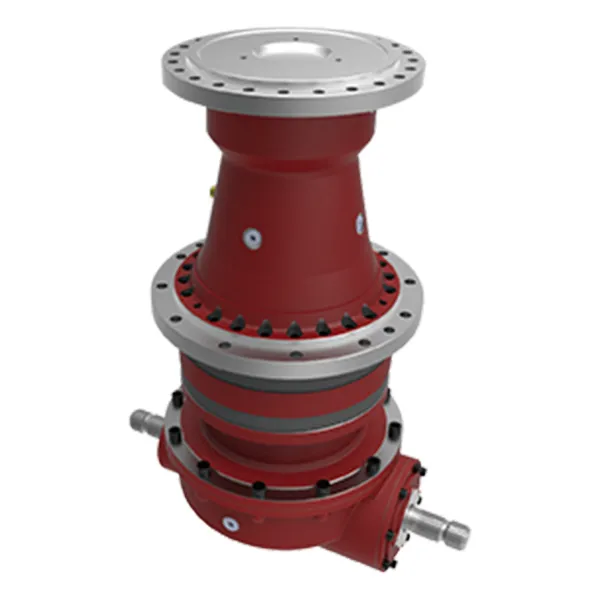
What Are the Most Common Mechanical Failure Symptoms Farmers Notice First?
Operators often detect early warning signs before complete failure occurs. Unusual knocking sounds, vibration transfer to the PTO line, or oil leakage around shaft seals are typical indicators. In many North American farming regions, farmers refer to this as gearbox chatter, a clear signal that internal gear meshing accuracy has been compromised.
Our service data shows that seal degradation caused by crop dust contamination is one of the most overlooked issues. When left unattended, lubricant contamination accelerates bearing wear inside the Agricultural Gearbox. Our factory addresses this by offering optional double-lip seals and high-temperature grease compatibility, ensuring stable performance during long harvest shifts.
How Can Lubrication and Oil Analysis Prevent Mid-Season Breakdowns?
Proper lubrication remains the foundation of reliable gearbox operation. In harvest seasons, oil oxidation occurs faster due to thermal stress and airborne debris. Routine oil sampling, a practice widely adopted by commercial farms in the Midwest, helps identify metal particles before visible damage occurs.
Our technical team recommends ISO VG-grade oils matched to local climate conditions. For example, cooler northern regions benefit from lower-viscosity oils to maintain flow at startup. Each Agricultural Gearbox produced by our factory is tested with load simulation to verify oil circulation efficiency under real harvesting conditions.
| Parameter | Specification Range |
| Rated Torque | 500 Nm to 3500 Nm |
| Gear Ratio Options | 1:1 to 1:6.5 |
| Lubrication Type | Oil Bath or Semi-Fluid Grease |
| Seal Configuration | Single or Double Lip |
Why Do Alignment and Mounting Errors Cause Repeated Failures?
Improper alignment between the drive shaft and driven implement is a frequent cause of repeated gearbox issues during harvest. Even slight angular misalignment increases radial load on bearings, leading to overheating. Local farm technicians often describe this as shaft fighting the gearbox.
Our installation guidelines emphasize precision mounting surfaces and torque-controlled fasteners. The Agricultural Gearbox housing geometry used by Raydafon Technology Group Co., Limited is engineered to maintain alignment stability even when mounted on vibrating frames. Our experience confirms that correct alignment alone can extend service life by more than one harvest cycle.
| Feature | Design Advantage |
| Ductile Iron Housing | Improved vibration absorption |
| Hardened Alloy Gears | Enhanced wear resistance |
| Precision Machined Shafts | Reduced alignment deviation |
| Thermal Treated Bearings | Stable performance under load |
How Should Farmers Decide Between Repair or Replacement During Harvest?
Timing is critical during harvest, and downtime directly impacts yield. When gear tooth damage exceeds acceptable limits or bearing seats are worn, replacement is often more cost-effective than repair. Our field support teams advise evaluating vibration data and oil debris levels before making decisions.
Raydafon Technology Group Co., Limited supports rapid replacement programs through our factory inventory system, allowing farmers to resume operations quickly. Selecting the correct agricultural gearbox model ensures compatibility with existing implements while maintaining torque safety margins. Our goal is to keep operations running smoothly when timing matters most.
FAQ: Common Troubleshooting Questions During Harvest Operations
Q1: What are the first checks to perform when a gearbox overheats during harvest?
Start by examining oil viscosity, oil level, and contamination. Overheating during harvest is often linked to degraded lubrication or restricted oil circulation caused by debris. Verifying proper airflow around the housing and confirming correct mounting alignment can prevent further internal damage.
Q2: Why does a gearbox produce abnormal noise after extended harvesting hours?
Abnormal noise typically results from bearing fatigue or gear surface wear due to continuous high-load operation. During harvest seasons, machines operate without sufficient cooling intervals, making regular vibration and sound monitoring essential for early fault detection.
Q3: When should a gearbox be replaced instead of repaired in peak harvest season?
Replacement is recommended when gear teeth show visible pitting, shaft journals are worn, or oil analysis reveals excessive metal particles. In peak harvest periods, replacing the unit often minimizes downtime and ensures stable performance for the remainder of the season.
Conclusion
In summary, effective troubleshooting during harvest seasons requires a practical understanding of load behavior, lubrication management, and precise installation practices. By applying structured inspection methods and choosing robust components, farmers can significantly reduce unexpected downtime. Our factory remains committed to delivering durable solutions tailored to real field conditions. Contact our technical team today to discuss specifications, application matching, or custom configurations designed to keep your harvest on schedule.