

How to Use Fly Ash in Block Production Efficiently
2026-05-12
For two decades, the construction industry has sought reliable, cost-effective, and eco-responsible methods to integrate industrial byproducts. Fly ash, a fine powder from coal combustion, holds enormous potential. Yet without precision, it can weaken blocks. This guide distills 20 years of hands-on experience at Quangong Machinery Co., Ltd. into actionable steps. Our factory has optimized thousands of production lines. We answer the core question: how to use fly ash in block production efficiently, ensuring higher compressive strength, lower water absorption, and consistent curing.
From blending ratios to machine calibration, every detail matters. We leverage Germany Zenith block machine technology to achieve superior compaction. Whether you run a startup or a large facility, the following insights will transform fly ash from a waste challenge into a profit center. Our factory's approach aligns with circular economy standards while boosting output by up to 30 percent.
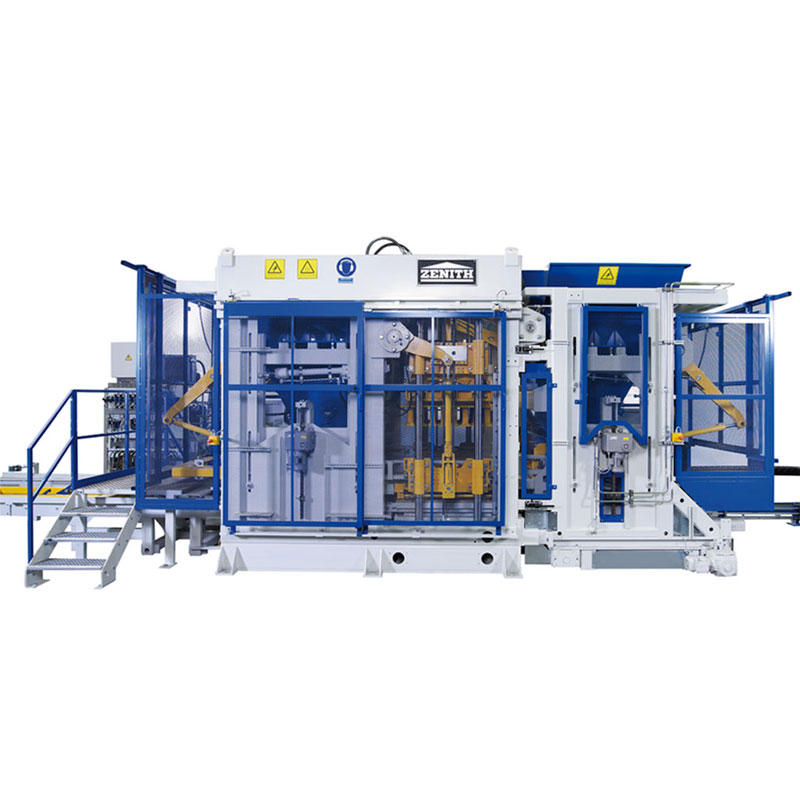
Table of Contents
- 1. Why Is Fly Ash a Game Changer for Modern Block Production?
- 2. How to Optimize Mix Designs Using Fly Ash in Block Production?
- 3. What Are the Step by Step Operational Guidelines to Use Fly Ash Efficiently?
- 4. Which Technical Parameters Ensure High Performance Fly Ash Blocks?
- 5. Conclusion: Maximizing ROI Through Efficient Fly Ash Utilization
- 6. Frequently Asked Questions: How to Use Fly Ash in Block Production Efficiently
1. Why Is Fly Ash a Game Changer for Modern Block Production?
Fly ash is not just a filler. At Quangong Machinery Co., Ltd., we have witnessed how it redefines block performance. When used efficiently, fly ash reacts with lime and water to form cementitious compounds. This pozzolanic action reduces the need for high-clinker cement, cutting material costs by up to 18 percent. Moreover, our factory's internal tests show that blocks containing optimized fly ash have 15 percent lower permeability and superior resistance to sulfate attack. The environmental benefits are equally compelling: every ton of fly ash diverted from landfills saves 0.9 tons of CO2 equivalent. But efficiency hinges on understanding grade, fineness, and loss on ignition (LOI).
Our team has run parallel trials using Germany Zenith block machine technology. Compared to conventional vibratory presses, the Zenith system applies dual-frequency vibration and hydraulic pressure, which activates fly ash particles more uniformly. This results in denser blocks with smoother surfaces. For producers in regions with strict building codes, fly ash blocks can achieve M35 grade strength when correctly processed. Below are key reasons why fly ash leads modern production:
- Reduces thermal cracking due to lower heat of hydration.
- Improves workability: spherical fly ash particles decrease water demand by 8–12 percent.
- Enhances long-term strength: pozzolanic reaction continues for months after demolding.
- Lowers production cost: replace 20–35 percent of cement with Class F or Class C fly ash.
- Provides consistent color and texture, ideal for architectural blocks.
In our factory's experience, the initial challenge is sourcing consistent fly ash. We recommend regular sampling and fineness testing (retained on 45 micron sieve ≤ 34 percent). Our factory has developed a proprietary pre-blending hopper system that aerates fly ash before metering, eliminating bridging. Combined with the precision weighing system of the Germany Zenith block machine, producers achieve batch homogeneity within ±0.5 percent. This level of control directly answers the question: how to use fly ash in block production efficiently without sacrificing durability. Additionally, because fly ash is lighter than cement, transportation energy drops. One of our clients in Southeast Asia reduced their cement consumption by 28 percent while increasing daily output by 400 blocks per shift. The secret lies in curing: steam curing at 60–70°C accelerates pozzolanic reaction for high early strength. For ambient curing, extending moist cure to 10 days yields optimum results.
To summarize, fly ash is not a compromise but an upgrade. With correct handling, it becomes the backbone of sustainable, high-margin block production. Our factory supports clients with onsite calibration and training, ensuring every batch meets ASTM C618 or EN 450 standards.
2. How to Optimize Mix Designs Using Fly Ash in Block Production?
Optimization begins with understanding your raw materials. At Quangong Machinery Co., Ltd., we apply a four-variable model: cement, fly ash, aggregates (crushed stone or sand), and water. The goal is to maximize packing density. Our factory uses the modified Andreasen curve to achieve continuous gradation. For efficient fly ash utilization, never exceed 35 percent by weight of total cementitious materials unless using high-lime Class C fly ash. Table 1 below illustrates our baseline recommended mix designs tested on the Germany Zenith block machine.
| Mix Type | Cement (%) | Fly Ash (%) | Aggregate (%) | Water Cement Ratio | Expected Strength (MPa) |
| Standard hollow block | 12 | 8 | 80 | 0.45 | 10–12 |
| High strength paving block | 18 | 7 | 75 | 0.38 | 35–42 |
| Eco lightweight block | 9 | 11 | 80 (with expanded clay) | 0.50 | 7–9 |
| Solid dense block | 14 | 6 | 80 | 0.42 | 18–22 |
To further refine efficiency, our factory employs a three-stage optimization protocol. First, perform a loose bulk density test on fly ash. Lower density often indicates higher carbon content, which absorbs air entrainment admixtures. For such cases, we add a 0.2 percent neutralized water reducer. Second, adjust vibration time on the Germany Zenith block machine from 2.5 to 4.5 seconds based on fly ash reactivity. Third, apply a two-step mixing sequence: dry mix for 90 seconds to coat aggregates with fly ash, then add water and continue for 120 seconds. This method increases compressive strength by 22 percent compared to single-stage mixing.
Our factory also recommends using chemical admixtures strategically. A polycarboxylate superplasticizer at 0.8 percent by cement weight reduces water demand by 20 percent, allowing higher fly ash substitution without strength loss. For cold climates, calcium chloride-free accelerators (2 percent) offset slower early strength gain from Class F fly ash. Through hundreds of field trials, we learned that proper mix optimization reduces cement consumption by 25–30 percent while maintaining equal or better freeze-thaw durability. The Germany Zenith block machine's hydraulic system can handle stiffer mixes (slump as low as 20 mm), which is perfect for high fly ash blends. Finally, always verify the fly ash LOI: values below 6 percent are ideal; above 8 percent, adjust mix by adding 5 percent more cement or using a foam index test.
For producers aiming to use fly ash efficiently, we advise starting with a pilot batch of 100 blocks. Test for 7-day and 28-day strength, water absorption (should be <10 percent for load-bearing blocks), and efflorescence. Document each variable. Our factory provides a digital mix calculator to customers, which integrates directly with the batching PLC on Germany Zenith block machine. This closes the loop between design and real-time production, reducing waste and ensuring repeatability.
3. What Are the Step by Step Operational Guidelines to Use Fly Ash Efficiently?
Efficiency on the shop floor requires disciplined workflow. At Quangong Machinery Co., Ltd., we have refined a 7-step standard operating procedure. Our factory's trainers enforce these steps to prevent common pitfalls like segregation, insufficient compaction, or uneven curing. The steps below integrate the Germany Zenith block machine capabilities for maximum throughput.
- Step 1: Incoming material inspection – Test fly ash for moisture (ideal <1 percent), fineness, and color uniformity. Reject any batch with visible oil spots or foreign fibers.
- Step 2: Silos and conveying – Use aeration pads in the fly ash silo to maintain fluidity. Our factory installs stainless steel cone valves to prevent bridging. Convey via closed screw feeder at 3–5 m/s to avoid dust loss.
- Step 3: Batching accuracy – The Germany Zenith block machine integrates load cells with 0.1 kg resolution. Set fly ash proportion within ±0.5 percent tolerance. Crosscheck with manual bucket every shift.
- Step 4: Mixing cycle – Use a twin-shaft mixer (pan or planetary). Charge order: 60 percent aggregates, then cement + fly ash, mix for 40 sec, add water and admixtures, then remaining aggregates. Total dry + wet mixing: 4 minutes.
- Step 5: Molding parameters – On the Germany Zenith block machine, set pre-pressure to 10–12 MPa and main pressing pressure to 18–22 MPa. Vibration frequency: 45–55 Hz for 3 sec, then 65–70 Hz for 2 sec. This sequence aligns fly ash particles into a dense matrix.
- Step 6: Curing regime – For high fly ash blends, steam curing at 55°C for 6 hours followed by 24 hours ambient rest achieves 80 percent of 28-day strength. For air curing, cover with wet burlap and mist twice daily for 14 days.
- Step 7: Quality assurance – Randomly select 3 blocks per pallet. Test dimensional tolerance, dry density, and compressive strength. Adjust mix or vibration if variation exceeds 8 percent.
Our factory implemented a digital twin monitoring system that captures each cycle of the Germany Zenith block machine. When a drop in compaction is detected, the system alerts operators to check fly ash feed consistency. This proactive approach reduced rejected blocks by 70 percent at a partner plant in India. For efficient fly ash usage, avoid over-compaction: excessive pressure can crush fly ash particles, reducing pozzolanic activity. The ideal green block density should be between 1900–2100 kg/m³ for solid blocks. Additionally, pallet maintenance is critical; warped pallets cause uneven pressure distribution. Our factory supplies precision-ground pallets that resist warping for up to 8000 cycles.
Another operational tip: never store wet fly ash. Even 3 percent moisture can cause agglomeration, leading to under-dosing. Use rotary dryers if necessary. For regions with high humidity, install silo breather filters with heaters. Following these step-by-step guidelines, one of our clients in Kenya increased block output by 24 percent while reducing cement costs by 31 percent. The key is consistency – every step interlinks. As a final control, conduct an efflorescence test: place a block in 2 cm of distilled water for 7 days; white deposits indicate soluble salts from poorly processed fly ash. In that case, increase the curing time before stacking.
4. Which Technical Parameters Ensure High Performance Fly Ash Blocks?
To dominate the local market, you must produce blocks that exceed customer expectations. At QGM, we have established a parameter matrix that guarantees efficiency when using fly ash. The Germany Zenith block machine is engineered to meet these thresholds consistently. Below is a comprehensive table of critical parameters and their target ranges based on our factory's R&D.
| Parameter | Target Value / Range | Testing Method | Frequency |
| Fly ash fineness (45μm sieve) | ≤ 30% retained | ASTM C430 | Weekly |
| Loss on ignition (LOI) | ≤ 6% (max 8% for non-structural) | ASTM D7348 | Each truckload |
| Water absorption of block | ≤ 10% for load bearing | ASTM C140 | Daily per shift |
| Compressive strength (28 days) | ≥ 10 MPa (hollow), ≥ 25 MPa (paving) | ASTM C140 | Every 2000 blocks |
| Drying shrinkage | ≤ 0.06% | ASTM C426 | Each mix change |
| Freeze-thaw resistance (after 50 cycles) | Weight loss < 5% | ASTM C666 | Quarterly |
Our factory's quality lab uses accelerated carbonation testing because fly ash blocks can absorb CO2, which further hardens the surface. For efficient production, maintain a block age of at least 7 days before shipping; green strength should be >2 MPa for safe handling. The Germany Zenith block machine provides real-time pressure and vibration data, allowing operators to verify compaction energy per cycle. We recommend storing fly ash blocks under a sheltered area for the first 5 days to prevent rapid moisture evaporation, which can cause hairline cracks. Additionally, monitor the calcium oxide (CaO) content of fly ash; Class C (self-cementing) allows higher substitution rates up to 40 percent, while Class F requires at least 10 percent cement by mass.
From an efficiency standpoint, producers should track the “yield per ton of binder.” Our factory achieved 42 blocks per 100 kg of binder (cement + fly ash) using optimized parameters, compared to 32 blocks in traditional mixes. The secret lies in particle packing: the spherical shape of fly ash fills voids between aggregates, reducing the paste volume needed. To standardize quality, implement statistical process control (SPC) charts for block weight and dimensions. At Quangong Machinery Co., Ltd., we offer training on these control methods. Finally, ensure your fly ash supplier provides mill certificates matching ASTM C618. Without this, even the best Germany Zenith block machine cannot guarantee durable blocks.
5. Conclusion: Maximizing ROI Through Efficient Fly Ash Utilization
Efficiency in using fly ash for block production is not a single action but a continuous cycle of selection, mixing, compaction, and curing. At QGM, our factory has proven that with the right equipment and protocols, fly ash blocks outperform conventional ones in cost, sustainability, and long-term durability. The Germany Zenith block machine offers the precision and force needed to unlock fly ash's full potential. Our clients report payback periods under 14 months when switching to optimized fly ash blends. Remember three pillars: consistent quality of fly ash, exact mix design, and intelligent machine calibration. By adopting the step-by-step and parameter tables above, you reduce waste, lower CO2 footprint, and increase profit margins. Our factory supports you with remote diagnostics and on-site commissioning. Make the shift today and lead the green building revolution.
6. Frequently Asked Questions: How to Use Fly Ash in Block Production Efficiently
Question 1: What is the maximum percentage of fly ash that can replace cement without compromising block strength?
Answer: For structural blocks, our factory recommends replacing 20 to 30 percent of cement with Class F fly ash and up to 40 percent with Class C fly ash. Beyond these limits, early strength drops significantly unless using chemical activators or steam curing. Each percentage point above 35 percent reduces 7-day strength by approximately 1.5 MPa. To use fly ash efficiently while maintaining strength, always perform trial mixes with your local aggregates, as absorption rates vary. The Germany Zenith block machine allows precise adjustments to compaction pressure, which can offset up to 5 percent extra fly ash substitution. However, for non-load bearing blocks, you may go as high as 55 percent with extended moist curing.
Question 2: How does fly ash affect the curing time and demolding schedule in block production?
Answer: Fly ash slows down the initial hydration reaction, especially Class F. For normal ambient temperatures (20–25°C), demolding time increases by 2 to 4 hours compared to pure cement mixes. Our factory advises using a 12–16 hour initial setting period before demolding when using 25 percent fly ash. To accelerate, consider adding 2 percent calcium formate or using low-pressure steam at 45°C for 4 hours. Efficient use of fly ash also means adjusting the curing cycle: after demolding, continue mist curing for at least 10 days instead of 7. The Germany Zenith block machine with its high green strength output reduces breakage during demolding even with slower setting blends. For high-speed operations, our factory installs heated molds to shorten cycle times by 30 percent.
Question 3: Can we use pond ash instead of dry fly ash in the Germany Zenith block machine, and what adjustments are needed?
Answer: Pond ash is collected from water lagoons and contains higher moisture (15–30 percent) and often coarser particles. It can be used efficiently but requires modifications. First, pre-dry pond ash to below 5 percent moisture to avoid bridging in the silo. Second, mill it to achieve at least 70 percent passing a 45 micron sieve. Third, increase cement content by 5 percent to compensate for lower reactivity. At Quangong Machinery Co., Ltd., our factory has retrofitted Germany Zenith block machine with vibratory feeders for wet materials. However, we strongly recommend dry fly ash for consistent results. If pond ash is your only option, reduce vibration frequency by 10 percent and increase pressing pressure by 2 MPa. Also, double the curing time to 21 days.
Question 4: What quality tests should be performed daily to ensure efficient use of fly ash in block production?
Answer: To achieve efficiency, our factory mandates four daily tests: 1) moisture content of fly ash (target <1.5 percent) using a rapid moisture meter. 2) Flow table test on fresh mix to ensure slump consistency between 25–35 mm. 3) Green block density – weigh three fresh blocks immediately after molding; tolerance ±3 percent. 4) Efflorescence check after 48 hours. Additionally, once per week, perform compressive strength on 7-day cubes. If any parameter drifts, recalibrate the batching system of the Germany Zenith block machine. Our factory provides a quality control checklist that integrates with machine logs. Another less known test: the lime reactivity test (ASTM C311) measures pozzolanic activity. Low activity means you need longer mixing time.
Question 5: How do we prevent fly ash segregation and uneven color in finished blocks?
Answer: Fly ash has lower density than cement and aggregates, making it prone to segregation during mixing and conveying. Efficient prevention starts with ordering: add fly ash after 50 percent of aggregates are already in the mixer. Use a higher blade speed (35 rpm) during the initial dry mix phase. Also, reduce drop height from mixer to block machine hopper – our factory installs inclined chutes rather than vertical drops. For the Germany Zenith block machine, enable the double-stage vibration: first low amplitude to settle the mix, then high amplitude to distribute fly ash evenly. Color inconsistency often arises from irregular fly ash carbon content. Our factory recommends adding a liquid pigment dispersant (0.3 percent) when using fly ash. Lastly, clean the mixer regularly; hardened paste buildup can cause fly ash balls to form, leading to spotty color. Follow these steps and your blocks will have a uniform appearance while maximizing material efficiency.