

What Advances in PTFE Envelope Gasket Design Are Driving Industrial Efficiency in 2026?
2026-05-07
Across chemical processing, food production, pharmaceutical manufacturing, and refinery operations, plant managers are under increasing pressure to improve uptime while reducing leakage incidents and maintenance costs. In many industrial systems, sealing failure remains one of the leading causes of unexpected shutdowns. This has pushed more engineers toward upgraded flange sealing technologies that can tolerate aggressive media, thermal cycling, and long production runs.
One of the most discussed solutions in industrial maintenance circles is the PTFE Envelope Gasket. Facilities operating under corrosive conditions are moving away from traditional rubber-only sealing products because modern production lines require stronger chemical resistance and more stable sealing under variable pressure.
Our factory has seen growing demand from processing plants that want better compatibility with acids, solvents, steam, and mixed chemical compounds. Buyers today are no longer looking only at purchase cost. They evaluate total operating efficiency, replacement intervals, and system reliability over time.
Ningbo Kaxite Sealing Materials Co., Ltd. has continued supplying industrial sealing materials for global distributors, OEM manufacturers, and maintenance contractors working in demanding process environments.
How Have Material Structures Improved Modern Gasket Reliability?
Traditional sealing products often struggled with creep relaxation, uneven flange pressure, and thermal expansion under continuous operation. In 2026, newer manufacturing methods have significantly improved the structure and consistency of the PTFE Envelope Gasket, especially in systems where corrosion resistance is critical.
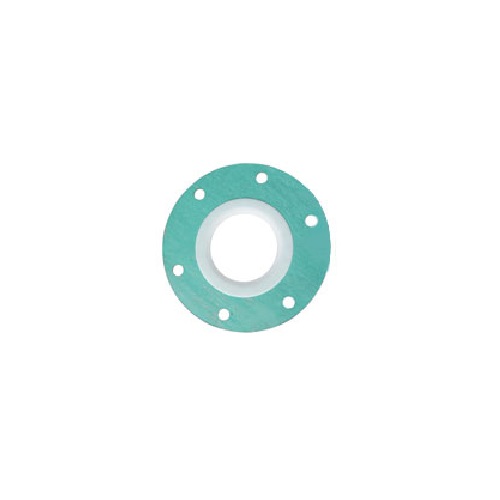
The outer PTFE envelope provides excellent chemical resistance and low friction characteristics, while the inner core material enhances recovery and mechanical stability. This dual-structure approach allows the gasket to maintain better sealing performance under changing operating conditions.
Our engineering team commonly recommends envelope configurations for lined pipe systems, glass-lined reactors, stainless process vessels, and hygienic piping installations. These environments demand sealing materials that can resist contamination, chemical attack, and media permeation.
In many North American and European plants, maintenance supervisors now prioritize sealing systems that reduce flange cleaning frequency and simplify turnaround servicing. Our production process focuses on dimensional precision, surface smoothness, and stable envelope forming to support those expectations.
| Property | Typical Performance Range |
| Temperature Resistance | -200°C to 260°C |
| Chemical Compatibility | Excellent with acids, alkalis, solvents |
| Surface Friction | Low friction coefficient |
| Pressure Stability | Suitable for medium and high-pressure systems |
| Moisture Absorption | Very low |
| Service Environment | Chemical plants, food plants, refineries |
What Design Improvements Are Helping Reduce Maintenance Downtime?
One major advancement in recent years is the refinement of envelope forming technology. Improved forming accuracy allows the PTFE Envelope Gasket to fit more evenly across flange surfaces, reducing localized stress concentration and improving seal integrity.
Another important development involves filler optimization. Depending on the application, manufacturers now use enhanced insert materials to improve compressibility and recovery behavior. This helps reduce cold flow issues often associated with conventional PTFE sealing products.
Our factory also supports customized dimensional tolerance control for clients using ASME, DIN, JIS, and custom flange standards. In industrial maintenance operations, even minor dimensional inconsistencies can create installation challenges and increase leak risks during startup cycles.
Ningbo Kaxite Sealing Materials Co., Ltd. works with customers needing tailored sealing solutions for pipelines carrying caustic chemicals, thermal oil, ultrapure water, or aggressive cleaning agents. Our production team reviews media compatibility, flange condition, operating pressure, and installation method before recommending material structures.
| Specification Item | Available Options |
| Outer Material | Virgin PTFE |
| Core Insert | Rubber, asbestos-free sheet, expanded filler |
| Shape Type | Flat ring, envelope type, custom profile |
| Size Standard | ASME, DIN, JIS, customized |
| Thickness Range | 1.5 mm to 6 mm |
| Application Media | Acid, alkali, solvent, steam |
Why Are More Industrial Buyers Choosing PTFE-Based Sealing Systems?
Industrial procurement teams now place greater importance on lifecycle performance rather than short-term savings. Frequent shutdowns caused by leakage can disrupt production schedules, increase labor costs, and damage process equipment. Because of this, many operators view the PTFE Envelope Gasket as a long-term operational investment.
Another reason behind rising demand is regulatory pressure. Processing facilities handling food ingredients, pharmaceutical compounds, or hazardous chemicals must comply with stricter safety and contamination standards. PTFE-based sealing products are valued for their clean surface properties and broad chemical compatibility.
Our customers often report improved sealing consistency after switching from conventional compressed sheet materials to engineered envelope designs. In systems exposed to repeated thermal cycling, maintaining gasket recovery performance becomes essential for preventing flange leakage.
Ningbo Kaxite Sealing Materials Co., Ltd. continues supporting distributors and industrial end users with stable production scheduling, technical consultation, and customized sealing recommendations for international markets.
What Questions Are Buyers Asking About PTFE Envelope Gasket Technology in 2026?
Q1: What industries commonly use PTFE envelope gasket products?
A1: These sealing products are widely used in chemical processing, pharmaceutical manufacturing, food processing, petrochemical systems, and water treatment facilities where strong chemical resistance and temperature stability are required.
Q2: Why does a PTFE envelope structure improve sealing reliability?
A2: The PTFE outer layer protects against aggressive media and corrosion, while the inner core provides compressibility and recovery. This combination improves flange adaptation and reduces leakage risk under changing operating conditions.
Q3: How should buyers select the correct PTFE Envelope Gasket specification?
A3: Buyers should evaluate flange standard, operating temperature, pressure range, chemical media, bolt load, and installation conditions. Providing detailed system information allows manufacturers to recommend the most suitable structure and material combination.
Why Will Advanced Sealing Design Continue Shaping Industrial Efficiency?
As industrial systems move toward longer production cycles and tighter environmental standards, sealing technology will remain a critical factor in plant reliability. Modern PTFE Envelope Gasket solutions are helping operators reduce leakage incidents, simplify maintenance planning, and improve process stability across demanding applications.
Our manufacturing experience shows that efficient sealing performance depends on material quality, dimensional precision, process control, and application-specific engineering support. Facilities looking to reduce operational interruptions are increasingly prioritizing sealing systems that can deliver stable long-term performance under aggressive service conditions.
If your project requires dependable sealing solutions for chemical processing, refinery systems, or industrial pipelines, contact our team today. Our factory can provide customized recommendations, technical support, and production solutions tailored to your operational requirements.