

What Are the Advantages of Steel vs. Plastic Concrete Block Molds?
2026-03-03
When selecting the right Mould for Concrete Block production, one of the most critical decisions a manufacturer faces is choosing between steel and plastic. Both materials offer distinct advantages depending on production scale, environmental conditions, and budget. At Quangong Machinery Co., Ltd., our factory has spent years engineering precision molds that serve high-volume block manufacturers across global markets. Understanding the core differences between steel and plastic mold options helps buyers make smarter procurement decisions and reduce long-term operational costs.
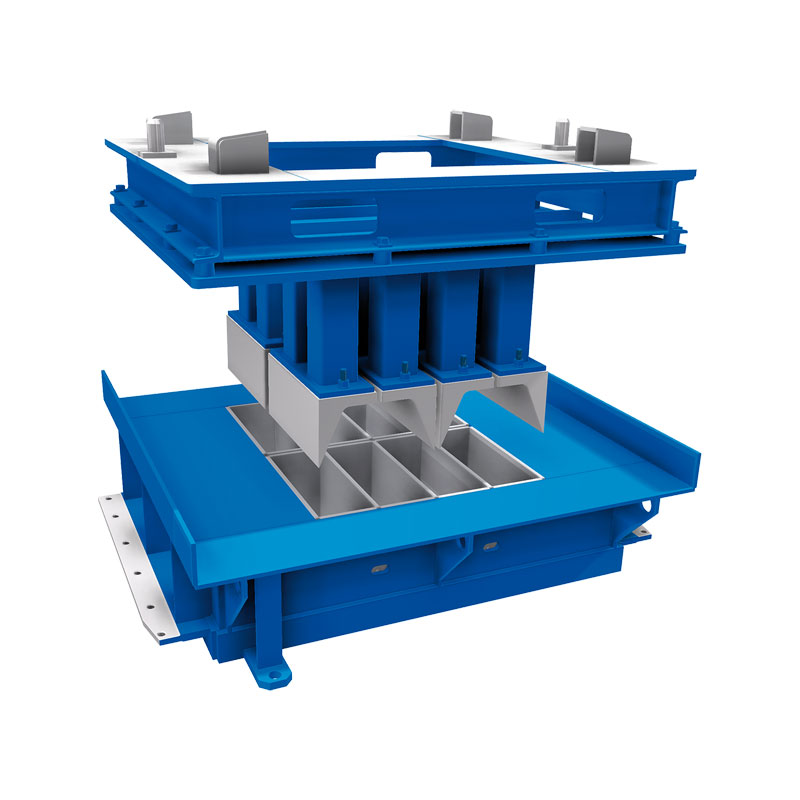
How Does Material Strength Affect the Performance of Concrete Block Molds?
Steel molds are widely regarded as the industry standard for heavy-duty concrete block production. Their high tensile strength allows them to withstand repeated high-pressure compaction cycles without warping or deforming. Our steel Mold for Concrete Block products are manufactured using precision-cut tool steel that maintains dimensional accuracy across thousands of production cycles. This level of durability is critical for operations producing uniform blocks at scale.
Plastic molds, by contrast, are typically best suited for lower-volume or decorative block production. While they are lighter and easier to handle on-site, they are more susceptible to cracking under sustained mechanical stress. Our factory recommends plastic variants primarily for specialized architectural applications or short production runs where flexibility and ease of transport are prioritized over long-term resilience.
What Are the Key Differences in Lifespan and Cost Efficiency Between Steel and Plastic Molds?
Lifecycle cost is a major factor when evaluating mold options. Steel molds require a higher upfront investment, but their extended service life makes them more economical over time. Our steel Mould for Concrete Block solutions are designed to deliver a minimum service life that dramatically reduces per-unit tooling costs across large production volumes. Plastic molds have a lower initial price point but typically require more frequent replacement, especially under continuous production pressure.
Below is a comparison table highlighting the core performance differences between steel and plastic concrete block molds based on our factory testing standards and field data collected from production partners worldwide.
| Comparison Factor | Steel Mold | Plastic Mold |
| Material Strength | High tensile, impact-resistant | Moderate, prone to stress cracking |
| Average Service Life | 300,000+ cycles | 10,000 to 30,000 cycles |
| Dimensional Accuracy | Tight tolerances, consistent output | May flex under pressure, less precise |
| Weight | Heavier, requires handling equipment | Lightweight, manual handling possible |
| Initial Cost | Higher upfront investment | Lower entry cost |
| Long-Term Cost Efficiency | Superior due to extended lifespan | Higher replacement frequency |
| Surface Finish Quality | Smooth, professional finish | Acceptable for decorative use |
| Maintenance Requirements | Periodic oiling and cleaning | Minimal maintenance needed |
How Do Production Scale and Application Type Influence Mold Selection?
The right mold choice depends heavily on the application and output requirements. For large-scale infrastructure projects, precast plants, and automated block production lines, steel is the clear choice. Our Mold for Concrete Block range is engineered for compatibility with vibration press machines commonly used in high-output facilities. The precision fit between our molds and production machinery ensures minimal waste and consistent block geometry across every batch.
For smaller operations, custom landscaping projects, or markets where lightweight tooling is preferred, plastic molds offer a practical and accessible entry point. Our factory also supplies custom-profile plastic molds for clients working with interlocking pavers, garden borders, and specialty architectural blocks where unique shapes are required and production pressure is lower.
Quangong Machinery Co., Ltd. provides both steel and plastic mold configurations to accommodate the full spectrum of customer needs, from entry-level setups to fully automated industrial lines. Our engineering team works directly with clients to assess production volume, block type, and machine compatibility before recommending the optimal mold solution.
What Product Specifications Should Buyers Review When Selecting a Concrete Block Mold?
Reviewing product parameters before purchase is essential for ensuring compatibility and long-term reliability. Our Mould for Concrete Block offerings are available in a range of standard and custom configurations. The table below outlines the key technical parameters for our steel mold product line, which represents our most requested industrial-grade option.
| Parameter | Specification |
| Mold Material | High-grade tool steel (HRC 52-58) |
| Standard Block Size Compatibility | 390 x 190 x 190 mm (customizable) |
| Surface Treatment | Hardening and precision grinding |
| Mold Cavity Options | Single, double, four-cavity configurations |
| Applicable Machine Type | Hydraulic and vibration press block machines |
| Tolerance Level | Plus or minus 0.1 mm |
| Service Life | Minimum 300,000 production cycles |
| Custom Profile Availability | Yes, including hollow blocks, paving blocks, curbstones |
| Lead Time | 15 to 30 working days (standard orders) |
These parameters reflect our commitment to precision manufacturing and help buyers align mold selection with their specific production goals. Our factory maintains strict quality control at every stage of production, from raw material sourcing to final dimensional inspection.
How Does Surface Finish and Release Performance Compare Between Steel and Plastic Molds?
Surface finish quality directly impacts the appearance and marketability of finished concrete blocks. Steel molds, when properly maintained, consistently deliver sharp edges, smooth faces, and uniform textures that meet commercial and structural standards. Our Mold for Concrete Block products undergo surface hardening and grinding processes that extend wear resistance and improve demolding performance.
Plastic molds typically require mold release agents to prevent adhesion, while steel molds, particularly those with coated surfaces, can be operated with minimal release agent use. Quangong Machinery Co., Ltd. has developed surface treatment protocols that reduce sticking and extend the interval between cleaning cycles, contributing to higher overall line efficiency. Our customers report measurable improvements in block rejection rates after switching from plastic to steel mold configurations on continuous production lines.
Frequently Asked Questions
Question 1: Are steel concrete block molds worth the higher upfront cost compared to plastic options?
Answer: For manufacturers running high-volume or continuous production lines, steel molds offer a significantly lower cost per cycle over their operational lifetime. While the initial investment is higher, our steel Mould for Concrete Block products are built to last through hundreds of thousands of production cycles with minimal dimensional change. When you factor in reduced downtime, fewer replacements, and consistent block quality, steel molds deliver a stronger return on investment for serious production operations. Plastic molds are more appropriate for low-volume or short-term use where the budget for tooling is limited.
Question 2: Can plastic molds handle the same block profiles as steel molds?
Answer: Plastic molds can be manufactured in a wide variety of profiles, including hollow blocks, solid blocks, and decorative pavers. However, complex profiles with thin walls or tight tolerances are better suited to steel construction because plastic tends to flex under compaction pressure, which can distort the final block shape. Our factory offers custom steel mold designs for clients who require precise replication of intricate block geometries. For standard decorative or garden-use applications where tolerances are less critical, plastic molds remain a viable and cost-effective choice.
Question 3: How should concrete block molds be maintained to extend their service life?
Answer: Proper maintenance is essential for maximizing the lifespan of both steel and plastic molds. For steel molds, our recommended practices include daily cleaning to remove concrete residue, periodic application of anti-rust lubricants on contact surfaces, and regular dimensional checks to catch wear before it affects block quality. Plastic molds should be stored away from direct sunlight and extreme temperature exposure to prevent material degradation. Our technical support team at Quangong Machinery Co., Ltd. provides detailed maintenance guidelines with every mold order to help customers protect their tooling investment and sustain consistent production output.
Conclusion
Choosing between steel and plastic concrete block molds is not a one-size-fits-all decision. It depends on production volume, application type, budget, and long-term operational goals. Steel molds excel in durability, dimensional precision, and lifecycle cost efficiency, making them the preferred choice for industrial-scale block manufacturing. Plastic molds offer accessibility and flexibility for smaller operations or specialty applications. Our factory engineers both options to the highest standards, ensuring that every Mould for Concrete Block we produce supports reliable, efficient, and profitable operations for our clients worldwide.
If you are ready to optimize your block production line with the right mold solution, contact our technical team at Quangong Machinery Co., Ltd. today. Our specialists will evaluate your production requirements and recommend the ideal mold configuration to match your machinery, output targets, and quality standards. Reach out now to request a product catalog, custom quote, or technical consultation.