

What Are the Common Mistakes When Using Concrete Block Molds?
2026-08-05
1. How Does Improper Cleaning Accelerate Wear on Our Molds?
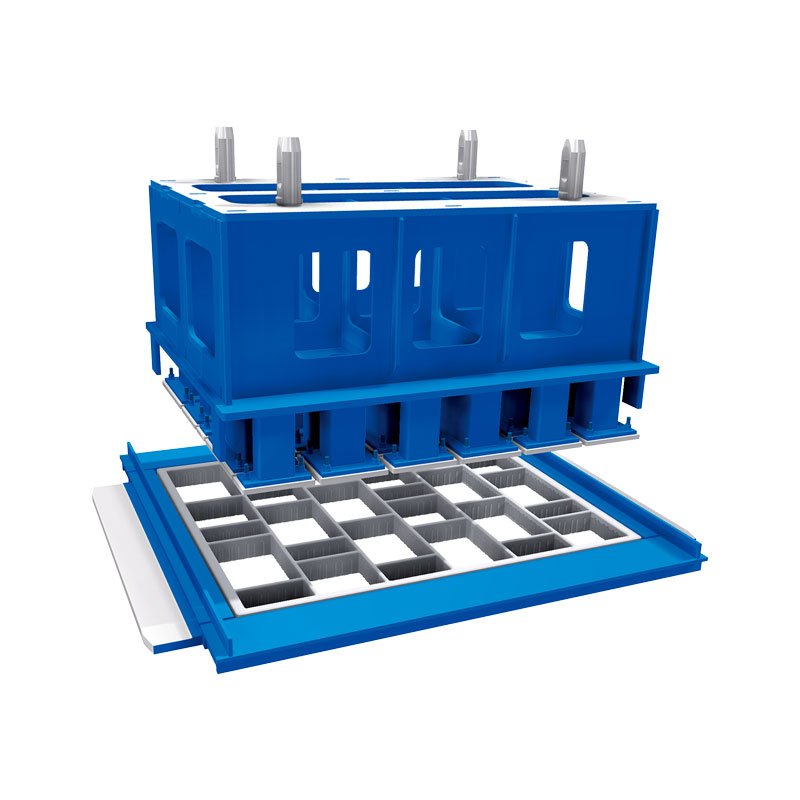
In our factory, we have inspected thousands of returned molds, and the most frequent issue is cement residue buildup. When concrete paste hardens inside the cavities, it creates a rough surface that increases friction during demolding. Operators often use metal scrapers aggressively, which scratches the hardened steel surface of the Mold for Concrete Block. These scratches trap moisture and fine aggregates, leading to rapid corrosion and pitting. Our Quangong Machinery Co., Ltd. recommends using plastic scrapers and high‑pressure water (up to 200 bar) after each shift. A common mistake is waiting until the end of the week to clean the mold. By then, the paste has set and requires harsh chemicals that strip the protective coating. Another error is using acidic cleaners that attack the chrome plating. We have seen molds that lost 30 percent of their service life simply because of poor cleaning habits. A clean Mold for Concrete Block produces blocks with smooth surfaces and reduces the need for excessive vibration, which also extends mold life. We provide a simple cleaning protocol with every mold we ship.
2. Why Does Incorrect Vibration Cause Uneven Block Density and Mold Fatigue?
Vibration is essential for compaction, but too much or too little can ruin both the block and the mold. When the vibration frequency is too high, the aggregate segregates, and the mold walls experience excessive cyclic stress, causing micro‑cracks. On the other hand, low frequency leads to poor compaction, forcing operators to increase the press pressure, which overloads the mold cores. Our factory has measured the optimal vibration range for a standard Mold for Concrete Block: 45 to 55 Hz with an amplitude of 0.6 to 0.8 mm. Many local block plants in Southeast Asia ignore these parameters and rely on guesswork. We have documented cases where molds cracked at the corners within 3 months due to a 15 percent over‑vibration. Another frequent mistake is not securing the mold tightly to the machine table; this creates chatter marks that ruin the block face. Our Quangong Machinery Co., Ltd. includes a vibration calibration guide and recommends periodic checking of the eccentric weights. A well‑set vibration cycle will improve mold life by 40 percent and produce consistent block density.
3. What Are the Consequences of Using the Wrong Release Agent?
Release agents are essential to prevent concrete from sticking to the Mold for Concrete Block. But many operators use diesel or waste oil, which are cheap but disastrous. These products do not spread evenly, leading to sticky spots that increase demolding forces. Over time, the uneven friction wears the side liners and causes the block edges to crumble. Our factory tested various release agents and found that water‑based emulsions with a 20 percent solid content provide the best film thickness and lubrication. A common error is applying the agent too thickly, which leaves a greasy film that attracts dust and hardens into a resinous deposit. Conversely, applying too little causes the concrete to adhere to the cavity walls. We recommend a spray application with an electrostatic nozzle that covers every surface uniformly. At Quangong Machinery Co., Ltd., we provide a recommended release agent list and a dilution chart. Some customers have reduced their mold maintenance costs by 50 percent simply by switching to a quality agent and applying it correctly.
4. How Does Inadequate Storage of Molds Lead to Deformation and Rust?
After a production run, molds are often left on the factory floor, exposed to moisture and temperature changes. This is a critical mistake. Our Mold for Concrete Block is made from high‑grade tool steel, but it will rust if stored improperly. Rust pitting creates a rough surface that affects block finish and makes demolding difficult. Another storage error is stacking molds on top of each other without padding. The weight of multiple molds can distort the cavity dimensions, especially for thin‑walled blocks. Our factory recommends storing molds vertically in a climate‑controlled area, with a light coating of rust preventive oil. We have seen molds that were stored outside for one winter become unusable because of deep pitting. Quangong Machinery Co., Ltd. offers a storage rack system and a humidity monitor as part of our mold care kit. A well‑stored Mold for Concrete Block will last 8 to 12 years, while a poorly stored one may fail in under 2 years. The investment in proper storage is minimal compared to the cost of a replacement mold.
Frequently Asked Questions About Concrete Block Mold Mistakes
Final Summary
The lifespan and performance of a Mold for Concrete Block depend heavily on how it is used and maintained. Cleaning, vibration settings, release agent selection, and storage are the four critical areas where mistakes are most common. Addressing these issues can double the service life of your molds, reduce block rejects, and lower your production costs. Our factory has extensive experience in mold design and maintenance. Investing time in proper handling pays for itself many times over. Quangong Machinery Co., Ltd. is ready to support you with high‑quality molds and expert advice.