
What Are the Differences Between Manual and Hydraulic HDPE Pipe Welding Machines?
2026-05-26
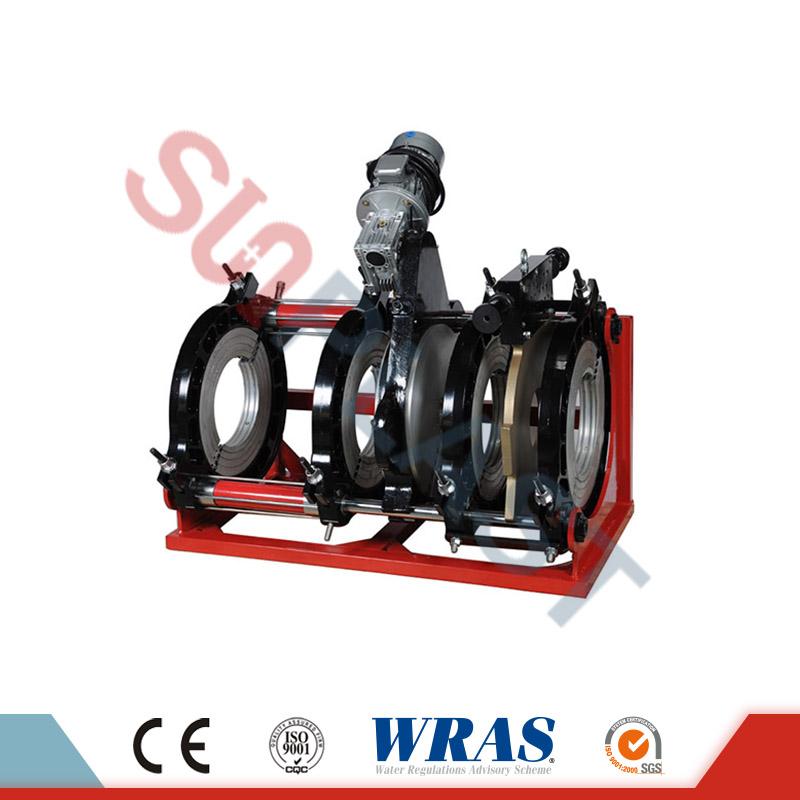
The fundamental divergence between the two types of HDPE pipe welding machine lies in how they generate and regulate the fusion pressure. A manual butt fusion unit uses a lever arm and the operator's physical strength to bring the pipe ends together against the heating plate and later forge the melt. This simple mechanical design makes it lightweight and easy to transport, but it limits the consistent application of force, especially on larger diameters. In contrast, a hydraulic welding machine employs a hydraulic pump and cylinder system to deliver precisely controlled pressure. Our factory engineers emphasize that this powered pressure control eliminates human fatigue variables and ensures uniform interfacial pressure across the entire pipe circumference, which is vital for pipes above 200mm.
How Does Automation Affect Weld Consistency and Operator Skill Requirements?
Manual operation demands a higher level of skill and constant physical monitoring. The operator must manually control the lever pressure during the heating, soaking, and cooling cycles. Any fluctuation can cause misalignment or cold joints. Our training sessions for clients highlight that while a skilled technician can achieve excellent results with a manual butt fusion welder, the process is inherently less repeatable than automated hydraulic sequences. Hydraulic machines, especially those from our range, often include semi‑automated control boxes that manage the pressure ramp‑up and dwell times. This automation reduces reliance on human judgment, making it easier to produce consistent, high‑strength welds on every joint. Our factory has integrated user‑friendly digital displays on select hydraulic models to further simplify operation and parameter logging.
What Do Our Technical Parameter Tables Reveal About Manual vs. Hydraulic Performance?
To provide complete transparency, we present the key specifications of our typical manual and hydraulic HDPE pipe welding machine models. These parameters reflect the engineering standards maintained at Ningbo Sunplast Pipe Co., Ltd. The first table compares the operational principles, while the second details our specific equipment capabilities.
| Feature | Manual Butt Fusion Welder | Hydraulic Butt Fusion Welder |
| Pressure Source | Lever arm with operator force | Electric hydraulic pump (adjustable) |
| Typical Pipe Diameter Range | 63mm – 160mm (up to 200mm limited) | 90mm – 630mm and above |
| Pressure Control | Manual, dependent on feel | Gauge monitored, precise PSI/MPa settings |
| Weight & Portability | Lightweight, often below 50 kg | Heavier, typically 120 kg and above |
| Power Requirement | Only for heating plate (1–2 kW) | Heating plate + hydraulic unit (3–4 kW) |
| Consistency on Large Diameter | Moderate to low | High, with uniform fusion pressure |
Now, let us examine our own production specifications. The following table showcases the proven parameters of our SP-M160 manual unit and our SP-H250 hydraulic unit, both manufactured under strict quality control at Ningbo Sunplast Pipe Co., Ltd.
| Technical Specification | Our Manual Model SP-M160 | Our Hydraulic Model SP-H250 |
| Welding Range (mm) | 63, 75, 90, 110, 125, 140, 160 | 90, 110, 125, 140, 160, 180, 200, 225, 250 |
| Pressure Regulation | Manual lever with calibrated spring | Hydraulic pump, 0–16 MPa adjustable gauge |
| Heating Plate Temperature | 200–230°C, thermostat controlled | 200–240°C, digital controller |
| Total Power (kW) | 1.8 kW heating, 0.1 kW router | 3.5 kW heating, 0.75 kW hydraulic motor, 0.1 kW router |
| Clamping Force | Manual clamp handles | Hydraulic clamp arms with removable inserts |
| Weight (kg) | 46 kg | 145 kg |
| Applicable Standard | ISO 21307, DVS 2207 | ISO 21307, DVS 2207, ASTM F2620 |
Our factory ensures every machine undergoes a rigorous pressure calibration test before dispatch. Whether you choose a manual or hydraulic HDPE pipe welding machine, you receive equipment that delivers reliable butt fusion in the field.
Which Machine Reduces Long-Term Operational Costs for Your Projects?
Cost efficiency extends beyond the initial purchase price. A manual HDPE pipe welding machine typically has a lower upfront cost and zero hydraulic oil maintenance, making it ideal for small‑scale plumbing and irrigation contractors. However, for large‑diameter municipal gas and water lines, the hydraulic system's faster cycle times and reduced rework translate into substantial savings. Our analysis of field data indicates that the repeatable pressure of our hydraulic models can cut the total welding time per joint by 30–40% on pipes above 200mm, directly lowering labor expenses. Additionally, our factory offers an extended warranty on hydraulic components, reflecting their durability in demanding environments.
Why Should You Source Your HDPE Pipe Welding Machine From Our Factory?
With two decades of manufacturing expertise, Ningbo Sunplast Pipe Co., Ltd. has perfected the balance between robust construction and precise engineering. Our quality team inspects raw materials and finished assemblies at multiple stages, ensuring that each clamping element and heater plate meets international fusion standards. We stock critical spare parts in our warehouse and provide immediate technical support. Our integrated approach—from casting the base frames in our own foundry to final performance testing—gives you full traceability. When you invest in a welding solution from our factory, you are securing not just a tool, but a partnership backed by responsive after‑sales service.
What Factors Determine the Best Choice Between a Manual and Hydraulic Butt Fusion Welder?
Several project‑specific parameters influence the decision: pipe diameter, required daily joint output, operator experience, and job site accessibility. For diameters under 160mm and fewer than 20 joints per day, our manual machines offer an economical solution without sacrificing weld quality when used by trained personnel. Conversely, for municipal projects involving 200mm–400mm pipes, our hydraulic machines dramatically speed up production and maintain consistent bead geometry. Our factory recommends a site assessment to match the machine type to the actual workload and the skill level of the crew.
How Do the Transportation and Setup Requirements Vary Between These Two Welding Systems?
A manual unit can be easily carried by two workers and set up directly in a trench or on a scaffold within minutes. It requires only a single‑phase power supply for the heating plate. A hydraulic system, on the other hand, often needs a small crane or lifting cart for positioning due to its weight. Our hydraulic models come with integrated wheels and lifting eyes to simplify mobility. The setup includes connecting the hydraulic hoses and checking fluid levels, adding about 10 minutes to the initial commissioning compared to a manual frame. Despite this, the time saved during actual welding quickly offsets the extra preparation.
Can a Manual Welding Setup Be Later Converted or Upgraded to Hydraulic Operation?
Typically, the frame and carriage of a dedicated manual butt fusion machine are not designed to accommodate hydraulic cylinders and pumps retroactively. The structural load paths differ significantly. However, our modular designs allow some interchangeability of clamps and inserts between our small manual and hydraulic ranges, reducing spare parts inventory for contractors who operate both types. Our team always advises purchasing a purpose‑built hydraulic welding machine if future project scopes may require larger diameters, as upgrading the entire system mid‑project is neither cost‑effective nor efficient.
In closing, the distinction between manual and hydraulic fusion equipment boils down to pressure control, automation level, and scale. We encourage you to review the parameter tables above and discuss your project requirements with our experienced engineers. Reach out to Ningbo Sunplast Pipe Co., Ltd. today for a tailored quotation and discover how our decades of expertise can add value to your next pipeline installation.