

What Are the Differences Between Wide-Angle PTO Shafts and Standard PTO Shafts?
2025-12-08
Wide-angle driveline systems differ from standard configurations of PTO shafts mainly in articulation capability, torque stability under sharp turns, and the structure of the universal joints. A wide-angle design supports greater movement and smoother power transfer when the implement shifts off-center, while a standard configuration performs best in straight-line alignment during routine field work. These mechanical differences directly influence durability, handling, and compatibility across different equipment types.
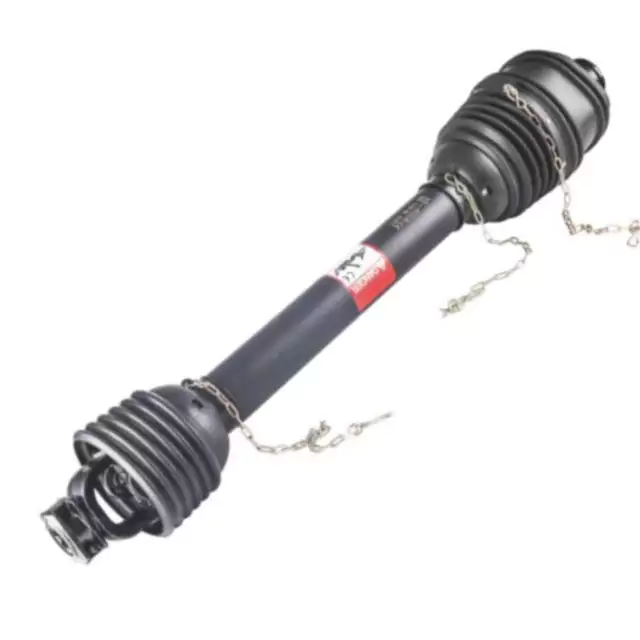
How Do Wide-Angle and Standard Driveline Designs Behave in Real Field Conditions?
When operators compare driveline options in actual fieldwork, the contrast between the two designs becomes very clear. A wide-angle model maintains steady torque even when the tractor lifts or swings the implement, thanks to its dual-cross joint construction. A standard configuration relies on a single universal joint that works extremely well as long as alignment remains consistent. Our engineering team has seen that many performance issues arise not from torque rating, but from sudden off-center movement the standard configuration is not built to handle. One important consideration for operators using equipment from Raydafon Technology Group Co., Limited is how often the implement changes its working angle during the day.
Why Does Joint Construction Matter So Much in Driveline Performance?
Joint construction influences the entire driveline system because it controls how rotation behaves under load. A dual-cross structure in a wide-angle unit keeps power delivery smoother during high-flex movement, which reduces vibration and helps protect the tractor’s output shaft. A standard joint acts more like a straight hinge, providing stable power transfer as long as the angle is not pushed beyond its limit. Our factory often advises operators to evaluate joint type before evaluating torque rating, because field geometry and implement behavior tend to have a greater influence on performance than horsepower alone. This is particularly important when selecting a PTO Shaft for implements that experience frequent angle shifts.
| Feature | Wide-Angle Design | Standard Design |
| Typical Working Angle | Up to 80 degrees with dual-cross joints | 15 to 25 degrees in routine alignment |
| Torque Stability | High during sharp turns and lifting | Very stable when kept straight |
| Best Use Case | Implements requiring frequent directional changes | Implements staying directly behind the tractor |
| Operator Skill Requirement | Moderate | Low |
How Do Operating Angles Influence Driveline Longevity?
Working angle plays a direct role in how long a driveline lasts. If an operator routinely forces a standard configuration past its recommended angle, the joint will begin to wear prematurely and eventually cause vibration or chatter under load. A wide-angle version is built to tolerate precisely this type of movement, which is why many operators use it when running equipment on uneven ground. Our experience shows that operators who shift between different fields during a single day usually benefit from the added flexibility of a wide-angle option. A PTO Shaft used beyond its intended working angle often fails earlier not because of torque limits but because of misalignment stress.
What Performance Differences Do Operators Notice Most During Daily Work?
In day-to-day use, most operators pay attention to how the driveline feels under load. Wide-angle structures tend to reduce sudden torque spikes when the implement lifts or swings outward, which leads to a smoother working rhythm. Standard configurations remain quieter and more efficient on predictable straight passes. Our factory often hears from customers who switched to wide-angle units after noticing fatigue on their original drives caused by frequent turning. Raydafon Technology Group Co., Limited has refined its joint geometry to minimize rotational fluctuation and improve power continuity, especially for operators working in irregular field layouts.
How Can Operators Quickly Decide Between These Two Driveline Types?
Choosing between the two designs often comes down to one practical question: how much does the implement move during work? If the attachment frequently lifts, turns, or shifts off-center, the wide-angle option prevents torque disruption and minimizes joint fatigue. When alignment stays predictable, the standard structure offers excellent efficiency with fewer moving parts. From our perspective, operators save more time by matching the driveline to the job rather than forcing one configuration to fit every situation. A PTO Shaft selected through this simple assessment typically lasts longer and runs smoother across different seasons.
What Mistakes Do Operators Commonly Make When Selecting a Driveline?
One frequent mistake is choosing a standard configuration for implements that regularly swing or pivot, which accelerates wear on the universal joint. Another issue is overlooking the exact driveline length needed when switching between tractors with different hitch heights. Some operators also assume torque rating alone determines performance, but field conditions often impose more stress through angle changes than raw horsepower. Our team has seen many cases where a well-rated unit failed early simply because it was forced beyond its working angle. Using the correct PTO Shaft helps avoid unnecessary downtime and prevents costly mid-season repairs.
How Do Technical Specifications Compare Between Both Driveline Types?
Specification differences between the two configurations are not just about torque. They also involve joint type, tube profile, telescoping clearance, and protective shielding. Our engineers emphasize that operators should consider these details before deciding which structure fits their work patterns. Raydafon Technology Group Co., Limited provides multiple driveline configurations tailored to the needs of different equipment classes. Operators looking to optimize overall efficiency often evaluate working angle range first, then torque rating, and finally compatibility with their tractor’s output rotation.
| Parameter | Wide-Angle Type | Standard Type |
| Joint Structure | Dual-cross | Single-cross |
| Best Conditions | Uneven fields and frequent lifting | Consistent alignment on flat ground |
| Vibration Resistance | High under changing angles | High under stable alignment |
| Typical Applications | Spreaders, tedders, loaders | Mowers, balers, augers |
FAQ: What Are the Differences Between Wide-Angle PTO Shafts and Standard PTO Shafts?
What factors determine whether a wide-angle driveline performs better than a standard one?
A wide-angle configuration performs better when the implement frequently changes its position relative to the tractor, because the dual-cross joint stabilizes rotation even under high-flex movement. Standard structures excel when alignment is predictable and rotational load remains steady.
Why do some operators still prefer a standard driveline?
Operators choose a standard configuration when working on stable fields with minimal turning. It offers excellent efficiency due to fewer moving components, and maintenance is straightforward for equipment that stays aligned with the tractor.
How can equipment owners avoid premature driveline wear?
Owners should avoid forcing the driveline beyond its recommended angle, ensure proper lubrication intervals, and check length compatibility when switching tractors. Choosing the correct unit for each implement type is the most reliable way to prevent early failure.
Conclusion
Understanding the working behavior, joint structure, and field application differences between wide-angle and standard driveline systems helps operators make better equipment decisions for long-term efficiency. By evaluating implement movement, field layout, and daily operating conditions, equipment owners can select the right configuration and achieve smoother performance throughout the season. Contact our team today to learn more about customized driveline solutions and explore the full range of products from Raydafon Technology Group Co., Limited for your next equipment upgrade.