
What Are the Differences Between Worm Gearbox and Helical Gearbox in Industrial Use?
2026-01-05
Selecting the right gearbox is a critical decision that directly impacts the efficiency, cost, and longevity of industrial machinery. Two of the most common types are the worm gearbox and the Helical Gearbox. Each possesses unique characteristics making them suitable for specific applications. With decades of experience in power transmission solutions, our team at Raydafon Technology Group Co.,Limited provides an in-depth comparison to guide your selection process.
Fundamental Design and Operating Principles
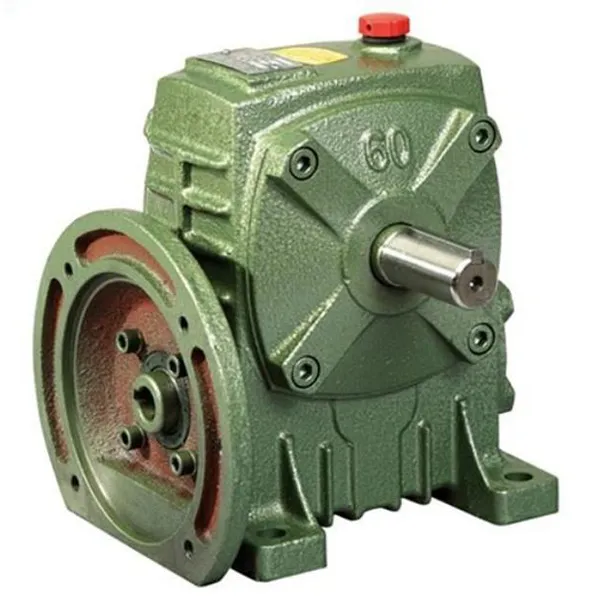
The core difference lies in their geometry and how motion is transferred. A Worm Gearbox consists of a threaded screw (the worm) that meshes with a toothed wheel (the worm gear). The worm’s threads engage the gear’s teeth at a right angle, typically resulting in a 90-degree change in the direction of shaft rotation. This design offers a substantial speed reduction in a single stage and a compact, non-reversible configuration in many standard models.
In contrast, a Helical Gearbox uses cylindrical gears with teeth cut at an angle (helix) to the gear axis. This angled tooth engagement allows multiple teeth to be in contact simultaneously, enabling smoother and quieter operation compared to spur gears. The shafts in a helical gearbox are usually parallel, and while they can provide high reduction ratios, it often requires multiple stages.
Key Performance Characteristics and Product Specifications
Our factory designs and manufactures both gearbox types to meet stringent industrial standards. Here is a detailed look at their performance parameters and typical specifications from our product lines at Raydafon Technology Group Co.,Limited.
| Parameter | Worm Gearbox | Helical Gearbox | |
| Typical Reduction Ratio Range | |||
| Efficiency | Lower (Typically 50%-90%, decreases with higher ratios) | Higher (Typically 94%-98% per stage) | |
| Backlash | Generally higher | Can be engineered for very low backlash | |
| Noise Level | Quiet operation | Quieter than spur gears, but may be louder than worm types | |
| Overload Protection | Excellent; the worm can slide without damaging the gear under shock loads | Good, but components are more susceptible to damage from sudden jams | |
| Thermal Capacity | Lower; can generate significant heat at higher ratios, requiring careful thermal management in our designs | Higher; generally runs cooler under similar load conditions | |
| Mounting Orientation | Versatile; output shaft is at 90 degrees | Typically in-line or parallel shaft configuration |
Industrial Application Scenarios
The choice between these gearboxes depends heavily on the application's demands. A Worm Gearbox excels in applications requiring high speed reduction, compact design, and inherent braking or self-locking capability. You will frequently find our worm gearbox solutions in conveyor systems, packaging machinery, gate controls, and lifting equipment where stopping and holding loads safely is crucial. Our engineers at Raydafon Technology Group Co.,Limited specifically design worm gearboxes for these high-torque, low-to-medium speed operations.
Helical gearboxes are the preferred choice for applications demanding high efficiency, high-speed operation, and continuous duty cycles. They are ideal for heavy-duty industrial mixers, extruders, pumps, and conveyor drives that run for extended periods. The higher efficiency translates to significant energy savings over time, a key consideration for our clients focused on operational cost reduction.
Advantages and Disadvantages Summary
Understanding the trade-offs is vital. The primary advantage of a Worm Gearbox is its high reduction ratio and compact size in a single stage. Its self-locking feature provides safety. The main drawback is lower efficiency, which leads to higher energy loss and heat generation, limiting its use in high-power, continuous applications. This is a key area where our factory focuses on advanced materials and lubrication to improve performance.
Helical gearboxes offer superior efficiency and can handle higher input speeds and power densities. They provide smooth, reliable power transmission. The disadvantages include a potentially higher initial cost for precision units, the need for more stages to achieve very high reductions, and a lack of inherent self-locking. For demanding, round-the-clock operations, our helical gear solutions often prove more economical in the long run.
Maintenance and Durability Considerations
Maintenance needs differ significantly. A worm gearbox requires careful attention to lubrication because of sliding contact and heat generation. The right lubricant is critical to minimize wear on the bronze worm gear, a common material in our Worm Gearbox assemblies. Proper thermal management extends service life dramatically.
Helical gearboxes, with their rolling contact, generally have longer service intervals and are less sensitive to thermal issues. However, they require precise alignment during installation to prevent premature wear or failure. Our team provides comprehensive support to ensure optimal setup and maintenance for both gearbox types, maximizing your investment.
FAQ Common Questions About Worm and Helical Gearboxes
Question 1: When should I definitely choose a Worm Gearbox over a Helical Gearbox?
Answer: You should prioritize a Worm Gearbox when your application requires a very high reduction ratio in a single, compact stage, when you need a 90-degree shaft configuration, or when an inherent self-locking feature is critical for safety to prevent back-driving, such as in hoists or vertical conveyors.
Question 2: Which gearbox type is more energy-efficient, and how does that affect operating costs?
Answer: A Helical Gearbox is significantly more energy-efficient, often by 15-30% or more compared to a standard worm gearbox at similar ratios. This higher efficiency means less wasted energy as heat, leading to lower electricity costs. For high-duty cycle applications, the energy savings from a helical gearbox can offset its higher initial purchase price within a surprisingly short time, making our helical units a cost-effective long-term solution.
Question 3: Can a Worm Gearbox be used for continuous, high-power applications?
Answer: Generally, it is not recommended for continuous high-power applications. The lower efficiency leads to substantial heat buildup that can degrade lubricants and damage components. For such applications, a high-quality Helical Gearbox or a specialized worm gear design with enhanced cooling is required. Our factory can advise on the best configuration, and for extreme cases, our custom-engineered solutions from Raydafon Technology Group Co.,Limited provide the necessary durability and thermal performance.
Making the Informed Choice for Your Operation
The decision between a worm and helical gearbox is not about which is universally better, but which is optimal for your specific operational parameters. Consider your required speed ratio, duty cycle, space constraints, efficiency goals, and safety needs. Our extensive product portfolio and engineering expertise ensure that whether your project calls for a robust, self-locking Worm Gearbox or a high-efficiency Helical Gearbox, you receive a solution built for performance and reliability. Contact our technical team at Raydafon Technology Group Co.,Limited to discuss your application needs and discover the perfect power transmission component for your system.