

What Are the Key Differences Between Copper Gaskets and Brass Gaskets?
2026-05-26
In the sealing industry, selecting the wrong metal alloy can result in catastrophic joint failure. Through two decades of manufacturing at Ningbo Kaxite Sealing Materials Co., Ltd., our factory has witnessed countless engineers grapple with the choice between red metal alloys. While both materials offer non-sparking properties and excellent machinability, their performance under pressure, temperature, and corrosive media diverges significantly. This analysis breaks down the metallurgical distinctions and real-world applications of these copper-zinc variants without the fluff, focusing strictly on data drawn from our production floor.
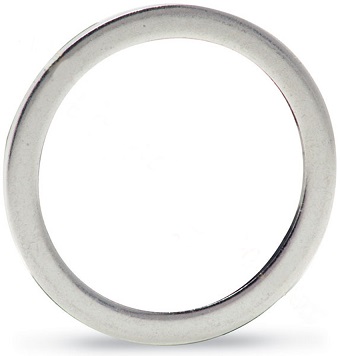
How Do the Chemical Compositions and Standards Differ Between These Red Metals?
At our factory, we distinguish these materials primarily by their zinc content and trace elements. Copper gaskets are fabricated from nearly pure annealed copper, typically conforming to UNS C11000 standards. This material contains a minimum of 99.9% copper, with oxygen content strictly controlled to prevent hydrogen embrittlement during high-temperature service. In contrast, brass is a copper-zinc alloy where the zinc content can vary broadly from 5% to 40%, with the most common sealing grades being UNS C26000 (Cartridge Brass) and UNS C28000 (Muntz Metal). The presence of zinc fundamentally alters the grain structure, boosting tensile strength but introducing susceptibility to a failure mechanism we strictly test for: dezincification. Our inventory includes semi-metallic configurations, but for critical blowout prevention, solid metal rings remain the standard.
We maintain tight tolerances on the Rockwell hardness scales during our stamping process. Our internal QC lab consistently records that pure copper sits comfortably at 40-50 HRF (Rockwell F scale), making it one of the most malleable sealing elements available. Brass, depending on its zinc alloying percentage, will range between 55 and 80 HRB. This mechanical disparity is not merely academic; it dictates the required bolt load during installation. At Ningbo Kaxite Sealing Materials Co., Ltd., our engineering team frequently advises that annealed copper requires a lower seating stress to flow into flange imperfections, often below 50 MPa, whereas brass demands higher compressive loads to energize the seal effectively without damaging the flange rotation.
| Parameter | Copper Gaskets (UNS C11000) | Brass Gaskets (UNS C26000) |
| Copper Content | 99.90% min | 68.5 – 71.5% |
| Zinc Content | Restricted (Trace) | 28.5 – 31.5% (Remainder) |
| Tensile Strength (Annealed) | 220 - 250 MPa | 330 - 410 MPa |
| Hardness | 40 - 50 HRF (Soft) | 55 - 80 HRB (Semi-Hard) |
| Max. Service Temp (Oxidizing) | Approx. 400°C | Approx. 200°C (Zinc leaching risk) |
| Magnetic Permeability | Less than 1.01 (Non-magnetic) | Less than 1.05 (Low magnetic) |
Why Is Thermal Conductivity and Corrosion Behavior Critical for Application Selection?
Heat dissipation is often the primary technical driver for specifying copper gaskets. With a thermal conductivity rating of roughly 388 W/m·K, pure copper acts as an efficient heat bridge, making it indispensable in head gasket designs and high-temperature heat exchanger flanges where hot spots cause warpage. Our factory produces copper rings specifically for applications requiring immediate thermal equalization. Brass, unfortunately, acts more as an insulator in comparison, with conductivity languishing around 120 W/m·K. This lower rate can be beneficial when thermal isolation is required, but it becomes a liability in combustion sealing, where localized thermal spikes can anneal the brass prematurely on the spot, leading to radical thickness reduction and leakage.
Regarding environmental resistance, the behaviors diverge sharply in plumbing and marine environments. We have observed through failure analysis that brass, particularly duplex grades, suffers selective leaching in stagnant, acidic water conditions. The zinc dissolves out of the alloy matrix, leaving behind a porous, weak copper skeleton that crumbles under flange pressure. Our process engineers at Ningbo Kaxite Sealing Materials Co., Ltd. frequently specify bronze or pure copper as an alternative for potable water systems operating below pH 6.5. Conversely, copper gaskets offer superior resistance to stress corrosion cracking in atmospheric and marine settings, developing a protective green patina without compromising the base material's integrity, a feature our clients in naval architecture rely on heavily.
| Performance Characteristic | Copper Gaskets | Brass Gaskets |
| Conductivity (Thermal) | ~388 W/m·K (Superior) | ~120 W/m·K (Moderate) |
| Corrosion Mechanism | Uniform oxidation (Patina) | Dezincification / SCC risk |
| Seawater Compatibility | Excellent (Bio-fouling resistant) | Moderate (Not for submerged use) |
| Steam Service | Suitable (No zinc embrittlement) | Not recommended |
| Permanent Set Resistance | Moderate | High (Better spring-back) |
When Does the Fabrication Method Impact the Sealability of Copper and Brass?
The grain flow during manufacturing is a detail often overlooked by generic distributors, but not by our factory. We employ a controlled blanking and coining process for copper gaskets to avoid edge cracking, a common defect in ductile metals. Because pure copper work-hardens rapidly, our tooling is specifically profiled to minimize burrs in a single stroke, preserving the soft, conformable core. This is vital because a work-hardened edge creates a bridge preventing the gasket from conforming to the flange face. During our quality audits, we routinely reject copper rings with a burr exceeding 0.1mm, a standard significantly tighter than the general industry norm, as that burr acts as a leak path in cryogenic applications.
Brass presents the opposite challenge. Its chip-breaking characteristics are superior, allowing for high-speed CNC machining of complex profiles, such as grooved or lens rings, without gumming up cutting tools. However, the rigidity of brass makes it ideal for high-pressure or serrated flange seat designs where the gasket must not extrude into the clearance gap. Our production line uses a stress-relief anneal on machined brass gaskets to remove residual stress without sacrificing the inherent spring-back that maintains bolt load during thermal cycling. This in-house heat treat gives our brass products a distinct advantage in oil and gas valve bonnets where retorquing is often impossible.
Why Are the Economic and Lifecycle Costs Different Despite Similar Raw Material Prices?
At first glance, the spot market prices for copper and brass stock might suggest similar procurement costs, but the total cost of ownership on the plant floor tells a more complex story. Our cost analysis models show that copper gaskets often require larger cross-sections to withstand blowout forces due to their lower intrinsic tensile strength, potentially increasing the weight of material used. Conversely, the higher mechanical strength of brass permits thinner, lighter cross-sections which can reduce the initial material usage in standard ANSI B16.5 flanges. However, the calculation shifts when factoring in maintenance windows and downtime. A brass gasket failing prematurely due to undetected process fluid acidity can lead to expensive unplanned shutdowns, an operational risk our clients frequently seek to mitigate by upgrading to high-purity copper.
Our sales history shows a strong correlation between critical service specifications and the selection of copper. While brass provides an effective, low-cost solution for lubricating oil and general hydraulics under pH control, any system where the fluid chemistry is variable tends to favor the inert reliability of copper. We stock massive inventories of both alloys in our distribution centers, but our engineering support team always interrogates the media first. The decision to use brass over copper should hinge on whether the mechanical rigidity justifies the increased vigilance required to monitor dezincification inhibitors.
FAQ: Common Questions About Copper Gaskets and Brass Gaskets
Q1: Can I replace copper gaskets with brass gaskets in my marine diesel engine heat exchanger?
Technically, a brass gasket will fit the geometry, but our service records indicate a high failure probability in this specific environment. Marine engines operate with saltwater cooling loops that act as electrolytes. Brass alloys containing zinc will undergo dezincification under these conditions, a process where the saltwater leaches the zinc content from the alloy matrix. This results in a porous, copper-rich residue that lacks the mechanical strength to hold the end cap pressure, causing a hydraulic leak. Furthermore, if the heat exchanger reaches temperatures above 200 degrees Celsius during operation, the zinc phase in brass can induce intergranular corrosion. Our factory always recommends pure annealed copper gaskets for any raw water or seawater service because of their homogenous, single-phase microstructure, which resists this specific type of electrochemical attack completely. The conformability of soft copper also handles the thermal expansion differentials better than the stiffer brass ring, maintaining a reliable seal through repeated thermal cycles.
Q2: What is the specific bolt torque reduction I should apply when switching from a stainless steel spiral wound to a solid copper gasket?
When our engineers manage this transition from hard spiral wound types to soft solid copper, the bolt load must be critically derated to prevent plastic collapse of the seal. A standard 316 stainless spiral wound gasket often requires a seating stress of approximately 70 to 90 MPa, which corresponds to high bolt torques. However, pure copper yields at a relatively low 60 to 70 MPa. Applying the same torque from a spiral wound specification will immediately cause the copper gasket to flow outward into the flange gap, thinning the material and destroying the seal before the process starts. Our protocol calculates the torque based on the ASME PCC-1 guidelines for low-yield materials. In practice, we instruct our field teams to reduce the total bolt load to achieve a gasket stress of only 25 to 35 MPa for standard copper rings, ensuring the material gasket seating is correct without yielding the solid metal matrix. It is vital to use a torque wrench and incremental cross-tightening to feel the metal compress without a sudden loss of resistance, which indicates crushing failure.
Q3: How can I visually distinguish an annealed copper gasket from a brass gasket when the labels are missing in the warehouse?
During our receiving and quality inspection process, our team utilizes three distinct non-destructive field tests to differentiate these metals because mixed inventory leads to catastrophic application errors. First, the visual color under white light is a primary indicator: fresh copper exhibits a distinct reddish-orange hue reminiscent of a new penny, whereas brass displays a duller, yellowish-gold appearance due to the zinc content. Second, the sound test is highly reliable; our older technicians drop the ring onto a concrete floor. A copper gasket produces a soft, deep thud, absorbed by the material's ductility, while a brass gasket rings with a sustained, high-pitched ping due to its stiffness. Third, examine the oxidized surface if the parts are old. Copper gaskets tarnish to a dark brown or eventually a green verdigris patina, whereas brass darkens to a dirty yellowish-brown or even black, often exhibiting distinctive white zinc oxide "frosting" on the surface if stored in moisture. If uncertainty persists, a quick scratch test on the edge with a penknife reveals the true base metal color immediately, and our experience proves copper scratches far more easily and smoothly than the tough, springy brass alloy.
Selecting between these two foundational alloys ultimately comes down to a trade-off between mechanical stiffness and chemical inertness. Brass offers a robust, machinable solution with excellent resilience for controlled hydraulic and pneumatic applications where zinc stability is assured. Copper gaskets remain the uncontested superior choice for extreme heat transfer, aggressive marine exposure, and any system where the cost of failure eclipses the cost of the component. Our global distribution network ensures that critical sealing specifications are met with full metallurgical traceability. If your current application involves cyclic thermal loads or corrosive media, contact our engineering team at Ningbo Kaxite Sealing Materials Co., Ltd. to request a material analysis and sample kit tailored to your specific operating parameters.