

What Are the Key Differences Between Rolling Taps and Cutting Taps?
2026-03-05
Thread creation is a fundamental process in metalworking, especially in industries such as automotive components, hydraulic equipment, aerospace fittings, and precision mechanical assemblies. The selection of the correct tapping method directly affects thread strength, machining efficiency, and tool life. Manufacturers frequently evaluate whether a forming process or a cutting process is more suitable for their applications.
In many production environments, choosing between Rolling Taps and cutting taps depends on material characteristics, production volume, and required thread quality. Rolling Taps create threads through material displacement instead of chip removal, while cutting taps remove material to form threads. Both methods are widely used, but their performance differs significantly in durability, lubrication requirements, and thread strength.
With decades of experience in precision tool manufacturing, Taizhou Hongyi Precision Tools Co.,Ltd. continuously supplies threading solutions for international equipment manufacturers. Through years of technical refinement, our factory has developed a broad portfolio of forming taps and cutting taps designed for stable performance across steel, aluminum, stainless steel, and nonferrous alloys.
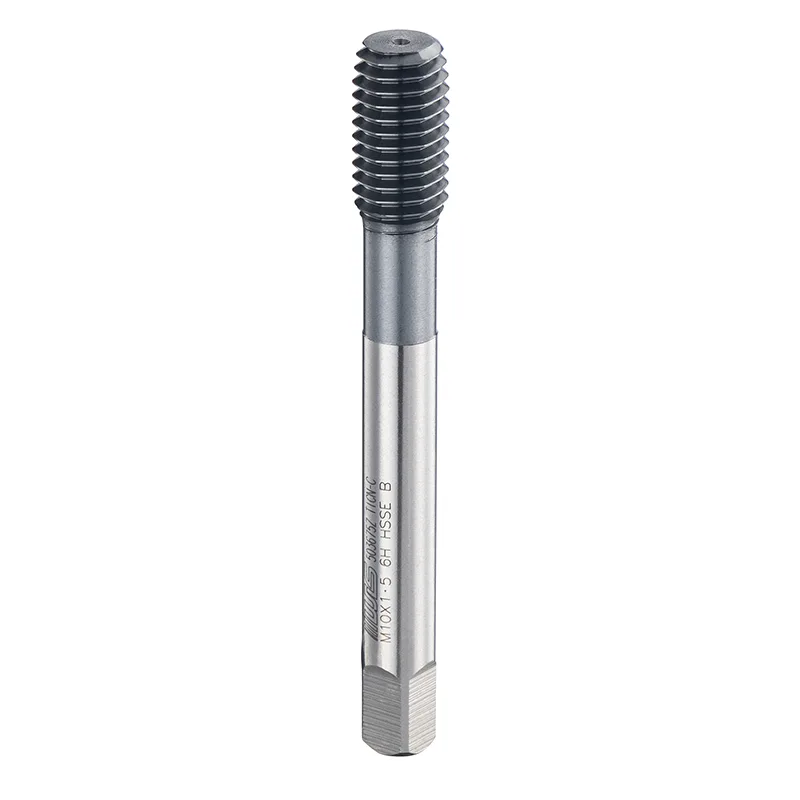
How Do Rolling Taps Form Threads Without Cutting?
Unlike conventional taps that remove chips during threading, Rolling Taps form threads through cold forming. The tool displaces the material plastically, forcing it into the shape of the thread profile. Because no chips are generated, the process is cleaner and reduces the risk of chip clogging in blind holes.
This forming method produces stronger internal threads because the metal grain flow remains continuous. The compressed material results in improved load-bearing capacity and better fatigue resistance. These characteristics make Rolling Taps particularly suitable for high-strength applications in automotive engines, transmission housings, and structural assemblies.
Another advantage is the extended tool life. Since Rolling Taps experience less edge wear compared to cutting taps, they typically last longer in high-volume manufacturing. Our factory designs forming taps with optimized lubrication grooves and surface treatments to minimize friction during forming operations.
Taizhou Hongyi Precision Tools Co.,Ltd. focuses on precision grinding technology to ensure that each forming tap maintains stable geometry and surface finish. Our engineering team evaluates material deformation behavior carefully to deliver reliable threading results across different alloys.
Why Are Cutting Taps Still Widely Used in Industrial Production?
Cutting taps remain an essential threading solution because of their versatility and ability to handle a wide variety of materials and hole types. Unlike forming taps, cutting taps remove material using sharp cutting edges that generate chips during the threading process.
This approach allows machining in materials that are too brittle or hard for forming processes. Cast iron, hardened steel, and certain high carbon alloys are typically threaded using cutting taps. These materials cannot deform plastically in the same way as ductile metals.
Cutting taps are also easier to apply in low torque machines or older equipment where forming torque requirements may exceed machine capacity. Our engineers often recommend this method when machining conditions are limited or when lubrication availability is inconsistent.
At Taizhou Hongyi Precision Tools Co.,Ltd., our factory manufactures multiple geometries including spiral flute taps, spiral point taps, and straight flute taps. Each design targets specific hole types such as blind holes or through holes to ensure consistent chip evacuation and thread accuracy.
Which Technical Parameters Should Buyers Evaluate Before Selecting a Tap?
Selecting the right tapping tool requires careful consideration of thread standards, material hardness, machine capabilities, and lubrication conditions. For manufacturers evaluating forming taps, torque requirements and material ductility are critical factors. Our factory provides comprehensive technical specifications to support precise tool selection.
| Parameter | Specification Range | Description |
| Thread Standards | ISO Metric, UNC, UNF | Supports international thread standards |
| Material Compatibility | Aluminum, Copper Alloys, Mild Steel | Optimized for ductile materials |
| Surface Treatment | TiN, TiCN, Nitriding | Enhances wear resistance and lubricity |
| Hardness | HSS-E up to 64 HRC | Ensures long tool life under forming pressure |
| Thread Size Range | M2 to M24 | Suitable for precision components and heavy assemblies |
Our engineers continuously refine tool geometry and coating combinations to ensure consistent forming performance. These parameters allow Rolling Taps to achieve stable results in automated production environments where repeatability is essential.
How Do Performance and Efficiency Compare in Real Production Environments?
Manufacturers evaluating thread forming tools often compare several key indicators including tool life, cycle time, thread strength, and lubrication requirements. Our factory conducts extensive production testing to evaluate how different tapping methods perform in real machining environments.
| Performance Factor | Rolling Taps | Cutting Taps |
| Chip Generation | No chips produced | Produces metal chips |
| Thread Strength | Higher due to material flow | Standard strength depending on material |
| Tool Life | Longer in high volume production | Moderate depending on cutting conditions |
| Torque Requirement | Higher forming torque | Lower cutting torque |
| Best Applications | Ductile metals and automotive parts | Harder materials and general machining |
Through years of product development, Taizhou Hongyi Precision Tools Co.,Ltd. has supplied threading tools to international machining workshops that require stable performance and predictable tool life. Our factory continuously improves manufacturing precision to ensure every batch meets strict industrial standards.
FAQ
What materials are best suited for Rolling Taps Rolling Taps perform best in ductile materials such as aluminum alloys, copper alloys, low carbon steel, and certain stainless steels. These materials can plastically deform during the thread forming process, allowing the tap to displace material without cracking or breaking the thread structure. When used in suitable materials with proper lubrication, forming taps can produce threads with superior strength and excellent surface finish.
Why do some manufacturers still prefer cutting taps in production Many manufacturers continue to use cutting taps because they provide greater flexibility when machining brittle materials or materials with high hardness levels. Cutting taps can also operate in machines with lower torque capacity. Additionally, chip formation allows material removal even when plastic deformation is not possible, making this method suitable for cast iron or hardened components.
How can tool life be extended when using forming taps Extending tool life requires proper lubrication, accurate hole diameter preparation, and stable machine alignment. The hole size must be slightly larger than the standard drilling size used for cutting taps to allow material displacement during forming. High quality lubricants reduce friction and prevent excessive heat buildup. Consistent machine speed and torque control also contribute to longer tool life and more consistent thread quality.
Conclusion
Understanding the differences between Rolling Taps and cutting taps allows manufacturers to optimize thread quality, machining efficiency, and overall production cost. Forming taps provide stronger threads, longer tool life, and cleaner machining conditions in ductile materials, while cutting taps offer versatility for harder alloys and broader machining environments.
With decades of manufacturing experience, Taizhou Hongyi Precision Tools Co.,Ltd. continues to deliver reliable threading solutions for global industrial clients. Our factory supports customized specifications, stable production capacity, and strict quality control to ensure consistent tool performance. Contact our team today to explore precision threading tools tailored to your machining requirements and receive a professional quotation for your next project.