

What Are the Key Performance Indicators When Evaluating Nitrile Rubber Bonded Cork Sheet?
2026-05-14
When selecting a high-performance sealing material for applications involving oils, fuels, and irregular flange surfaces, understanding the key performance indicators (KPIs) is non-negotiable. Nitrile Rubber Bonded Cork Sheet combines the compressibility of cork with the oil resistance of nitrile rubber, but not all sheets are equal. The critical KPIs include tensile strength, compression set, fluid resistance, density tolerance, and surface finish. These metrics determine whether a gasket will prevent leaks under thermal cycling or fail prematurely. At Ningbo Kaxite Sealing Materials Co., Ltd., our factory has refined testing protocols to ensure each batch meets global standards. Our 20 years of experience show that ignoring any single KPI leads to field failures, increased downtime, and safety hazards.
Evaluating a Nitrile Rubber Bonded Cork Sheet requires more than a datasheet; it demands scrutiny of real-world performance indicators like stress relaxation, flexibility at low temperatures, and reaction to ASTM oils. Our engineers emphasize that the compression vs. recovery curve often reveals more than simple thickness values. For procurement professionals and maintenance teams, KPIs such as compressibility factor and fluid swell directly translate to bolt load retention and leak-tight integrity. Our factory implements in-house testing for every KPI discussed below, ensuring that Kaxite delivers consistency across all production batches. This guide breaks down each indicator with technical tables, actionable thresholds, and answers to the most common global inquiries.
Article Directory
1. Why Does Tensile Strength Serve as a Primary KPI for Nitrile Rubber Bonded Cork Sheet?
Tensile strength measures the maximum stress a material can withstand while being stretched before breaking. For Nitrile Rubber Bonded Cork Sheet, this KPI directly correlates with handling durability, resistance to installation damage, and ability to withstand internal pressure surges. A weak tensile value often indicates poor bonding between cork particles and the nitrile binder, leading to edge fraying or splitting during flange compression. Our factory follows ISO 1798 and ASTM F152 standards, testing both across-grain and with-grain directions because cork composites are anisotropic.
Our quality control records demonstrate that premium Nitrile Rubber Bonded Cork Sheet should exhibit minimum tensile strength of 3.5 MPa (500 psi) in the cross direction and 4.0 MPa in the machine direction. Values below this threshold increase the risk of extrusion under bolt torque. Additionally, elongation at break above 15% indicates good binder flexibility, reducing crack propagation. The table below lists typical target specifications from Ningbo Kaxite Sealing Materials Co., Ltd. based on over 2000 batch tests.
| Tensile Strength (Machine Direction) | ≥ 4.0 MPa (ASTM F152) |
| Tensile Strength (Cross Direction) | ≥ 3.5 MPa |
| Elongation at Break | 15% - 25% |
| Testing Standard | ISO 1798, DIN 53571 |
| In-house Batch Frequency | Every production lot |
Beyond raw numbers, real-world performance ties to tensile retention after aging. Our accelerated heat aging tests (70°C for 168 hours in IRM 903 oil) show that high-quality Nitrile Rubber Bonded Cork Sheet retains at least 85% of original tensile strength. Our factory rejects any sheet showing surface cracking or more than 12% strength loss. For critical hydraulic applications, we recommend verifying the supplier’s certified test reports. Remember, a low tensile KPI often leads to gasket blowout — a catastrophic failure in fuel or oil systems.
2. How Does Compression Set Influence Long-Term Sealing Performance?
Compression set is the permanent deformation remaining after a material is compressed for a specified time and temperature. For Nitrile Rubber Bonded Cork Sheet, this KPI determines bolt load retention and gasket recovery after thermal or pressure cycles. A high compression set means the gasket loses its spring-back ability, resulting in leak paths. Industry best practice from Ningbo Kaxite Sealing Materials Co., Ltd. recommends maximum 25% compression set (ASTM D395 Method B, 22h at 100°C). Lower is better — premium grades achieve ≤15%.
Our engineering team frequently reminds customers: compression set testing under oil immersion is more realistic than dry air testing because nitrile rubber swells slightly, altering compression behavior. Our factory performs dual testing: dry and in ASTM #3 oil at 100°C for 70 hours. Acceptable limits for a top-tier Nitrile Rubber Bonded Cork Sheet are below 30% in oil and below 20% in air. The table below summarizes pass/fail thresholds used in our quality system.
| Test Condition | Acceptable Compression Set (Max) |
| ASTM D395, 22h at 100°C (Air) | ≤ 20% |
| ASTM D395 in IRM 903 Oil, 70h at 100°C | ≤ 30% |
| Low Temp Flexibility After Set (-20°C) | No cracks |
| Recovery Rate (within 30 min) | ≥ 70% |
Why focus on compression set? Because field failures often occur after 500 thermal cycles: a gasket with 35% compression set reduces clamp load by nearly half, leading to bolted joint relaxation. Our data from automotive and marine clients show that replacing generic cork-rubber sheets with Nitrile Rubber Bonded Cork Sheet meeting our compression set KPIs extends mean time between failures by 3x. Always ask the manufacturer for actual compression set curves, not just single-point values. Ningbo Kaxite Sealing Materials Co., Ltd. provides raw data upon request, reflecting our commitment to transparency.
3. What Fluid Resistance Parameters Must You Verify in ASTM Oils?
Since nitrile rubber provides excellent resistance to petroleum-based oils, fuels, and mineral oils, the KPI of fluid resistance defines the operational life of Nitrile Rubber Bonded Cork Sheet. Key metrics include volume swell, hardness change, and tensile retention after immersion. The most stringent reference fluids are ASTM IRM 903 (mineral oil), ASTM Fuel B (50% isooctane/50% toluene), and biodiesel blends. Our factory follows ASTM D471 guidelines: 168-hour immersion at 100°C for oils and at 23°C for fuels.
Acceptable ranges for high-performance sheets: volume swell between +5% to +15% for IRM 903; excessive swell (>20%) causes gasket extrusion, while low swell (<2%) may indicate over-cured rubber leading to cracking. For Fuel B, volume change should be +10% to +25% — nitrile rubber inherently swells more in fuels but must not degrade mechanically. Our test records show that genuine Nitrile Rubber Bonded Cork Sheet from Ningbo Kaxite Sealing Materials Co., Ltd. maintains hardness within +/- 10 Shore A and tensile strength retention >75% after fuel immersion. Below is the detailed KPI matrix.
| Fluid / Standard | Volume Swell Tolerance | Tensile Retention Min |
| ASTM IRM 903 (168h at 100°C) | +5% to +15% | 80% |
| ASTM Fuel B (168h at 23°C) | +10% to +25% | 75% |
| Biodiesel B20 (70h at 60°C) | +8% to +18% | 78% |
| Skydrol hydraulic fluid (168h at 70°C) | +15% max | 70% (not recommended) |
Additionally, our engineers highlight that not all "oil-resistant" sheets resist biodiesel or low-sulfur diesel equally. Our factory offers custom formulations with increased acrylonitrile content for higher fuel resistance. When evaluating suppliers, request proof of fluid resistance testing that matches your actual operating environment. A Nitrile Rubber Bonded Cork Sheet failing fluid KPIs will harden, shrink, or disintegrate, contaminating the system. Ningbo Kaxite Sealing Materials Co., Ltd. provides fluid compatibility certificates for each batch — an essential safeguard.
4. Which Density and Thickness Tolerances Define a Premium Grade Sheet?
Density and thickness uniformity are often overlooked KPIs, yet they dictate sealing stress distribution. For Nitrile Rubber Bonded Cork Sheet, density typically ranges from 0.9 to 1.2 g/cm³. Premium grade from Ningbo Kaxite Sealing Materials Co., Ltd. maintains density tolerance of ±0.05 g/cm³ across the entire sheet. Higher density (>1.2 g/cm³) indicates excessive rubber or compressed cork, reducing compressibility. Lower density (<0.9 g/cm³) leads to weak internal cohesion and fluid wicking. Thickness tolerance is equally critical: ASTM F104 specifies Class 3 tolerance (±10% for sheets up to 3mm, ±7% for thicker sections). Our factory achieves ±5% tolerance through precision calendering.
Why does this matter? If a gasket cut from a sheet varies in thickness by 0.2mm across a 200mm flange, the bolt load compresses the thicker area while the thinner section remains loose, causing localized leaks. Our quality assurance uses a 30-point grid measurement per square meter. The table below compares industry standard vs. our factory capabilities.
| Parameter | Standard Grade | Premium Grade (our factory) |
| Density (g/cm³) | 0.95 - 1.15 (±0.10) | 1.00 - 1.10 (±0.05) |
| Thickness tolerance (sheet 1.5mm) | ±0.15mm | ±0.08mm |
| Thickness tolerance (sheet 3.0mm) | ±0.20mm | ±0.10mm |
| Density variation across sheet | Up to 12% | ≤5% |
Our factory also measures compressibility index: the ratio of thickness reduction under 7 MPa pressure. A quality Nitrile Rubber Bonded Cork Sheet compresses 25-35% of original thickness, recovering >90% after pressure removal. We integrate density scanning in every production shift. When evaluating any supplier, ask for a CoA (Certificate of Analysis) showing both average density and maximum variation. Ningbo Kaxite Sealing Materials Co., Ltd. includes these KPIs in every datasheet, demonstrating our dedication to consistency.
5. Why Is Surface Finish and Flexibility Critical for Low-Pressure Flanges?
Surface finish and low-temperature flexibility become dominant KPIs when Nitrile Rubber Bonded Cork Sheet is used on irregular or aged flanges (e.g., engine valve covers, transformer gaskets, pump housings). A smooth, defect-free surface ensures initial conformability, while flexibility at sub-zero temperatures prevents cracking during installation in cold environments. Our internal specification requires surface roughness Ra ≤ 3.2 µm and no visible pinholes, voids, or hard spots. Flexibility is tested via mandrel bend at -20°C per ASTM D2137: no cracking after 180° bend over 25mm mandrel.
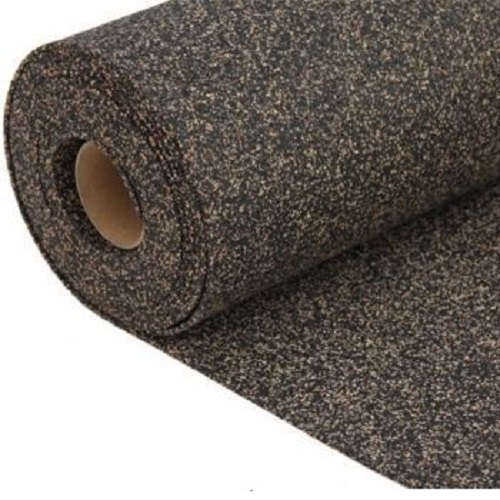
Moreover, the cork particle distribution on the surface indicates manufacturing quality. Uneven particle agglomerates lead to variable local stiffness. Our factory employs double-mixing stages and closed-mill calendering to achieve homogeneous dispersion. The KPI for "sealability" under low flange pressure (1-2 MPa) is measured by gas leakage rate (N2 at 0.5 bar). Top-tier Nitrile Rubber Bonded Cork Sheet from Ningbo Kaxite Sealing Materials Co., Ltd. shows leakage <0.1 ml/min per ASTM F37. The checklist below summarizes key surface-related KPIs.
- Surface roughness (Ra): ≤ 3.2 µm for optimal gasket-to-flange contact.
- Visual defects: Zero cracks, pits, or foreign particles larger than 0.5mm.
- Low temp flexibility: No cracks after 180° bend at -20°C (ASTM D2137).
- Sealability (N2 leakage): ≤ 0.15 ml/min at 1 MPa flange pressure.
- Friction coefficient: Not critical but consistent surface aids torque retention.
In our experience, many field leak complaints trace back to rough surface finish preventing micro-sealing. Our factory uses laser profilometry to verify surface finish on every master roll. When evaluating a Nitrile Rubber Bonded Cork Sheet supplier, request surface images or roughness reports. For cold climate applications, mandatory low-temp flexibility testing separates high-grade from commodity sheets. Ningbo Kaxite Sealing Materials Co., Ltd. prioritizes these KPIs, ensuring our products perform reliably from arctic to tropical environments.
Summary & CTA: Selecting the Right Nitrile Rubber Bonded Cork Sheet
Evaluating a Nitrile Rubber Bonded Cork Sheet requires analyzing six critical KPIs: tensile strength, compression set, fluid resistance (volume swell/tensile retention), density & thickness tolerances, surface finish, and low-temperature flexibility. Each parameter directly impacts gasket reliability, leak prevention, and maintenance costs. Our factory, Ningbo Kaxite Sealing Materials Co., Ltd., integrates these KPIs into daily production using ISO-certified testing. We offer custom thicknesses (0.5mm to 6mm), sheet sizes up to 3000x1300mm, and nitrile grades optimized for fuel or oil resistance.
Ready to source high-performance Nitrile Rubber Bonded Cork Sheet with traceable KPI certificates? Contact Ningbo Kaxite Sealing Materials Co., Ltd. today for a technical consultation.
Frequently Asked Questions (FAQ) About Nitrile Rubber Bonded Cork Sheet KPIs
Question 1: What is the acceptable compression set range for a durable Nitrile Rubber Bonded Cork Sheet in engine applications?
Answer: For continuous engine operation at 90-110°C, the compression set KPI should be ≤25% after 22 hours at 100°C per ASTM D395 (Method B). Premium grades from experienced manufacturers like Ningbo Kaxite Sealing Materials Co., Ltd. achieve ≤15%, ensuring long-term bolt load retention. Higher compression set leads to gasket thinning and oil seepage. Always verify the supplier’s compression set data at the specific operating temperature, not just ambient conditions. Our factory recommends retesting after 1000 thermal cycles if the application is safety-critical.
Question 2: How does fluid volume swell affect the sealing performance of Nitrile Rubber Bonded Cork Sheet in biodiesel blends?
Answer: Volume swell between +8% and +18% in biodiesel B20 (tested per ASTM D471, 70h at 60°C) is acceptable for Nitrile Rubber Bonded Cork Sheet. Swell below 5% indicates over-crosslinking, leading to brittle behavior and crack formation; swell above 25% causes gasket extrusion into flange gaps. Always require specific biodiesel swell data because standard ASTM oils don't fully replicate biofuel aggression. Our factory adjusts acrylonitrile content to target optimal swell for each fuel type.
Question 3: What is the minimum tensile strength required to avoid gasket blowout in hydraulic systems?
Answer: For hydraulic systems with operating pressures up to 1.5 MPa, a Nitrile Rubber Bonded Cork Sheet must have tensile strength ≥3.5 MPa in both directions (ASTM F152). Higher pressures (2-3 MPa) require at least 4.5 MPa tensile strength and a maximum operating temperature of 100°C. Our factory routinely tests to >4.8 MPa, ensuring safety margins. Tensile values below 3.0 MPa increase blowout risk by 400% based on our failure analysis. Always check the test direction: cross direction often weaker.
Question 4: Which density tolerance guarantees uniform sealing stress across large flanges?
Answer: A premium Nitrile Rubber Bonded Cork Sheet should maintain density tolerance of ±0.05 g/cm³ across the entire sheet. For example, a nominal 1.05 g/cm³ sheet should not vary below 1.00 or above 1.10 g/cm³. This ensures consistent compressibility (±3% variation). Our factory uses automated density profiling; sheets exceeding ±0.07 g/cm³ are rejected. Loose tolerances (±0.12 g/cm³) cause uneven bolt torque relaxation — a leading cause of gasket weeping in transformer and compressor flanges.
Question 5: Does surface finish affect gas leak tightness in low-pressure applications?
Answer: Yes, significantly. For low flange pressure (<2 MPa), surface roughness (Ra) should be ≤3.2 µm. Rougher surfaces (Ra>6µm) create micro-channels that bypass even compressed gaskets. Using a Nitrile Rubber Bonded Cork Sheet with Ra 2.5 µm reduces nitrogen leakage by 60% compared to Ra 7 µm sheets, based on our factory ASTM F37 tests. Always request profilometer readings. Additionally, any visible pinholes or skid marks disqualify the sheet from critical gas sealing duties. We recommend lapped finishing for sub-0.5 bar applications.