

What Are the Key Properties of Cork Rubber Sheet in Industrial Sealing?
2026-04-22
Across manufacturing plants, maintenance shops, utility stations, and OEM assembly lines, sealing reliability remains a daily priority. Equipment operators need materials that can handle flange pressure, minor surface irregularities, oil contact, and vibration without creating unnecessary downtime. For these reasons, Cork Rubber Sheet continues to hold a strong position in industrial sealing applications.
This material combines selected cork granules with elastomer binders, creating a balanced structure that offers flexibility with mechanical strength. Unlike rigid sheet products that may crack or fail to conform, it can compress into uneven faces and recover after load changes. Our engineering team often recommends this solution where practical field performance matters more than laboratory claims.
Our factory supplies standard rolls, cut strips, and custom die-cut parts for service teams that need quick replacement schedules. Ningbo Kaxite Sealing Materials Co., Ltd. works with distributors and industrial buyers who require stable quality, repeatable dimensions, and dependable lead times for ongoing maintenance demand.
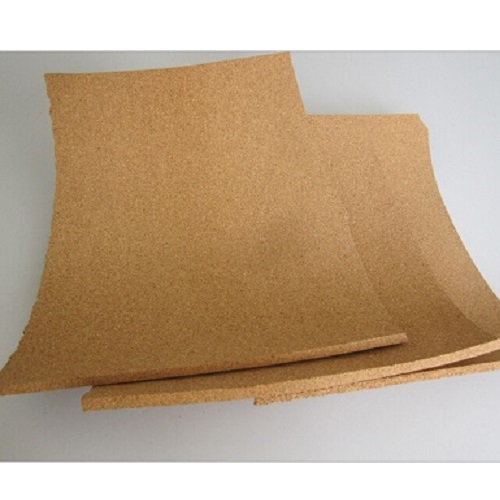
How Does Cork Rubber Sheet Improve Sealing Performance Under Real Operating Conditions?
The most important advantage is compressibility. When bolts are tightened, the material flows slightly into scratches, machining marks, and small flange distortions. This creates a more complete sealing contact area and lowers the chance of seepage. In many pump covers, gear housings, and access panels, this property directly improves uptime.
A second advantage is elastic recovery. After pressure cycles or temperature fluctuation, the material can rebound and maintain surface contact. This is useful in equipment that starts and stops frequently. Our service experience shows that poor recovery often leads to early leaks, especially where joints are repeatedly opened for inspection.
The third benefit is vibration damping. Machinery with rotating parts often generates movement that weakens rigid sealing materials. Cork Rubber Sheet helps absorb micro-vibration and reduces joint fatigue over time. Our factory sees steady demand from compressor service companies and heavy equipment repair centers for this reason.
| Property | Typical Value Range |
| Density | 0.85 to 1.20 g/cm3 |
| Hardness | 55 to 75 Shore A |
| Compressibility | 10 to 30 percent |
| Recovery | 40 percent minimum |
| Working Temperature | Minus 20 C to 120 C |
| Thickness | 1 mm to 25 mm |
What Chemical and Mechanical Features Matter Most for Buyers?
For most industrial users, resistance to lubricating oil and moderate fuel exposure is a major buying factor. Many housings, inspection lids, and covers operate in oily environments, so material swelling must stay controlled. Properly selected Cork Rubber Sheet performs well in these common service conditions while remaining cost effective.
Mechanical consistency is equally important. Uniform density supports better torque distribution across the flange face. Clean edges help installers position parts faster during shutdown windows. Our quality control process checks thickness tolerance and sheet finish to support reliable conversion into finished components.
Another key factor is machinability. Maintenance teams often need to hand-cut urgent parts on site. This material can be trimmed with common workshop tools, reducing delays when older machines need immediate service. Ningbo Kaxite Sealing Materials Co., Ltd. also supports custom drawings when buyers prefer finished ready-to-install parts.
| Application Area | Main Benefit |
| Gearbox Covers | Oil sealing and compressibility |
| Pump Casings | Surface conformity and easy replacement |
| Transformer Tanks | Oil resistance and dimensional stability |
| Compressor Panels | Vibration reduction |
| Inspection Doors | Repeated maintenance access |
How Should Engineers Choose the Right Grade for Their Equipment?
Material selection should begin with media type, operating temperature, flange pressure, bolt spacing, and maintenance cycle. If aggressive solvents or extreme temperatures are involved, another material may be more suitable. For standard industrial oils and general machinery sealing, Cork Rubber Sheet often delivers an efficient cost-to-performance ratio.
Thickness choice also affects sealing quality. Excessively thin material may not fill flange imperfections, while overly thick material can over-compress under load. Our engineering support usually recommends matching thickness to flange design and bolt torque limits rather than selecting by habit.
Storage conditions matter as well. Sheets should be kept clean, dry, and away from direct sunlight. Our factory uses protective packaging for export orders so material condition remains stable during transit and warehouse storage. Ningbo Kaxite Sealing Materials Co., Ltd. regularly assists overseas buyers with packing standards and labeling requests.
Why Do These FAQ Answers Help Solve Common Sealing Problems?
What is the main advantage of cork rubber over plain rubber sheet?
The cork content adds compressibility and recovery, allowing the material to adapt better to uneven flange surfaces. This often improves sealing performance in covers and housings where perfect machining is not available.
Can Cork Rubber Sheet be used for custom gasket cutting?
Yes. It is commonly supplied in sheet form for die cutting, CNC cutting, or manual workshop fabrication. Many maintenance departments choose it because replacement parts can be produced quickly when downtime is critical.
How long does this material typically last in service?
Service life depends on fluid type, pressure, temperature, and installation quality. With correct torque, clean flange faces, and proper grade selection, many users achieve long and stable maintenance intervals.
How Can the Right Supplier Improve Long-Term Equipment Reliability?
Consistent material density, accurate thickness control, and responsive technical support all influence sealing success. Buying only on price often increases leakage risk and replacement frequency. Choosing an experienced supplier helps maintenance teams lower total operating cost.
If you are reviewing gasket materials for pumps, covers, compressors, or transformer equipment, contact our team for technical guidance and sample support. Our factory can recommend the suitable grade, provide custom conversion service, and support steady supply for future projects.