

What Are the Latest Manufacturing Innovations in Cork Rubber Sheet Technology?
2026-03-10
Across North American and European industrial markets, sealing materials are expected to meet stricter performance standards in oil resistance, compressibility, and long-term sealing reliability. Manufacturers working in automotive assemblies, transformer production, marine systems, and heavy machinery increasingly require composite materials that combine flexibility with mechanical durability. This is where Cork Rubber Sheet continues to gain attention among engineers and procurement teams.
Recent advances in material formulation and automated pressing technology have significantly improved structural consistency and dimensional stability. At Ningbo Kaxite Sealing Materials Co., Ltd., our engineering team has invested heavily in refining granule distribution, rubber blending ratios, and precision curing cycles. These improvements allow our factory to deliver sealing sheets that perform reliably in applications involving vibration, pressure fluctuations, and temperature changes.
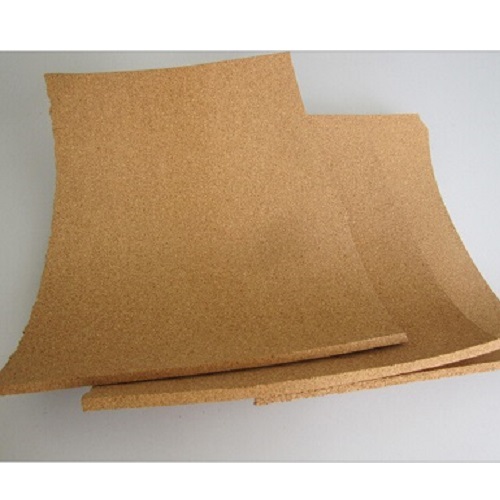
Compared with traditional gasket materials, Cork Rubber Sheet offers a balanced structure that combines cork elasticity with the resilience of nitrile rubber. The material adapts well to uneven flange surfaces and helps reduce leakage risks in pumps, gearboxes, compressors, and fuel systems. Our production team continues to optimize each step of manufacturing so our clients receive stable material performance across different thickness ranges and densities.
How Are Modern Manufacturing Processes Improving Material Stability and Performance?
Material innovation begins with precise raw material preparation. High quality cork granules are screened by particle size to ensure consistent structure within the sheet. Meanwhile, advanced rubber compounding technology allows our technicians to adjust elasticity, oil resistance, and tensile strength according to application requirements.
At Ningbo Kaxite Sealing Materials Co., Ltd., our factory uses temperature controlled hydraulic presses and automated mixing equipment to maintain uniform density during the vulcanization process. These production upgrades help our engineers reduce air pockets and internal stress that might otherwise shorten the lifespan of sealing materials. Our production specialists also monitor compression recovery performance to ensure the finished Cork Rubber Sheet maintains sealing force after repeated load cycles.
Another key innovation involves multi stage curing. Instead of relying on a single heat cycle, modern lines apply staged pressure and temperature adjustments. This process strengthens bonding between cork particles and rubber compounds, producing a structure that resists cracking and maintains flexibility over long operating periods.
What Technical Specifications Define High Performance Cork Rubber Materials?
Industrial buyers often evaluate sealing sheets based on compressibility, density, and resistance to oil or fuel exposure. Our engineering department focuses on providing stable performance parameters that meet international industrial sealing requirements.
| Material Composition | Cork granules combined with NBR rubber compound |
| Density Range | 0.85 to 1.10 g per cubic centimeter |
| Thickness Range | 1 mm to 50 mm |
| Operating Temperature | Minus 40 degrees Celsius to 120 degrees Celsius |
| Compressibility | 10 percent to 30 percent depending on grade |
| Recovery Rate | Minimum 70 percent after compression |
| Typical Sheet Size | 1000 by 1000 mm and 1500 by 1500 mm |
These specifications allow our clients to select material grades suitable for automotive sealing components, industrial machinery gaskets, and transformer insulation pads. Our technical staff frequently collaborates with equipment manufacturers to recommend the appropriate Cork Rubber Sheet configuration based on load pressure, oil exposure, and operating temperature conditions.
How Do Advanced Production Lines Ensure Consistent Quality for Industrial Buyers?
Consistency is one of the biggest challenges when producing composite sealing materials. Variations in cork particle distribution or rubber curing can lead to uneven compression characteristics. To address this challenge, our factory integrates automated weighing systems and digital process monitoring throughout the production line.
Kaxite Sealing has implemented modern inspection procedures that include density analysis, tensile strength verification, and oil immersion testing. These quality checks ensure that each Cork Rubber Sheet delivered to customers meets strict industrial performance standards.
Our manufacturing workflow also includes precision cutting and surface finishing processes. These steps improve dimensional accuracy and reduce installation adjustments during gasket fabrication. Our clients in the United States and Europe often require material consistency because automated gasket cutting machines depend on predictable sheet properties.
| Inspection Method | Purpose |
| Density Measurement | Ensures uniform cork distribution within sheets |
| Tensile Strength Testing | Evaluates structural integrity under mechanical load |
| Oil Resistance Test | Verifies durability in fuel and lubricant environments |
| Compression Recovery Test | Measures sealing resilience after repeated pressure cycles |
| Dimensional Accuracy Inspection | Ensures sheet thickness and flatness meet tolerance standards |
Our quality engineers analyze production data regularly to maintain long term consistency. These improvements allow our factory to support OEM gasket manufacturers who rely on dependable material batches.
Why Are Engineers Choosing Cork Rubber Solutions for Demanding Industrial Applications?
Industrial equipment increasingly operates under demanding conditions that involve vibration, fluid exposure, and temperature fluctuations. Engineers need sealing materials that can absorb mechanical stress while maintaining structural integrity. Cork Rubber Sheet performs well in these situations because cork cells provide natural compressibility while rubber compounds supply strength and resilience.
Our application specialists frequently see this material used in automotive oil pan gaskets, transformer mounting pads, pump housings, and marine engine assemblies. The flexibility of Cork Rubber Sheet also helps compensate for minor flange surface irregularities, improving sealing efficiency without excessive bolt torque.
At Ningbo Kaxite Sealing Materials Co., Ltd., our factory works closely with distributors and equipment manufacturers who require custom density grades or thickness specifications. Our production team continues to refine processing technology so our clients receive materials that support long service life and dependable sealing performance.
FAQ About What Are the Latest Manufacturing Innovations in Cork Rubber Sheet Technology?
Q1: What manufacturing improvements have had the greatest impact on Cork Rubber Sheet performance?
Recent improvements in automated mixing systems and multi stage curing processes have significantly enhanced material uniformity. By controlling temperature, pressure, and curing duration more precisely, manufacturers can improve bonding between cork granules and rubber compounds. This results in better compressibility stability, improved oil resistance, and longer service life in mechanical sealing applications.
Q2: How does advanced quality control influence industrial reliability of cork rubber materials?
Modern quality control methods use density testing, tensile strength analysis, and oil immersion evaluation to verify material durability. These inspection procedures ensure that each production batch maintains consistent mechanical properties. For industrial equipment manufacturers, this consistency reduces the risk of gasket failure and improves overall equipment reliability during long operating cycles.
Q3: Which industries benefit most from modern cork rubber sheet technology?
Automotive manufacturing, transformer production, heavy machinery assembly, and marine engineering all benefit from improved cork rubber materials. These industries require sealing materials that tolerate vibration, fluid exposure, and moderate heat. Advances in manufacturing technology allow suppliers to provide sheets with stable density and compressibility, making them suitable for demanding industrial sealing environments.
Manufacturing innovation continues to reshape the global sealing materials market. Improved compounding technology, automated production lines, and rigorous quality testing have transformed how industrial sealing sheets are produced and applied. At Kaxite Sealing, our factory remains committed to refining material formulations and production processes so our partners receive dependable sealing solutions for modern equipment systems. If you are searching for reliable industrial sealing materials or customized Cork Rubber Sheet specifications, our technical team is ready to assist. Contact our specialists today to discuss your application requirements and request detailed product information.