

What Are the Most Common Applications for Solid Copper Gaskets in Industrial Equipment?
2026-06-11
1. Why Do High Pressure Hydraulic Systems Rely on Our Copper Gaskets?
In our factory, we have supplied solid copper gaskets to hydraulic repair shops across the Midwest and Texas oilfields for more than a decade. The main reason is that annealed Copper Gaskets compress evenly under bolt torque, creating a metal to metal seal that resists pressures up to 5000 psi. Unlike rubber or fiber gaskets, copper does not extrude or cold flow at high pressure. Many local equipment rebuilders use our Copper Gaskets on hydraulic pump flanges and valve stack interfaces. For example, a Caterpillar D8 hydraulic control valve uses a custom OD 78mm copper ring. Our Ningbo Kaxite Sealing Materials Co., Ltd. produces these with a precise hardness of 40 to 65 HB after annealing. Another common application is in high pressure fuel injection lines on diesel engines. The copper seals on injector nozzles see cyclic pressure spikes from 300 to 2500 bar. Our factory tests every batch with a helium leak detector. Without a proper Copper Gaskets, hydraulic leaks cause downtime and environmental fines. So for any heavy equipment workshop, copper remains the standard.
2. Where Are Copper Gaskets Used in Petrochemical Refinery Flanges?
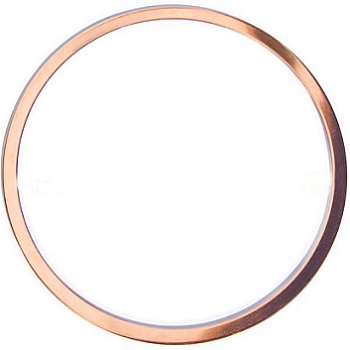
Refinery maintenance crews often ask us why we recommend Copper Gaskets for steam and hydrocarbon service. The answer is thermal stability. In a catalytic cracker or heat exchanger, flange temperatures swing from ambient to 450°C within minutes. Solid copper handles this without relaxation because its coefficient of thermal expansion matches carbon steel flanges. Our Ningbo Kaxite Sealing Materials Co., Ltd. provides Copper Gaskets in sizes up to DN600 for Class 150 to Class 900 flanges. One real world application is on API 6A gate valve bonnets. The copper gasket sits between the body and bonnet, enduring sour gas and H2S. We also see them on steam turbine casing joints where graphite gaskets would oxidize. Our factory uses full hard temper copper for high creep resistance, then we fully anneal before shipment. Many local fabricators in Alberta oil sands prefer copper over spiral wound because copper reuses after retorquing. Another critical spot is on pressure transmitter impulse lines. The small Copper Gaskets seal against 3000 psi natural gas. Without them, fugitive emissions rise. For petrochemical plants, the self lubricating property of copper prevents galling on stainless steel flanges.
3. Which Industrial Applications Benefit From Copper Gaskets in Extreme Temperatures?
When equipment goes from cryogenic cold to furnace hot, our Copper Gaskets excel. Our factory produces them for LNG liquefaction plants where temperatures reach minus 162°C. Copper remains ductile at that extreme, while many elastomers shatter. Another high temp example is in diesel particulate filter (DPF) connections on heavy trucks. The Copper Gaskets withstand exhaust gas temperatures of 650°C without burning out. We have supplied replacements for Volvo and Scania exhaust manifolds. Also, in glass manufacturing furnaces, the cooling water joints use solid copper seals because they resist oxidation scaling. Our Ningbo Kaxite Sealing Materials Co., Ltd. tracks one glass plant that has used the same Copper Gaskets for eight years on their tin bath cooling loops. In aerospace ground support equipment, liquid oxygen transfer lines require non reactive seals. Copper is inherently compatible with LOX. Another growing application is in battery manufacturing vacuum furnaces. Copper Gaskets seal the vacuum chamber doors under 10^-6 torr. Our factory performs helium mass spectrometry on every gasket for that industry. The table below lists standard parameters for these extreme cases.
| Application Area | Typical Pressure (psi) | Temperature Range (°C) | Copper Gasket Hardness |
| Hydraulic pump flanges | 3000 - 5000 psi | -30 to 150 | Annealed 45 HB |
| Petrochemical heat exchanger | 1500 psi | Up to 450 | Half hard 70 HB |
| LNG cryogenic lines | 800 psi | -162 to 80 | Annealed 40 HB |
| Diesel exhaust manifold | Atmospheric+spikes | 650 peak | Full hard 90 HB |
| Vacuum furnace doors | 10^-6 torr external | Ambient to 400 | Annealed 50 HB |
Additionally, our Copper Gaskets are used in marine diesel cylinder heads. The sealing rings around the liner fire ring face extreme combustion pressure. Our factory anneals each piece in a controlled atmosphere furnace to avoid surface oxidation. For industrial equipment, the versatility of copper across temperature extremes is unmatched.
4. How Do Copper Gaskets Improve Sealing on Pneumatic Clutch and Brake Systems?
On heavy duty pneumatic clutches and brake actuators, compressed air leaks waste energy. Our Copper Gaskets seal the port connections on brake chambers and quick release valves. A typical application is on a Wabco air dryer purge valve. The copper ring seal handles repeated pressurization from 0 to 150 psi every cycle. Unlike paper gaskets that dry out and crack, Copper Gaskets maintain torque retention. Our factory has seen mining haul trucks with original copper seals still leak free after 20,000 hours. Another spot is on rotary screw air compressor discharge flanges. The copper gasket withstands hot oil mist and vibration. Local fleet maintenance shops in Queensland use our Copper Gaskets on trailer air beam connections. The anti galvanic property of copper also prevents thread seizing when used on aluminum air tanks. Our Ningbo Kaxite Sealing Materials Co., Ltd. recommends a light coating of anti seize on the outer diameter for easier disassembly. In railway air brake systems, the copper gaskets on angle cocks provide reliability in dusty environments. We produce them to AAR specification M-903. For any pneumatic circuit that experiences thermal cycling, copper outperforms elastomer seals.
Frequently Asked Questions About Solid Copper Gaskets in Industrial Equipment
Answer: Yes, but with important conditions. Our factory has tested reuse of Copper Gaskets on compressor cylinder heads and hydraulic valve stacks. A solid copper gasket can be reused once if the original compression was not excessive (less than 30 percent thickness reduction). The procedure: after removal, visually inspect for deep scratches, extrusion gaps, or heavy pitting. If the surface is clean, you must re anneal the copper gasket by heating it to 550°C to 650°C (red dull glow) and quenching in water. This restores softness to 40-55 HB. Without annealing, the gasket will be work hardened and may leak. In our experience, flanged joints with low bolt torque (Class 150) allow up to two reuses. But for high pressure steam above 600 psi, we recommend always using a new Copper Gaskets. Many power plants keep annealed spares ready. Also, never reuse a copper gasket that was installed with sealants or PTFE tape, because residues prevent proper seating. Our Ningbo Kaxite Sealing Materials Co., Ltd. offers economical multi packs for critical services, making reuse unnecessary for safety loops.
Answer: In our factory failure analysis lab, we see three common failure modes on reciprocating compressor Copper Gaskets. First is fatigue cracking from pulsation. The gasket on the discharge valve cover sees pressure pulses from 50 to 800 psi several hundred times per minute. Over time, the copper work hardens and cracks at the inner edge. Solution: use half hard copper instead of fully annealed to increase fatigue resistance. Second failure is galvanic corrosion when installed between cast iron and stainless steel flanges in wet CO2 service. The copper becomes the cathode, leading to pitting. We mitigate by applying a thin layer of Teflon coating. Third is creep relaxation when bolts stretch. If the joint designer uses low grade bolts, the copper gasket loses compressive stress. Always use high strength studs and retorque after first heat cycle. Another real world example: in ammonia refrigeration compressors, copper reacts with sulfur based oils. Our factory produces a special aluminum bronze gasket for that case. But for standard air or hydrocarbon compressors, proper torque and retorque prevent 90 percent of failures. Always follow the equipment manual for flange roughness: copper needs at least 63 microinch Ra finish.
Final Summary
Solid copper gaskets serve critical roles in hydraulic systems, petrochemical refineries, extreme temperature equipment, and pneumatic brakes. Our factory has proven that proper material selection, annealing, and surface finish directly extend service intervals. The most common applications all rely on copper’s ability to maintain sealability under thermal cycling and pressure spikes. Our Copper Gaskets meet ISO 9001 and ASTM F68 standards. Ningbo Kaxite Sealing Materials Co., Ltd. keeps a large inventory of standard sizes from 6mm to 1200mm OD for immediate shipment.