

What Changes Are Transforming Electric Motors Production in 2026?
2026-04-10
The manufacturing landscape is undergoing a structural shift as automation becomes deeply integrated into production lines. In 2026, factories are no longer relying on semi-manual assembly processes. Instead, advanced robotics, AI-assisted inspection systems, and real-time monitoring platforms are setting new benchmarks for consistency and output. These changes are especially critical for high-performance Motor manufacturing, where precision tolerances directly impact efficiency and lifecycle.
At Saifu Vietnam Company Limited, our factory has adopted intelligent assembly workflows that reduce human error and improve repeatability. By integrating servo-driven winding systems and automated rotor balancing, our production lines deliver stable performance across large volumes. Our engineering team continues to refine these systems to ensure our products meet evolving industrial standards.
Another major shift is predictive maintenance. Sensors embedded across our factory equipment allow our team to identify wear patterns before breakdowns occur. This reduces downtime and ensures that every Motor leaving our line maintains consistent quality. For global buyers, this translates into shorter lead times and reliable delivery schedules.
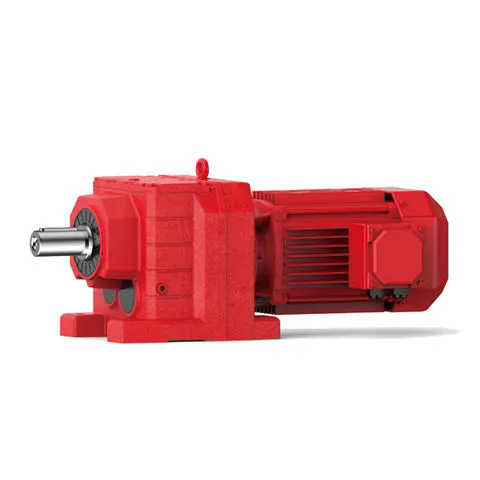
What Material Innovations Are Improving Performance and Durability?
Material science is playing a central role in transforming electric motors production. Manufacturers are moving toward higher-grade silicon steel, improved copper winding materials, and advanced insulation systems to enhance thermal resistance and energy efficiency. These upgrades are particularly important in applications such as HVAC systems, industrial automation, and electric mobility.
Our factory focuses on sourcing premium raw materials that meet international certifications. At Saifu Vietnam Company Limited, our engineering team evaluates each component for conductivity, heat resistance, and mechanical strength. This ensures that every Motor performs reliably even under continuous load conditions.
| Component | Material Upgrade | Performance Benefit |
| Stator Core | High-grade silicon steel | Reduced energy loss |
| Windings | Oxygen-free copper | Improved conductivity |
| Insulation | Class F / H insulation | Higher temperature resistance |
| Housing | Aluminum alloy | Better heat dissipation |
These material enhancements are not just incremental improvements. They directly affect lifecycle costs, maintenance intervals, and operational safety. Our team prioritizes these upgrades to ensure long-term value for industrial buyers.
Why Is Energy Efficiency Becoming a Core Production Standard?
Energy efficiency is no longer optional. Regulatory frameworks across North America, Europe, and Asia are pushing manufacturers to meet stricter efficiency classes such as IE3 and IE4. This shift is forcing factories to redesign production processes, focusing on reducing energy loss at every stage.
Our factory aligns with these global standards by optimizing electromagnetic design and improving rotor dynamics. At Saifu Vietnam Company Limited, our approach combines simulation tools with real-world testing to ensure compliance and performance consistency. This allows our products to meet the expectations of energy-conscious markets.
Efficiency improvements also impact total cost of ownership. Buyers are increasingly evaluating Motor solutions based on long-term energy savings rather than initial purchase price. Our engineering team supports this shift by offering solutions that balance efficiency, durability, and cost-effectiveness.
How Are Customization and Application-Specific Designs Evolving?
In 2026, standardization is giving way to customization. Industrial buyers are seeking solutions tailored to specific applications such as pumps, compressors, conveyors, and agricultural equipment. This trend is driving manufacturers to adopt flexible production systems capable of handling diverse specifications.
Our factory has developed modular production capabilities that allow our team to adjust shaft dimensions, mounting configurations, and voltage requirements efficiently. This flexibility ensures that each Motor aligns with the operational needs of different industries.
| Specification | Options Available | Application Use |
| Voltage | 110V / 220V / 380V | Industrial and commercial systems |
| Speed | 750 RPM – 3000 RPM | Variable load equipment |
| Protection Level | IP44 / IP55 / IP65 | Indoor and outdoor environments |
| Cooling Method | IC411 / IC416 | Continuous operation systems |
At Saifu, our engineering process starts with understanding application requirements. Our team collaborates closely with buyers to ensure that our solutions match real-world conditions. This approach improves performance while reducing installation challenges.
What Role Does Quality Control Play in Modern Production?
Quality control has evolved from basic inspection to a fully integrated system. In 2026, manufacturers rely on digital tracking, automated testing, and data-driven analysis to maintain consistency. Every stage of production is monitored to ensure compliance with international standards.
Our factory uses multi-stage testing protocols, including insulation resistance testing, vibration analysis, and load testing. These procedures ensure that every Motor meets strict performance criteria before shipment. Our quality team continuously reviews production data to identify improvement opportunities.
Traceability is another critical factor. Each unit produced in our factory is assigned a unique identification code, allowing our team to track its entire production history. This transparency builds trust with buyers and supports long-term partnerships.
FAQ
What are the most important trends in electric motors production in 2026?
The most important trends include automation, energy efficiency improvements, advanced materials, and increased customization. Manufacturers are focusing on reducing energy consumption, improving durability, and adapting to application-specific requirements. These changes are driven by both regulatory pressure and market demand for higher performance solutions.
How does automation improve electric motors manufacturing quality?
Automation reduces human error and ensures consistent production standards. By using robotic systems and real-time monitoring, manufacturers can maintain precise tolerances and detect defects early. This leads to improved reliability, lower failure rates, and more predictable performance in industrial applications.
Why is energy efficiency critical when selecting electric motors?
Energy efficiency directly impacts operating costs and environmental compliance. High-efficiency motors consume less electricity, generate less heat, and require less maintenance. Over time, this results in significant cost savings and improved sustainability, especially in large-scale industrial operations.
Conclusion
The transformation of electric motors production in 2026 is driven by automation, material innovation, energy efficiency standards, and customization capabilities. These changes are reshaping how manufacturers design and deliver solutions to global markets. Our factory continues to adapt to these trends by investing in advanced technologies and refining our production processes. Saifu Vietnam Company Limited remains committed to delivering reliable and efficient solutions that meet evolving industrial demands. If you are looking for a trusted partner to support your business, our team is ready to provide tailored solutions and professional support. Contact us today to explore how we can meet your requirements.