

What Factors Affect Heat Dissipation in Worm Gearbox Systems?
2025-12-29
Heat dissipation is one of the most critical performance indicators in worm-driven transmission systems. Excessive temperature rise not only reduces mechanical efficiency but also accelerates wear, lubricant degradation, and seal failure. In our factory, thermal performance is treated as a core design parameter rather than an afterthought. Through long-term field feedback and testing, Raydafon Technology Group Co.,Limited has observed that heat buildup is rarely caused by a single factor. Instead, it is the result of multiple interacting design, material, and operating conditions within each worm gearbox.
How Does Gear Geometry Influence Heat Generation and Release?
The basic geometry of a worm and worm wheel creates sliding contact rather than rolling contact. This inherent sliding action is the primary source of heat generation. When the lead angle of the worm is too small, friction increases significantly, causing rapid temperature rise under load. In our factory, engineers carefully balance lead angle, tooth profile, and surface finish to minimize unnecessary friction while maintaining torque capacity.
Raydafon Technology Group Co.,Limited designs each transmission stage with calculated contact ratios to ensure stable meshing. Poorly optimized geometry can trap heat inside the housing, especially in compact Worm Gearbox designs used in conveyors or lifting equipment. Our experience shows that precise tooth engagement directly affects how efficiently heat can be dissipated through the gear surfaces and into the housing.
What Role Does Housing Design Play in Thermal Dissipation?
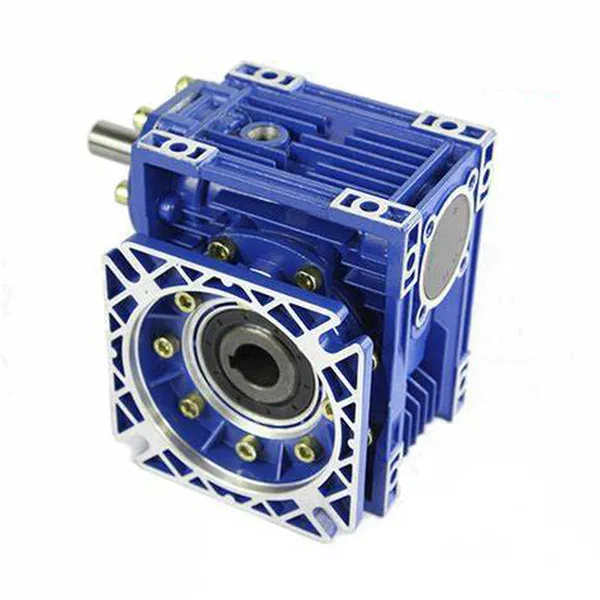
The gearbox housing is the main path through which internal heat escapes into the surrounding environment. Housing material, wall thickness, and external surface area all affect thermal performance. Aluminum housings dissipate heat faster due to higher thermal conductivity, while cast iron housings retain heat longer but offer better vibration damping. In our factory, housing selection is always aligned with application duty cycles.
Raydafon Technology Group Co.,Limited incorporates ribbed housing designs to increase surface area without compromising structural strength. This approach improves natural convection and helps stabilize operating temperature in continuous-duty Worm Gearbox installations. Poor housing ventilation or undersized enclosures often lead to heat accumulation that shortens service life.
How Do Lubrication Type and Oil Quality Affect Temperature Control?
Lubrication plays a dual role by reducing friction and carrying heat away from contact zones. The viscosity grade, additive package, and oil fill volume all influence how effectively heat is managed. Our factory specifies lubricant types based on load, speed, and ambient conditions. Using oil that is too viscous can increase churning losses, while oil that is too thin may fail to maintain a protective film.
The table below outlines typical lubricant parameters and their thermal impact in industrial transmission systems.
| Lubricant Property | Recommended Range | Thermal Impact | Application Notes |
| Viscosity Grade | ISO VG 220 to 460 | Controls friction heat | Selected based on speed and load |
| Additive Type | EP or synthetic | Improves heat resistance | Suitable for high sliding contact |
| Oil Fill Level | Standard immersion depth | Affects heat transfer | Overfilling increases churning loss |
Why Do Load Conditions and Duty Cycles Matter?
Thermal behavior is highly sensitive to actual operating load. A gearbox running near its rated torque for extended periods will naturally generate more heat than one operating intermittently. In our factory, thermal simulations are performed using realistic duty cycles rather than theoretical peak values. This ensures that each worm gearbox remains within acceptable temperature limits during normal operation.
Raydafon Technology Group Co.,Limited often advises customers to consider service factors carefully. Continuous operation, frequent starts, or shock loading can dramatically increase internal temperature. Proper sizing and realistic load assessment are essential to prevent overheating and premature component failure.
How Does Installation Environment Affect Heat Dissipation?
The surrounding environment significantly influences how efficiently heat is released. Ambient temperature, airflow, and installation orientation all play a role. Gearboxes installed in enclosed spaces or near heat sources may experience reduced cooling capacity. Our factory recommends adequate spacing and ventilation around the unit to promote natural air circulation.
In some cases, external cooling solutions such as forced airflow or heat sinks are considered. Raydafon Technology Group Co.,Limited evaluates these options when standard housing dissipation is insufficient for high-load Worm Gearbox applications used in heavy industrial settings.
What Is the Impact of Surface Finish and Manufacturing Accuracy?
Surface roughness directly affects friction levels at the contact interface. Poorly finished worm threads or wheel teeth increase micro-friction, generating excess heat. Our factory applies controlled finishing processes to achieve smooth contact surfaces that reduce sliding resistance. Manufacturing accuracy also ensures even load distribution across the tooth face.
Raydafon maintains strict quality control during machining and assembly. Consistent tolerances help minimize localized hotspots that often develop when contact pressure is uneven. This attention to detail supports stable thermal performance throughout the service life.
How Do Power Losses Translate Into Heat Within the System?
All mechanical losses eventually convert into heat. In worm-driven systems, efficiency losses are higher than in other gear types due to sliding motion. Understanding where these losses occur helps engineers improve thermal management. Our factory tracks efficiency data during testing to identify areas where design optimization can reduce heat buildup.
The following table summarizes typical sources of power loss and their thermal implications.
| Loss Source | Description | Heat Contribution | Mitigation Approach |
| Sliding friction | Contact between worm and wheel | High | Optimized geometry and lubrication |
| Bearing losses | Rotational resistance | Moderate | High-quality bearing selection |
| Oil churning | Lubricant agitation | Low to moderate | Correct oil level control |
What Factors Affect Heat Dissipation in Worm Gearbox Systems? FAQ
Q1: How can overheating be detected during operation?
Overheating is often indicated by abnormal housing temperature, lubricant discoloration, or unusual noise. Monitoring surface temperature and oil condition provides early warning before damage occurs.
Q2: Does higher efficiency always mean better heat dissipation?
Higher efficiency reduces heat generation, but dissipation also depends on housing design and environment. Both generation and release of heat must be considered together.
Q3: When is external cooling necessary?
External cooling is typically required when ambient temperature is high, load is continuous, or space limits natural airflow. It helps maintain stable operating temperatures under demanding conditions.
Conclusion
Effective heat dissipation depends on gear geometry, housing design, lubrication quality, load conditions, installation environment, and manufacturing precision. Each of these factors interacts to determine long-term reliability and efficiency. Our team applies practical engineering principles to ensure every Worm Gearbox operates within safe thermal limits. Raydafon Technology Group Co.,Limited supports customers with technical guidance and application-specific solutions. If you are evaluating thermal performance or planning a new installation, contact our technical team to discuss how we can help optimize your transmission system.