

What Factors Affect the Performance of a Hydraulic Motor?
2025-12-16
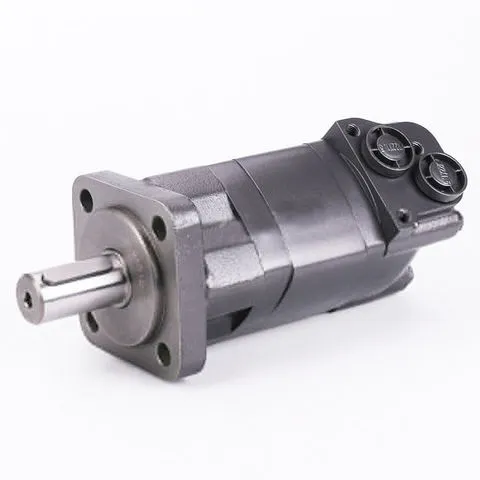
The performance of a hydraulic drive unit is not determined by a single parameter. In real industrial applications, output torque, speed stability, efficiency, and service life are all influenced by multiple mechanical and hydraulic conditions working together. From field experience inside our factory, performance issues usually appear when operating parameters, installation conditions, or component selection are not fully aligned with system demands. This is why engineers evaluating a hydraulic motor must consider the complete operating environment rather than focusing on nameplate values alone.
How does system pressure influence motor output and stability?
System pressure is one of the most critical factors affecting torque output and load response. When pressure is insufficient, the Motor cannot deliver rated torque, resulting in slow response and reduced work capacity. Excessive pressure, on the other hand, accelerates internal wear and raises oil temperature. In our factory, pressure matching is treated as a primary design step, especially for continuous duty equipment such as construction machinery and industrial conveyors.
Saifu Vietnam Company Limited supports customers by verifying working pressure ranges against seal design, housing strength, and internal leakage control. A properly matched pressure profile ensures consistent performance and protects internal components over long operating cycles.
Why does flow rate directly affect speed and efficiency?
Flow rate determines rotational speed. When flow fluctuates, speed instability becomes unavoidable. Many users notice vibration or uneven motion when flow supply does not match the motor displacement. From our experience, flow control problems often originate upstream, such as undersized pumps or unstable valves, rather than from the Hydraulic Motor itself.
In our factory testing process, flow characteristics are verified under both steady and variable load conditions. This approach helps ensure predictable speed behavior in real installations, particularly in mobile hydraulic systems where load changes frequently.
How do displacement and internal design impact torque performance?
Displacement volume defines how much fluid is required per rotation and directly influences torque output. Larger displacement units generate higher torque at lower speeds, while smaller displacement designs favor higher speed operation. Selecting the wrong displacement often leads to inefficient energy usage and excessive heat generation.
The internal structure, including gear geometry or piston arrangement, also plays a major role. Saifu Vietnam Company Limited focuses on optimized internal flow paths to reduce pressure loss and improve volumetric efficiency. Our engineering team regularly adjusts internal tolerances based on operating duty cycles to balance efficiency and durability.
The table below outlines typical displacement ranges and their common applications.
| Displacement Range | Typical Speed Range | Torque Output | Common Application |
| Low displacement | High speed | Lower torque | Light industrial automation |
| Medium displacement | Moderate speed | Balanced torque | Material handling systems |
| High displacement | Low speed | High torque | Construction and mining equipment |
What role does oil quality play in long term performance?
Hydraulic oil is both an energy transfer medium and a lubricating agent. Contamination, viscosity breakdown, or moisture ingress can significantly reduce efficiency and accelerate internal wear. In our factory, oil compatibility is always reviewed alongside seal material and bearing design to ensure stable operation across temperature ranges.
Users operating a Hydraulic Motor in dusty or high humidity environments should prioritize filtration and routine oil analysis. Our field data shows that oil cleanliness has a direct correlation with service life and consistent output.
How does mechanical load affect efficiency and service life?
Mechanical load determines how hard the Motor must work to maintain speed and torque. Frequent overload conditions cause excessive internal stress and raise operating temperatures. Underloading, while less damaging, often results in inefficient energy usage and unstable control behavior.
Saifu Vietnam Company Limited advises matching load profiles with rated operating curves rather than peak values. Our factory testing includes simulated overload cycles to evaluate how components respond under real working stress.
Why is installation and alignment often overlooked?
Improper installation remains one of the most common causes of premature failure. Misalignment between shafts, incorrect mounting orientation, or insufficient structural support can introduce side loads that damage bearings and seals. Even a high quality Hydraulic Motor will underperform if installation guidelines are ignored.
Our technical team frequently assists customers during commissioning to confirm alignment, mounting rigidity, and coupling selection. These steps significantly reduce vibration and noise while improving operational stability.
What factors affect the performance of a hydraulic motor? FAQ
Q1: How does internal leakage influence output efficiency?
Internal leakage reduces the effective flow available for torque generation. As leakage increases, efficiency drops and heat generation rises. Maintaining proper clearances and oil quality helps control leakage levels.
Q2: Can improper system design reduce motor lifespan?
Yes. Poorly sized pumps, unstable valves, or incorrect pressure settings can force the unit to operate outside its optimal range. This accelerates wear and shortens service life even if the component itself is well manufactured.
Q3: Why is regular monitoring important for stable operation?
Monitoring pressure, temperature, and noise trends helps identify early signs of wear or misalignment. Addressing small deviations early prevents costly downtime and extends overall system reliability.
Conclusion
The performance of a hydraulic drive unit is shaped by pressure, flow, displacement, oil condition, load characteristics, installation quality, and temperature control. When these factors are properly aligned, system efficiency improves and maintenance costs decrease. Our team at Saifu Vietnam Company Limited works closely with industrial users to optimize these parameters through careful design and testing. If you are evaluating a new Motor solution or seeking to improve existing system performance, contact our technical specialists today to receive professional support and customized recommendations.