
What Is the Difference Between Tie-Rod and Welded Hydraulic Cylinders?
2026-07-07
1. How Does the Construction Design Differ Between the Two Cylinder Types?
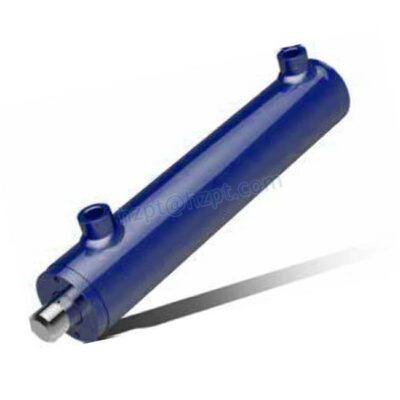
In our factory, we manufacture both styles, so we know the structural nuances inside out. A tie-rod Hydraulic Cylinder uses external threaded rods that run from the head cap to the base cap, secured by nuts. This creates a clamping force that holds the assembly together. A welded Hydraulic Cylinder has its barrel permanently welded to the end caps, with no external fasteners. The tie-rod design allows you to disassemble the entire unit by simply unbolting the nuts. Our Raydafon Technology Group Co.,Limited produces tie-rod cylinders with four or eight rods, depending on pressure ratings. The welded design is a single piece barrel with end caps welded directly, making it more compact but non serviceable in the field. For a typical industrial press, tie-rod cylinders are common because they can be rebuilt. For mobile equipment like excavator boom cylinders, welded is the standard because it withstands shock loads better. When you look at a tie-rod Hydraulic Cylinder, you see the rods running along the outside. With a welded cylinder, the exterior is smooth except for the ports and mounting brackets. This fundamental construction difference drives all other performance and maintenance characteristics.
2. Which Cylinder Type Handles Higher Pressure and Shock Loads?
Pressure rating is a decisive factor. Our factory tests show that a welded Hydraulic Cylinder can handle continuous pressures up to 5,000 psi and intermittent spikes up to 7,500 psi, because the welded barrel has no potential leak paths through threads. The tie-rod Hydraulic Cylinder is generally rated up to 3,000 psi, though heavy duty versions can reach 4,000 psi. The limitation comes from the rod tension and nut fatigue under extreme cycling. For forestry equipment and mining shovels, welded cylinders are preferred because shock loads are absorbed by the solid barrel structure. Tie-rod cylinders are sensitive to side loading; if you apply a bending moment, the rods can stretch unevenly, causing seal failure. Our Raydafon Technology Group Co.,Limited offers a reinforced tie-rod design with larger diameter rods for high pressure applications, but we always recommend welded for continuous heavy duty. In a recent project for a steel mill, we supplied welded Hydraulic Cylinder units that operated at 4,800 psi for two years without any leakage. The tie-rod equivalents on the same line needed retorquing every three months. So if your application involves high cyclic pressure or severe vibrations, welded is the safer choice.
3. What Are the Maintenance and Repair Differences Between Tie-Rod and Welded Cylinders?
Repairability is where the tie-rod Hydraulic Cylinder shines. You can replace seals, pistons, or even the rod without cutting or welding. Our factory ships seal kits that allow a technician to overhaul a tie-rod cylinder in under two hours. The welded Hydraulic Cylinder requires cutting the weld, re machining the barrel, and re welding after repair. This is a shop job, not a field repair. Many local equipment owners choose tie-rod for their production machinery because downtime is minimized. For example, a tie-rod cylinder on a plastic injection molding machine can be rebuilt during a shift change. A welded cylinder on the same machine would require removing the whole unit and sending it to our factory or a specialized repair center. Our Raydafon provides a complete rebuild service for both types, but we note that the cost of repairing a welded Hydraulic Cylinder is typically 60 to 80 percent higher than a tie-rod of the same size. The table below summarizes the key differences in maintenance aspects.
| Maintenance factor | Tie-rod Hydraulic Cylinder | Welded Hydraulic Cylinder |
| Field repairability | Yes – can be disassembled with hand tools | No – requires cutting and welding equipment |
| Seal replacement time | 1.5 to 2.5 hours | 6 to 10 hours (including dismount and remount) |
| Cost of typical overhaul | Low – parts only, labor minimal | High – cutting, welding, machining required |
| Special tools needed | Wrenches and torque wrench | Welding machine, lathe, and alignment jig |
| Common failure points | Rod nuts loosening, thread wear | Weld cracks at end cap junction |
For customers with limited maintenance staff, the tie-rod Hydraulic Cylinder is often the practical choice. We have many clients who stock seal kits and perform all repairs in house. Welded cylinders, while more robust, require a partnership with a capable repair shop. Our factory supports both, but we always advise customers to consider their own maintenance capabilities when choosing.
4. How Do Dimensions and Mounting Options Compare Between the Two Designs?
Space constraints often dictate the selection. A welded Hydraulic Cylinder has a smaller outside diameter for a given bore size because there are no external rods. This allows tighter mounting in compact machinery. The tie-rod Hydraulic Cylinder requires additional clearance for the rods and nuts, so it is bulkier. For example, a 4 inch bore tie-rod cylinder with four rods has an overall width about 2 inches larger than its welded counterpart. Mounting styles also differ: tie-rod cylinders typically use flange or foot mounts that bolt to the end caps. Welded cylinders often have integral clevis or trunnion mounts that are welded directly to the barrel. Our Raydafon Technology Group Co.,Limited can customize both types, but we find that welded cylinders are more flexible for custom mounting because we can attach brackets anywhere along the barrel. The table below shows typical dimension comparisons for a standard 5 inch bore, 30 inch stroke cylinder.
| Dimension / feature | Tie-rod Hydraulic Cylinder | Welded Hydraulic Cylinder |
| Overall diameter (approx.) | 8.5 inches (with rods) | 6.5 inches (barrel only) |
| Retracted length | 42 inches | 38 inches |
| Weight (approx.) | 185 lbs | 165 lbs |
| Mounting options | Foot, flange, trunnion (via adapter) | Clevis, trunnion, flange (integral) |
| Standard SAE ports | Yes – SAE 8 or 12 | Yes – SAE 8 or 12 |
For new machine designs, engineers often prefer welded cylinders because they save space and weight. For retrofitting existing equipment, tie-rod cylinders are easier to match because of standardized NFPA dimensions. Our factory maintains a large inventory of both types, and we always provide detailed CAD models for integration planning.
Frequently Asked Questions About Tie-Rod vs Welded Hydraulic Cylinders
Final Summary
Choosing between tie-rod and welded Hydraulic Cylinders depends on your pressure requirements, maintenance philosophy, space constraints, and total cost objectives. Tie-rod cylinders offer unmatched repairability and lower long term maintenance costs, while welded cylinders provide higher pressure capacity and compactness. Our factory produces both types to the highest standards, and we have helped thousands of customers select the right design for their application. Our Raydafon Technology Group Co.,Limited stands behind every cylinder with full technical support and a comprehensive warranty.