

What Maintenance Practices Help Extend the Lifespan of a Planetary Gearbox?
2025-12-17
Maintenance is not simply a routine task but a core part of ensuring long term reliability in precision transmission systems. In industrial automation, robotics, packaging lines, and servo driven equipment, gearbox durability directly affects uptime and operating cost. From our experience working with OEMs and system integrators, consistent maintenance practices can significantly extend the service life of a planetary gearbox while maintaining torque accuracy and efficiency. In our factory, we focus on both design optimization and real world maintenance guidance to help customers achieve stable performance under continuous operation.
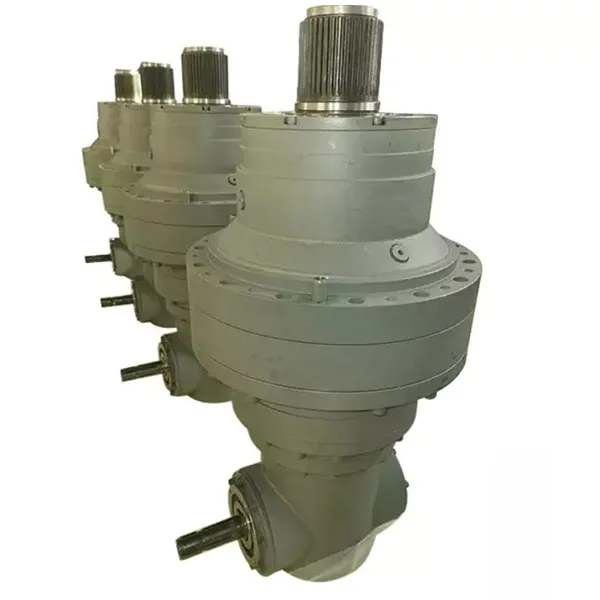
Why Is Proper Lubrication the Foundation of Gearbox Longevity?
Lubrication plays a critical role in reducing friction, controlling heat, and preventing premature wear of internal gear sets. Insufficient or degraded lubricant is one of the most common causes of early gearbox failure. Our engineering team recommends selecting lubricants based on load conditions, ambient temperature, and duty cycle rather than relying on generic oil specifications. At Raydafon Technology Group Co., Limited, our design approach considers oil flow paths and sealing performance to support consistent lubrication over extended operating hours.
From our field data, we have seen that correct lubrication intervals help stabilize backlash and reduce vibration. In our factory testing environment, we validate lubricant compatibility with internal components to ensure long term chemical stability. This approach allows our customers to operate demanding applications with confidence while protecting their planetary gearbox investment.
How Does Load Management Prevent Internal Gear Fatigue?
Operating a gearbox beyond its rated torque is a silent contributor to internal fatigue. Overloading accelerates tooth wear and increases bearing stress, even if failure does not occur immediately. Our application engineers always emphasize load analysis during system design. By reviewing peak torque, shock loads, and duty cycles, our team helps customers select transmission solutions that remain within safe operating margins.
The following table outlines typical load parameters considered during gearbox selection and maintenance planning. These values are verified through testing in our factory to ensure reliable field performance.
| Parameter | Recommended Range | Maintenance Impact | Notes |
| Rated Torque Utilization | Below 80 percent | Reduced gear tooth stress | Improves long term stability |
| Shock Load Frequency | Low to moderate | Minimized fatigue damage | Requires system damping |
| Duty Cycle | Continuous or intermittent | Determines lubrication schedule | Affects service interval planning |
What Role Does Alignment Play in Reducing Wear?
Misalignment between the motor shaft and gearbox input is another frequent issue observed in industrial installations. Even small angular or axial misalignments can lead to uneven load distribution across bearings and gears. In our experience, correct alignment during installation can extend the service life of a planetary gearbox by several years. Our factory assembly process includes precision alignment verification to minimize initial installation risks.
Our technical support team often advises customers to recheck alignment after commissioning and during scheduled maintenance shutdowns. Thermal expansion, foundation settling, and coupling wear can all affect alignment over time. Addressing these factors early helps maintain smooth operation and protects internal components.
How Do Temperature Control and Monitoring Support Reliability?
Heat is a natural byproduct of mechanical power transmission, but excessive temperature accelerates lubricant breakdown and material fatigue. Monitoring operating temperature provides valuable insight into gearbox health. Our engineers recommend installing temperature sensors in high-duty applications to detect abnormal conditions before damage occurs. In our factory, thermal testing is conducted under simulated load conditions to validate heat dissipation performance.
When temperature remains within the recommended range, internal components maintain dimensional stability and lubrication remains effective. This is especially important for systems operating in enclosed cabinets or high ambient environments. At Raydafon, our design philosophy integrates thermal management considerations to support long term operational stability.
Why Is Cleanliness Critical During Maintenance Procedures?
Contamination introduced during maintenance can be as harmful as poor lubrication. Dust, metal particles, and moisture can enter the gearbox housing if proper procedures are not followed. Our maintenance guidelines stress the importance of clean tools, sealed containers, and controlled environments when servicing transmission systems. In our factory, assembly areas are managed to reduce airborne contamination during critical processes.
For customers operating in dusty or humid conditions, additional sealing inspection is recommended. Regular visual checks help identify early signs of seal degradation. Maintaining cleanliness ensures that the internal precision components of a planetary gearbox continue to operate as designed.
How Do Regular Inspections Improve Predictive Maintenance?
Scheduled inspections provide valuable data that supports predictive maintenance strategies. By tracking vibration, noise levels, and backlash changes, operators can identify wear patterns before they lead to downtime. Our service team often works with customers to establish inspection intervals aligned with production schedules. This proactive approach reduces unexpected failures and supports stable output.
The table below summarizes common inspection points and their maintenance value based on data collected from our factory validation programs.
| Inspection Item | Observation Focus | Maintenance Benefit | Recommended Frequency |
| Noise Level | Unusual sound patterns | Early fault detection | Monthly |
| Vibration | Amplitude changes | Bearing condition monitoring | Quarterly |
| Backlash | Incremental increase | Gear wear assessment | Scheduled shutdown |
What Maintenance Practices Help Extend the Lifespan of a Planetary Gearbox? FAQ
Q1: How often should lubrication be replaced in industrial applications?
Lubrication intervals depend on operating temperature, load level, and duty cycle. In continuous operation, oil condition should be inspected regularly and replaced based on viscosity and contamination analysis rather than fixed time intervals.
Q2: Can vibration monitoring really prevent unexpected failures?
Yes. Vibration analysis helps identify bearing wear and gear mesh issues at an early stage. When trends are monitored over time, corrective actions can be planned before serious damage occurs.
Q3: Is alignment still important if flexible couplings are used?
Flexible couplings can compensate for minor misalignment, but they do not eliminate the need for proper alignment. Excessive misalignment still increases bearing load and reduces overall service life.
Conclusion
Extending the lifespan of a planetary gearbox depends on consistent lubrication, controlled loading, precise alignment, effective temperature management, and disciplined inspection routines. When these practices are applied together, transmission systems deliver stable performance and reduced maintenance costs. At Raydafon Technology Group Co.,Limited, our engineering team combines design expertise with practical field experience to support long term reliability. If you are evaluating transmission solutions or seeking maintenance guidance for demanding applications, contact our technical specialists today to discuss how our solutions can support your operational goals.