

What Maintenance Tips Ensure Long-Term Reliability of Shaft Collars?
2026-03-02
In industrial power transmission systems, even small positioning components can determine whether a production line runs smoothly or suffers unexpected downtime. A properly maintained Shaft Collar plays a critical role in axial positioning, load distribution, and vibration control across rotating assemblies. In sectors such as packaging, material handling, agricultural machinery, and automated production cells, American maintenance teams often refer to these parts as shaft locking collars or shaft clamps, depending on the configuration.
Preventive maintenance is not just about avoiding visible wear. It directly affects torque transmission stability, concentric alignment, and overall system uptime. In our field experience at Raydafon Technology Group Co.,Limited, we have seen that consistent inspection routines reduce premature failure rates by more than 30 percent. Our factory recommends integrating collar inspection into scheduled PM cycles rather than waiting for mechanical play or noise.
When maintenance is ignored, micro-movement between the collar bore and shaft surface can cause fretting corrosion, galling, and imbalance. Over time, this compromises bearing life and increases vibration levels. By establishing structured lubrication checks, torque verification, and alignment monitoring, our engineering team ensures that customers achieve long service intervals with minimal disruption.
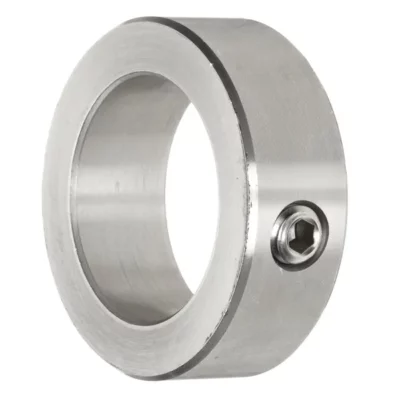
How Should Installation and Torque Control Be Managed for Long Service Life?
Improper installation remains one of the most common causes of failure. Whether using a set screw type or a split clamp style, torque accuracy is essential. Over-tightening may deform the shaft surface, while under-tightening leads to slippage under load. Our factory supplies torque guidelines calibrated to common ANSI shaft tolerances used across North America.
Before mounting any Shaft Collar, technicians should clean the shaft with a non-residue solvent and confirm surface finish consistency. Burrs or scoring must be removed using fine emery cloth. During installation, always align the collar square to the shaft axis to avoid runout. Our production team machines bores to tight concentricity tolerances to ensure proper seating.
Below are recommended torque ranges for typical alloy steel and stainless steel configurations supplied by Raydafon Transmission.
| Bore Size | Material | Set Screw Size | Recommended Torque Range | Typical Application |
| 1/2 inch | Carbon Steel 1045 | 1/4-28 | 75 to 85 in-lbs | Light conveyors |
| 1 inch | Alloy Steel 4140 | 5/16-24 | 140 to 160 in-lbs | Packaging lines |
| 2 inch | Stainless Steel 304 | 3/8-24 | 260 to 300 in-lbs | Food processing |
| 3 inch | Alloy Steel 4140 | 1/2-20 | 480 to 520 in-lbs | Heavy machinery |
After initial startup, our service guideline recommends rechecking torque after the first 24 hours of operation. Thermal cycling and vibration can slightly reduce clamping force. Our engineering staff advises using calibrated torque wrenches rather than impact tools to maintain consistency.
What Inspection Intervals and Lubrication Practices Reduce Wear?
Routine inspection intervals depend on duty cycle and environmental conditions. In high-speed applications above 1800 RPM, weekly visual inspection is advisable. For moderate-speed systems operating below 1200 RPM, monthly inspection may be sufficient. Our factory often suggests incorporating collar inspection into bearing lubrication schedules to streamline maintenance workflow.
Although many clamp-style collars are designed for dry operation, light anti-seize compound on the set screw threads helps prevent galling. For corrosive environments such as coastal installations or fertilizer equipment, protective coatings or stainless variants are recommended. Our team at Raydafon Technology Group Co.,Limited frequently supplies black oxide, zinc-plated, and passivated finishes depending on the environment.
Key inspection checkpoints include:
- Check for axial drift or misalignment along the shaft shoulder.
- Inspect for surface scoring or fretting at the bore interface.
- Verify set screw integrity and thread condition.
- Listen for abnormal vibration or chatter during operation.
When a Shaft Collar shows signs of bore enlargement or repeated slippage, replacement is more cost-effective than reworking the shaft. Our factory maintains consistent dimensional tolerance to ANSI standards to ensure interchangeability.
How Do Material Selection and Surface Treatment Affect Reliability?
Material choice significantly influences durability. Carbon steel is widely used for general industrial duty, while alloy steel provides higher tensile strength and improved fatigue resistance. Stainless steel is preferred in washdown or food-grade environments where corrosion resistance is mandatory.
At Raydafon Technology Group Co.,Limited, our manufacturing process includes precision CNC turning, controlled heat treatment, and surface finishing to achieve reliable clamping performance. Our metallurgical control ensures uniform hardness distribution, minimizing crack initiation under cyclic load.
| Material Grade | Tensile Strength | Surface Finish | Corrosion Resistance Level | Recommended Industry |
| 1045 Carbon Steel | 570 MPa | Black Oxide | Moderate | General Manufacturing |
| 4140 Alloy Steel | 850 MPa | Phosphate Coated | Moderate to High | Heavy Equipment |
| 304 Stainless Steel | 515 MPa | Passivated | High | Food and Beverage |
| 316 Stainless Steel | 580 MPa | Passivated | Very High | Marine Applications |
Proper surface treatment reduces oxidation and maintains consistent clamping friction. Our quality control system performs hardness testing and dimensional verification before shipment to ensure that each Shaft Collar meets industrial performance standards.
When Should Replacement Be Considered Instead of Continued Maintenance?
Even with structured maintenance, mechanical components have a defined lifecycle. Replacement should be considered when repeated torque adjustments fail to maintain axial position, when bore wear exceeds tolerance, or when vibration analysis shows imbalance originating at the shaft interface.
In automated systems operating multiple shifts, downtime costs often exceed replacement cost. Our factory recommends maintaining spare inventory for critical production assets. Our logistics network allows fast turnaround to minimize disruption. Through continuous improvement, Raydafon Technology Group Co.,Limited supports OEM clients and MRO distributors with consistent batch quality.
Monitoring data trends such as shaft temperature, RPM stability, and vibration spectrum analysis can help determine optimal replacement timing. A proactive strategy reduces unexpected shutdowns and protects associated components like bearings and couplings.
FAQ
Q1: What Maintenance Tips Ensure Long-Term Reliability of Shaft Collars?
Regular inspection, accurate torque control, clean installation surfaces, and correct material selection are the most critical practices. Scheduled re-torque after initial operation, combined with periodic visual checks for wear or corrosion, significantly extends service life.
Q2: How often should torque be rechecked in high vibration environments?
In high vibration applications such as reciprocating machinery or heavy-duty conveyors, torque should be verified within 24 hours after installation and then monthly. Systems exposed to shock loads may require biweekly inspection to ensure clamp integrity.
Q3: Which material is best for corrosive industrial environments?
For environments exposed to moisture, chemicals, or salt air, 316 stainless steel provides superior corrosion resistance. When structural strength is also critical, alloy steel with protective coating may be used, but routine inspection intervals should be shorter.
Consistent preventive maintenance, proper installation, informed material selection, and timely replacement decisions collectively ensure long-term mechanical stability. By integrating these strategies into standard operating procedures, manufacturers can protect uptime and reduce lifecycle cost. Our engineering team at Raydafon Technology Group Co.,Limited is ready to support custom specifications and bulk supply programs tailored to your operational needs. Contact our sales department today to request technical documentation or receive a competitive quotation from our factory.