

What Makes a Planetary Gearbox Different From Traditional Gear Reducers?
2026-09-07
When a machine designer specifies a gear reducer, the choice between a planetary gearbox and a traditional helical or worm reducer is often based on habit rather than analysis. Yet the mechanical differences between these technologies are fundamental—they affect the size of the machine, the efficiency of the drive, the accuracy of the positioning, and the total cost of ownership. This guide is written for design engineers who need to understand the engineering trade-offs and make an informed decision based on the application requirements.
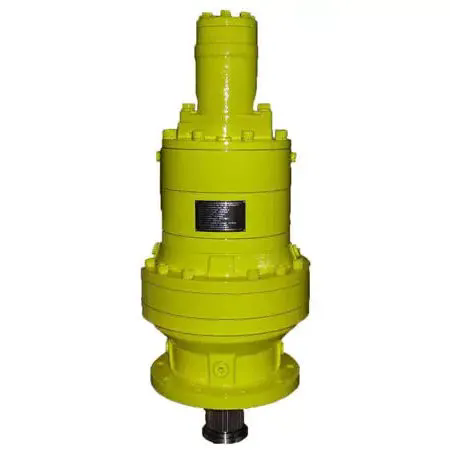
1. What Is the Fundamental Mechanical Difference Between a Planetary Gearbox and a Traditional Reducer?
The core difference lies in the power distribution path. In a traditional helical or spur gear reducer, the input gear drives a single output gear through a series of gear pairs. The load is transmitted through one mesh at a time. In a Planetary Gearbox, the input shaft drives a central sun gear, which simultaneously drives multiple planet gears that orbit around the sun. The planet gears are held by a carrier, which serves as the output. The load is distributed among multiple gear meshes simultaneously. This load sharing is the key mechanical advantage. In a three-planet design, each gear tooth carries only one third of the load compared to a single mesh design. This allows a Planetary Gearbox to transmit the same torque as a traditional reducer that is significantly larger.
In our factory, we manufacture Planetary Gearbox units with three to five planet gears, depending on the torque rating. The table below shows the load distribution difference.
| Parameter | Planetary Gearbox (3 planets) | Helical reducer (single stage) | Worm reducer |
| Load sharing | 3 paths (33% per mesh) | 1 path (100% per mesh) | 1 path (100% per mesh) |
| Tooth contact stress | Reduced by 40% | Baseline | Higher (sliding contact) |
| Torque density (Nm/kg) | High (4 – 6 Nm/kg) | Medium (2 – 3 Nm/kg) | Low (1 – 1.5 Nm/kg) |
| Typical efficiency per stage | 97 – 98% | 96 – 98% | 60 – 90% (depends on ratio) |
This load sharing principle means that a Planetary Gearbox can achieve the same torque rating as a traditional reducer in a much smaller package. At Saifu Vietnam Company Limited, we have supplied Planetary Gearbox units that are 40 percent smaller and 30 percent lighter than equivalent helical reducers for the same application.
2. How Does the Gear Arrangement Affect Efficiency and Backlash?
Efficiency and backlash are the two performance parameters that most directly affect the application suitability. In a Planetary Gearbox, the efficiency is consistently high (97 to 98 percent per stage) because the gears are in continuous contact with rolling motion, not sliding. In a worm reducer, the sliding contact between the worm and the worm wheel generates significant friction, which reduces efficiency, especially at high ratios. The backlash in a Planetary Gearbox can be controlled to less than 3 arc minutes for standard versions and less than 1 arc minute for precision versions. In a helical reducer, the backlash is typically 5 to 15 arc minutes due to the clearance required between gear teeth. The table below compares the performance parameters across the three reducer types.
| Performance parameter | Planetary Gearbox (precision) | Helical reducer | Worm reducer |
| Efficiency (10:1 ratio) | 96 – 98% | 94 – 96% | 75 – 85% |
| Backlash (arc minutes) | < 3 (standard), < 1 (precision) | 5 – 15 | 10 – 30 |
| Speed range (input RPM) | 0 – 10,000 | 0 – 6,000 | 0 – 3,000 |
| Noise level (dB at 3000 RPM) | 65 – 70 | 70 – 78 | 72 – 80 |
| Maintenance interval (operating hours) | 5,000 – 10,000 | 3,000 – 5,000 | 2,000 – 3,000 |
In our factory, we manufacture Planetary Gearbox units with a backlash of less than 1 arc minute for servo drive applications. This precision makes the Planetary Gearbox the preferred choice for robotics, CNC machines, and other applications that require accurate positioning.
3. When Should You Choose a Planetary Gearbox Over a Traditional Reducer?
The choice between a Planetary Gearbox and a traditional reducer depends on the application priorities. A Planetary Gearbox is the best choice when space is limited, when high torque density is required, or when low backlash is critical. It is also preferred for applications with frequent starts and stops, because the load sharing reduces the impact stress on the teeth. A helical reducer is the best choice for simple, low-speed applications where the cost is the primary consideration and space is not constrained. A worm reducer is the best choice for applications that require a high reduction ratio in a single stage and that are not sensitive to efficiency, such as infrequently operated manual adjustment mechanisms.
Decision matrix example: For a robotic arm joint requiring 200 Nm output torque with positioning accuracy of 0.01 degrees, a Planetary Gearbox with 1 arc minute backlash is the only viable option. For a conveyor belt drive requiring 500 Nm output torque at constant speed with no positioning requirement, a helical reducer is the most cost-effective choice.
In our factory, we have seen applications where engineers specified a helical reducer because it was cheaper, but the larger size required a redesign of the machine frame. The additional cost of the larger frame often exceeded the cost difference between the two reducer types. A Planetary Gearbox can help you avoid these hidden costs.
4. What Are the Design Trade-Offs in a Planetary Gearbox That Engineers Should Understand?
While the Planetary Gearbox offers many advantages, it also has design constraints that engineers should consider. The planet gear bearing arrangement is a critical design element. The planet gears are typically supported by needle roller bearings that must withstand both radial and thrust loads. In high torque applications, the bearing life can be the limiting factor. The sun gear and the planet gears must be carefully designed to balance the load distribution. If the manufacturing tolerances are not controlled, one planet may carry more load than the others, reducing the life of the gearbox. In our factory, we use a selective assembly process to ensure that all planets share the load within 10 percent. This is a manufacturing capability that not all suppliers possess. The thermal management is also more challenging in a Planetary Gearbox because the heat is generated in a smaller volume, and the oil must be circulated effectively.
Frequently Asked Questions About Planetary Gearbox Selection
Summary for Drive System Design Engineers
The Planetary Gearbox offers a fundamentally different power transmission approach than traditional gear reducers. Its ability to share the load among multiple gear meshes results in higher torque density, better efficiency, lower backlash, and a more compact package. These advantages come at a higher initial cost, but the total cost of ownership is often lower when the size and weight savings are considered. When selecting a reducer, engineers should consider the application's torque requirements, space constraints, backlash sensitivity, and duty cycle. A Planetary Gearbox is the right choice for applications that demand high performance in a compact envelope.
Saifu Vietnam Company Limited manufactures Planetary Gearbox units with up to 5 planet gears for high torque applications. We provide full technical documentation, including efficiency curves, backlash measurements, and life calculations. Our engineering team can help you select the right gearbox for your specific application.