

What Makes Double Jacket Gaskets Suitable for High-Temperature Operating Conditions?
2026-01-23
In demanding industrial environments where high temperatures and pressures are the norm, selecting the correct sealing solution is critical for safety, efficiency, and operational longevity. The Double Jacket Gasket stands out as a premier choice for these challenging conditions. But what specific attributes grant this resilience? This article delves into the engineering and material science that make double jacket gaskets exceptionally suitable for high-temperature service.
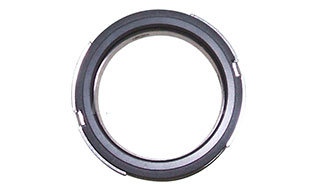
Core Construction and High-Temperature Resilience
The fundamental design of a Double Jacket Gasket is the primary source of its high-temperature capability. This gasket type features a robust, metallic outer shell—the "jacket"—that encases a softer, compressible filler material, typically graphite or PTFE. In high-temperature scenarios, this construction offers distinct advantages. The metal jacket, often made from stainless steel 304, 316, or other high-grade alloys, provides structural integrity and resists thermal creep and relaxation. It contains the filler material, preventing its extrusion or blow-out under extreme heat and cycling conditions. The inner filler, meanwhile, compensates for flange surface imperfections, ensuring a tight, initial seal. At elevated temperatures, materials like flexible graphite expand, further enhancing the seal, while the jacket constrains this expansion, maintaining bolt load and gasket stress. This synergistic relationship between jacket and filler is what we meticulously engineer at our factory for consistent performance.
Material Selection and Technical Parameters
The suitability for high temperatures is not just about design; it hinges on precise material selection. The metal jacket material must retain its strength and resist corrosion at operating temperatures. For most high-temperature applications, stainless steel is the standard. The filler material is equally crucial. Flexible graphite filler is renowned for its thermal stability, functioning effectively from cryogenic temperatures up to 4500°F (2482°C) in non-oxidizing atmospheres, making it ideal for many high-heat processes. PTFE fillers offer excellent chemical resistance but are used for lower temperature ranges. At Ningbo Kaxite Sealing Materials Co., Ltd., we rigorously test material combinations to ensure our Double Jacket Gasket products meet specified thermal demands. The table below outlines key parameters that define our product's capabilities.
| Parameter | Typical Specification & Performance |
| Jacket Material | Stainless Steel 304/316, Carbon Steel, Monel, Inconel |
| Filler Material | Flexible Graphite, PTFE, Ceramic, Mica |
| Temperature Range (Graphite Filler) | -240°C to 650°C (-400°F to 1200°F) in oxidizing atmosphere; up to 3000°C+ in inert gas. |
| Pressure Rating | Suitable for high-pressure applications, dependent on size and class. |
| Standard Specifications | ASME B16.20, B16.5, DIN, JIS, and customer-specific designs. |
| Available Styles | Full Face, Ring Type, Oval, Octagonal |
Performance Under Thermal Cycling and Pressure
High-temperature operations often involve thermal cycling—repeated heating and cooling cycles. Ordinary gaskets can fail under these conditions due to fatigue or loss of seal compression. The Double Jacket Gasket excels here because its metal jacket has a spring-like effect. It helps maintain a constant sealing force on the filler material as the connection expands and contracts. This resilience to thermal cycling prevents leakage and reduces maintenance frequency. Furthermore, the design offers excellent recovery properties, meaning it can maintain a seal even after exposure to temperature spikes or pressure surges. Our manufacturing process focuses on achieving uniform jacket thickness and filler density, which are critical for predictable performance under such dynamic conditions. Every Double Jacket Gasket from our factory is built to withstand these rigorous operational realities.
Applications in High-Temperature Industries
Given their robust characteristics, double jacket gaskets are indispensable across several high-temperature industries. They are extensively used in petrochemical and refinery applications, such as in cracker units, reformers, and heavy oil processing where temperatures are consistently high. Power generation, including fossil fuel and nuclear plants, relies on these gaskets for critical steam and hot water systems. They are also found in high-temperature heat exchangers, boilers, and exhaust ducting systems. The versatility of the Double Jacket Gasket, available in various metals and fillers, allows for customization to specific process media and thermal profiles. At Ningbo Kaxite Sealing Materials Co., Ltd., we work closely with clients in these sectors to provide sealing solutions that enhance safety and operational continuity in their high-temperature environments.
Frequently Asked Questions
Q1: What is the maximum temperature a double jacket gasket with graphite filler can withstand?
The maximum temperature depends heavily on the atmosphere. In continuous service within an oxidizing atmosphere (like air), a double jacket gasket with flexible graphite filler is generally rated for up to 450°C to 650°C (842°F to 1200°F), with the upper limit often constrained by the oxidation of graphite. In inert or reducing atmospheres, graphite retains its properties at much higher temperatures, potentially up to 3000°C (5432°F) or more. The metal jacket material must also be selected to match these temperatures. Our technical team can advise on the optimal combination for your specific service conditions.
Q2: How does the double jacket design prevent gasket blow-out under high temperature and pressure?
The double jacket design physically contains the soft filler material within two layers of formed metal. This metallic armor provides exceptional resistance to internal pressure and prevents the filler from being extruded into the flange clearance—a common failure mode known as blow-out. Under high temperature and pressure, the metal jacket maintains its structural integrity and confines the filler, ensuring the seal remains intact. The mechanical strength of the jacket is a key factor in our product design, which we enhance through precise forming and seam welding techniques in our factory.
Q3: Can double jacket gaskets be used in applications with rapid thermal cycling?
Yes, double jacket gaskets are particularly well-suited for applications with rapid thermal cycling. The inherent flexibility and resilience of the metal jacket allow it to absorb the differential expansion and contraction of the flanges without permanently deforming or losing clamping force. The filler material, especially flexible graphite, also has excellent thermal shock resistance. This combination allows the gasket to maintain a leak-tight seal through numerous heating and cooling cycles, reducing downtime and replacement costs. We test our Double Jacket Gasket products to ensure reliable performance in such dynamic operating scenarios.
Conclusion and Commitment
The suitability of Double Jacket Gaskets for high-temperature conditions is a direct result of intelligent engineering: a durable metal jacket containing a thermally stable, compensating filler. This design ensures outstanding performance under extreme heat, pressure, and cycling, providing reliability where it matters most. Selecting the right partner for these critical components is essential. With extensive experience and a commitment to quality, Kaxite Sealing delivers high-performance sealing solutions. Our focus on material excellence, precise manufacturing, and technical support ensures that our Double Jacket Gasket products meet the stringent demands of your high-temperature operations, safeguarding your processes and productivity.