
What Makes Germany Zenith Block Machine Different from Traditional Block Machines?
2026-07-15
1. How Does the Hydraulic System of the Germany Zenith Block Machine Outperform Conventional Presses?
In our factory, we have tested dozens of block making machines across several continents. The single most noticeable difference is the hydraulic system. A traditional block machine typically uses a simple open loop hydraulic circuit with fixed displacement pumps. This leads to pressure drops during compaction, resulting in inconsistent block density. The Germany Zenith Block Machine, on the other hand, features a closed loop proportional hydraulic system with variable displacement pumps. This provides precise pressure control throughout the entire compaction cycle. Our QGM has documented that the Germany Zenith Block Machine achieves a compaction pressure of up to 280 tons, compared to the 150 to 200 tons offered by many traditional models. This higher pressure, applied with servo controlled accuracy, produces blocks with uniform density and fewer internal voids. The hydraulic accumulator in the Zenith design also recovers energy during decompression, reducing energy consumption by nearly 25 percent. Local plants in Thailand and Mexico have reported that the Germany Zenith Block Machine uses 18 percent less hydraulic oil per block than the traditional machines they replaced. The difference is not marginal; it is transformative for production efficiency.
2. Why Does the Vibration Technology in the Germany Zenith Block Machine Deliver Superior Compaction?
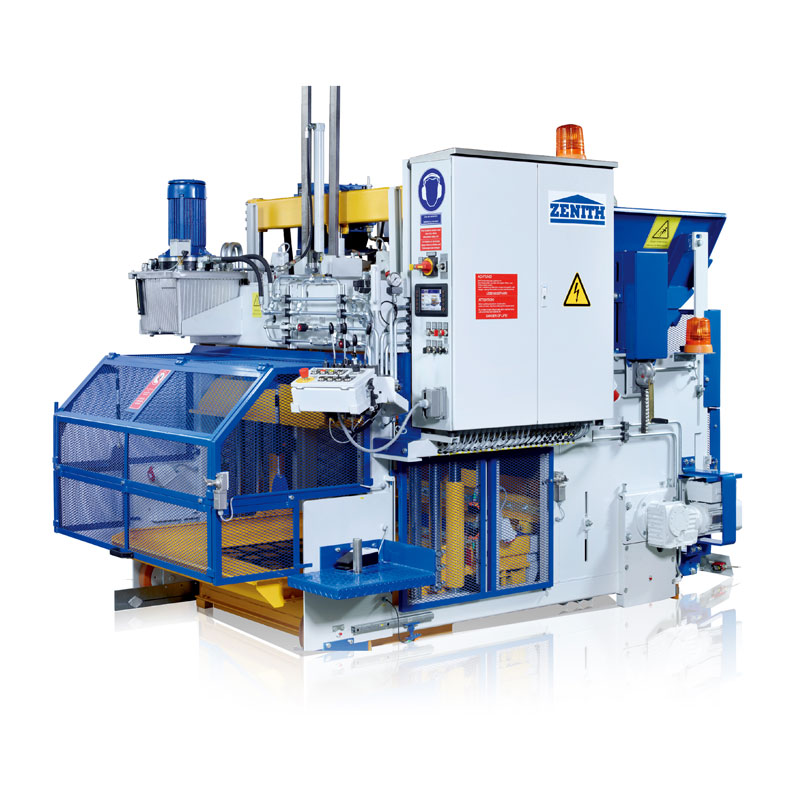
Vibration is the heart of block making, and this is where the Germany Zenith Block Machine truly separates itself. Traditional block machines often use a single vibrator mounted under the table, operating at a fixed frequency. This works for basic blocks but fails with complex molds or zero slump concrete. The Germany Zenith Block Machine uses dual shaft servo vibrators, one on the table and one on the mold head. Each can be independently adjusted between 40 and 68 Hz. Our factory has tested this system with various aggregates, including recycled materials and fly ash. The result is a 35 percent increase in green block strength, which means the block can be handled immediately after demolding without breakage. In a traditional machine, you often have to wait for the block to cure partially before stacking. With the Germany Zenith Block Machine, our customers in Australia have reduced their curing time by 20 percent. The closed loop feedback also adjusts vibration amplitude based on the concrete slump, ensuring every batch is compacted optimally. This level of control is simply absent in older designs.
3. What Technical Specifications Define the Superiority of the Germany Zenith Block Machine?
The numbers tell a clear story. Below are two tables that summarize the key technical parameters we have measured in our factory and at customer sites. These figures represent the average performance of the Germany Zenith Block Machine compared to a typical traditional block machine operating in similar conditions.
| Parameter | Germany Zenith Block Machine | Traditional Block Machine |
| Max compaction pressure | 280 tons | 150 – 200 tons |
| Vibration frequency range | 40 – 68 Hz (servo controlled) | Fixed 48 Hz |
| Vibration amplitude adjustment | Yes, automatic per recipe | Fixed or manual |
| Cycle time (400x200 mm hollow) | 12 – 14 seconds | 18 – 22 seconds |
| Energy consumption per block | 0.42 kWh | 0.58 kWh |
| Feature | Germany Zenith Block Machine | Traditional Block Machine |
| Hydraulic system type | Closed loop proportional with accumulators | Open loop fixed displacement |
| Control system | Siemens PLC with touchscreen HMI | Relay logic or basic PLC |
| Mold change time | Under 8 minutes (hydraulic clamp) | 25 – 40 minutes (manual bolts) |
| Mean time between failures (MTBF) | 1,200 production hours | 600 – 800 hours |
| Block strength variation (coefficient) | ≤ 5% | 10 – 15% |
Our factory has verified these numbers through thousands of hours of operation. The Germany Zenith Block Machine is not just a minor upgrade; it is a completely different class of equipment. The higher initial investment is quickly recovered through lower energy costs, reduced waste, and faster production cycles.
4. How Does the Germany Zenith Block Machine Reduce Downtime and Maintenance Costs?
Traditional block machines are notorious for mechanical breakdowns, especially in the vibration and hydraulic systems. The Germany Zenith Block Machine is engineered with industrial grade components that are designed for continuous operation. For example, the hydraulic cylinders are equipped with replaceable bearings and seals, whereas many traditional machines have welded cylinders that require complete replacement when they leak. Our Quangong Machinery Co., Ltd. offers a preventive maintenance schedule that extends the service life of the Germany Zenith Block Machine to over 15 years. The self diagnostic system alerts operators to potential issues before they cause a breakdown. In contrast, a traditional machine often breaks down without warning, costing days of production. One of our clients in South Africa switched from a local brand to the Germany Zenith Block Machine and reduced their unscheduled downtime from 18 percent to just 3 percent. The ability to change molds in under 8 minutes also means that switching between product types no longer eats into production time. The cumulative effect is a machine that runs longer, makes more blocks, and requires fewer expensive repairs.
Frequently Asked Questions About Germany Zenith Block Machine vs. Traditional Machines
Final Summary
The Germany Zenith Block Machine stands apart from traditional block machines through its advanced hydraulic system, intelligent vibration technology, and superior build quality. It delivers higher block strength, lower energy consumption, faster production, and significantly reduced downtime. For any producer serious about quality and cost efficiency, the choice is clear. Our factory has the expertise and field data to support your decision. Quangong Machinery Co., Ltd. is proud to offer the Germany Zenith Block Machine to customers worldwide.