

What Makes HDPE Pipe Fittings Ideal for Industrial Wastewater Systems?
2026-02-25
Industrial wastewater systems in North America and Europe operate under strict EPA discharge standards, municipal pretreatment programs, and plant-level environmental compliance audits. From chemical processing plants and food manufacturing facilities to mining sites and power stations, pipe networks must withstand aggressive media, fluctuating temperatures, and continuous flow cycles. In these demanding environments, HDPE Pipe Fittings have become a trusted solution for long-term reliability.
Unlike traditional carbon steel or ductile iron systems that are vulnerable to corrosion and scaling, high-density polyethylene offers inherent resistance to acids, alkalis, and biological fouling. This is particularly important in industrial effluent lines where pH levels may vary significantly throughout production cycles. Our engineering team has optimized product geometry to reduce turbulence and sediment buildup, improving flow efficiency across extended pipeline runs.
At Ningbo Sunplast Pipe Co., Ltd., we manufacture fittings that are compatible with ASTM, ISO, and EN piping systems. Our factory applies strict dimensional tolerances to ensure seamless butt fusion and electrofusion performance, minimizing leakage risks in pressurized and gravity wastewater applications. By focusing on material purity and resin traceability, we ensure that every component meets long-term structural integrity requirements.
In modern treatment facilities where uptime is critical, plant managers value predictable service life. With proper installation, HDPE Pipe Fittings can deliver a design life exceeding 50 years, even in chemically aggressive discharge lines. This lifecycle advantage directly reduces maintenance budgets and replacement downtime.
How Do Material Properties Improve Corrosion Resistance and Structural Stability?
The performance of industrial piping systems begins with raw material quality. Our products are produced from PE100 and PE4710 grade resins, widely recognized in the U.S. water and wastewater sector for high tensile strength and slow crack growth resistance. These materials provide exceptional durability under both internal pressure and external soil load conditions.
| Material Grade | PE100 / PE4710 |
| Density | ≥ 0.95 g/cm3 |
| Design Pressure Range | PN6 to PN16 |
| Operating Temperature | -40°C to 60°C |
| Standards Compliance | ISO 4427, ASTM F714, EN 12201 |
| Connection Methods | Butt Fusion, Electrofusion, Flange |
Because industrial wastewater often contains chlorides, sulfates, and abrasive particles, corrosion resistance is not optional. HDPE Pipe Fittings do not rust, pit, or scale. Our internal surface finish maintains a low friction coefficient, supporting efficient flow even after years of operation. In gravity sewer lines and force mains, this characteristic helps prevent blockages and odor buildup.
Another critical factor is impact strength. In regions exposed to freezing temperatures, buried pipelines experience ground movement and contraction. Our factory performs hydrostatic and impact testing to ensure structural resilience. This mechanical flexibility makes HDPE Pipe Fittings suitable for trenchless installation methods such as horizontal directional drilling and sliplining, which are widely used in municipal and industrial upgrades.
What Technical Specifications Ensure Performance in High-Load Environments?
Industrial wastewater systems often operate at variable pressures depending on pump stations and treatment stages. Selecting the correct pressure rating and fitting configuration is essential. Our product range includes elbows, tees, reducers, stub ends, and custom fabricated fittings designed to meet high-flow industrial demands.
| Available Diameter Range | DN20 to DN1200 |
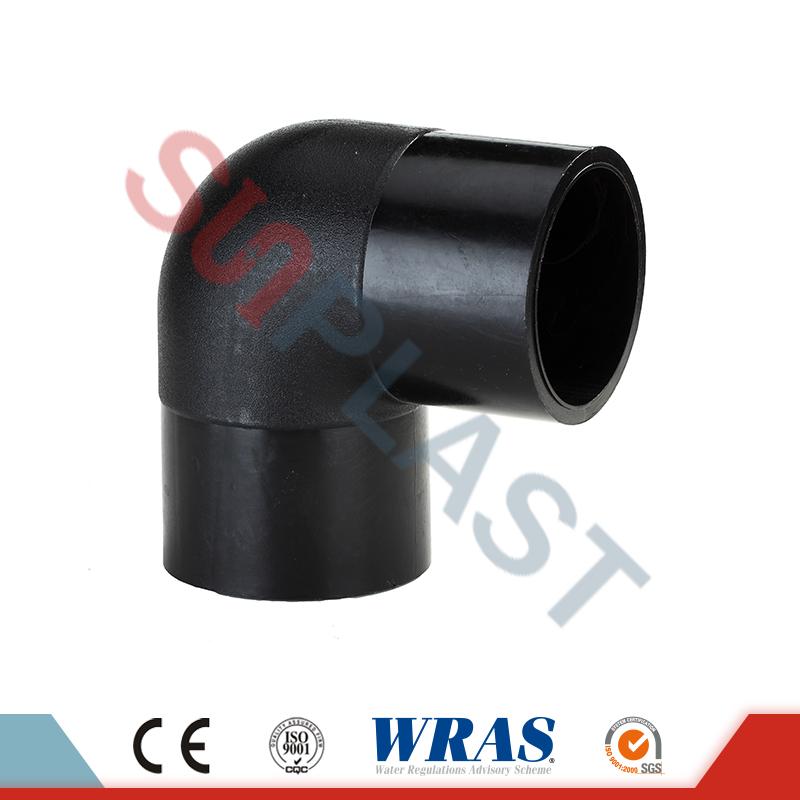
| Elbow Angles | 45°, 90°, Custom Fabrication |
| Reducer Types | Concentric, Eccentric |
| Wall Thickness SDR Options | SDR9, SDR11, SDR13.6, SDR17 |
| Joint Efficiency | 100% Leak-Free When Properly Fused |
| Design Life | Over 50 Years |
Precise wall thickness and dimensional accuracy ensure strong fusion joints. In industrial wastewater pump stations, where surge pressure may occur, HDPE Pipe Fittings provide reliable stress distribution across connection points. Our technical team supports project engineers in selecting appropriate SDR ratings based on system design pressure and temperature fluctuations.
Ningbo Sunplast Pipe Co., Ltd. also offers customized fabrication for large-diameter manifolds and transition fittings. This flexibility allows our customers to optimize plant layouts without compromising system integrity. Because our production lines use advanced injection and machining equipment, we maintain consistent quality from small diameters to large industrial sizes.
How Do Installation Efficiency and Lifecycle Cost Impact Plant Operations?
Industrial operators prioritize total installed cost rather than just material price. Lightweight components reduce freight expenses and handling time on job sites. Compared to metal alternatives, HDPE Pipe Fittings are easier to transport and position, lowering labor hours during installation.
Butt fusion creates a homogenous joint, effectively forming a continuous pipeline without mechanical gasket failure points. This eliminates infiltration and exfiltration risks that are common in traditional sewer systems. Over time, our customers benefit from reduced leakage incidents, fewer shutdowns, and improved environmental compliance.
Our factory provides detailed installation guidelines and welding parameter charts to contractors. By ensuring proper alignment and fusion procedures, we help extend service life and minimize warranty claims. In retrofit wastewater plants, the flexibility of HDPE Pipe Fittings allows connection to existing piping systems using flange adapters and transition fittings.
Ningbo Sunplast Pipe Co., Ltd. works closely with EPC contractors and plant engineers during bidding and execution stages. Our support includes material submittals, technical drawings, and certification documents required for industrial wastewater approvals. Through consistent quality control, we ensure that our fittings meet both regulatory and operational expectations.
Why Is Supplier Reliability Critical for Large-Scale Wastewater Projects?
In industrial construction, supply chain reliability is as important as technical performance. Delays in fittings delivery can halt entire installation schedules. Our production planning system ensures stable lead times and batch traceability. Each shipment is inspected and labeled for project identification.
At Sunplast, quality assurance extends beyond dimensional inspection. We conduct pressure testing, visual checks, and material verification before dispatch. This disciplined process gives contractors confidence in our manufacturing standards. Our long-term partnerships with global distributors reflect consistent product reliability in wastewater and drainage infrastructure.
Because environmental regulations continue to tighten, selecting durable piping components reduces risk exposure. HDPE Pipe Fittings provide a sustainable solution with low carbon footprint during manufacturing and long operational life after installation. This sustainability factor is increasingly valued in ESG-driven industrial projects.
Frequently Asked Questions
Q1: What makes HDPE Pipe Fittings more suitable than PVC for industrial wastewater systems?
HDPE offers superior impact resistance, flexibility, and chemical tolerance compared to standard PVC. In industrial effluent lines where pressure surges and temperature variations occur, HDPE maintains structural stability and resists cracking. Fusion joints also create a leak-free system, which is critical for environmental compliance.
Q2: How long can HDPE Pipe Fittings last in corrosive wastewater environments?
When properly installed and operated within design parameters, these fittings can exceed a 50-year service life. The material does not corrode, scale, or degrade under typical industrial wastewater conditions, significantly reducing maintenance and replacement frequency.
Q3: Are HDPE Pipe Fittings compatible with existing metal or concrete pipelines?
Yes. Transition fittings, flange adapters, and mechanical couplings allow integration with steel, ductile iron, or concrete systems. Proper engineering design ensures secure connections while preserving the corrosion-resistant benefits of polyethylene components.
Conclusion
Industrial wastewater systems demand durability, chemical resistance, and dependable performance under continuous operation. By combining advanced PE materials, strict quality control, and comprehensive technical support, our solutions deliver measurable lifecycle value. Whether upgrading an aging treatment plant or constructing a new industrial discharge network, selecting the right fittings directly impacts long-term reliability and regulatory compliance.
If you are planning an industrial wastewater project and require detailed specifications or customized configurations, contact our team today for technical consultation and a competitive quotation.