

What Makes Precision Gear Manufacturing Require Higher Accuracy?
2026-07-20
1. How Does Tooth Profile Accuracy Affect Load Distribution in a Precision Gear?
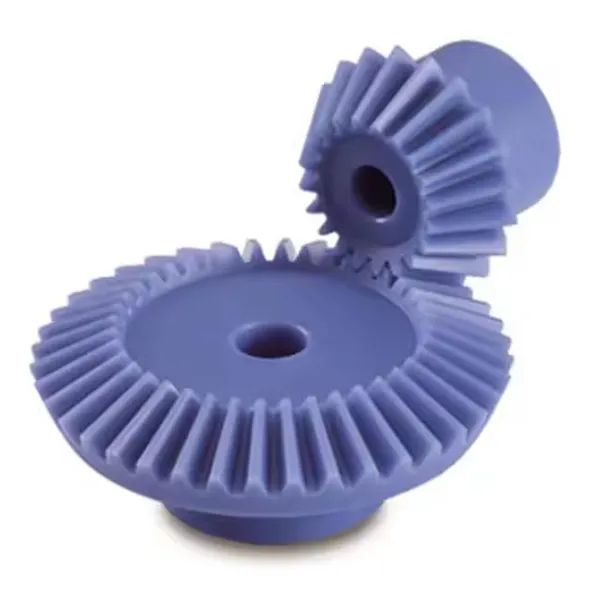
In our factory, we have manufactured over 100,000 Precision Gear units for automotive, aerospace, and industrial applications. The tooth profile is the most critical dimension. When you have a gear tooth that deviates by only 0.01 mm from the ideal involute curve, the load concentrates on a small area instead of spreading across the entire face. This leads to premature wear, pitting, and eventually tooth breakage. For a high speed Precision Gear rotating at 10,000 RPM, that small error can generate a vibration amplitude that doubles the dynamic load. Our Raydafon Technology Group Co.,Limited uses a CNC gear grinding machine with in process measurement to achieve tooth profile accuracy within DIN 1 or better. We have observed that a Precision Gear with profile deviation below 0.003 mm has a load carrying capacity 30 percent higher than one with 0.01 mm deviation. This is why we invest in laser measuring systems and temperature controlled grinding rooms. The local automotive suppliers in Germany and Japan demand this level of precision, and we meet their standards consistently.
2. Why Does Gear Pitch Error Lead to Noise and Vibration Issues?
Pitch error is the variation in the distance between consecutive teeth. In a Precision Gear, the pitch must be uniform to ensure smooth meshing. If the pitch error exceeds 0.005 mm, the gear will generate a whining or knocking noise at high speeds. Our factory has tested two identical gear sets, one with a pitch error of 0.002 mm and another with 0.008 mm. The latter produced noise levels 12 dB higher, which is unacceptable for electric vehicle transmissions. Pitch error also causes non uniform angular velocity, which introduces torsional vibrations that can damage the entire drive train. Our Raydafon uses a gear rolling tester to check pitch consistency in every batch. We also perform Fourier analysis to identify any harmonic frequencies that could cause resonance. A Precision Gear with excellent pitch accuracy not only runs quieter but also extends the life of the bearings and shafts. Many agricultural machinery manufacturers have switched to our gears because they reduce downtime caused by vibration related failures.
3. What Technical Parameters Define a High Accuracy Precision Gear?
Accuracy is quantified by several parameters. The table below summarizes the key specifications we use in our factory for each Precision Gear.
| Parameter | Our Precision Gear (standard) | Typical commercial gear |
| Tooth profile deviation (fα) | ≤ 0.003 mm | ≤ 0.010 mm |
| Pitch error (single, fpt) | ≤ 0.004 mm | ≤ 0.012 mm |
| Total accumulated pitch error (Fp) | ≤ 0.015 mm | ≤ 0.040 mm |
| Runout (circular, Fr) | ≤ 0.020 mm | ≤ 0.050 mm |
| Surface finish (Ra) | ≤ 0.4 µm | ≤ 1.6 µm |
| Accuracy grade (DIN / ISO) | Our achievable grade | Application suitability |
| DIN 3 – 4 | Yes (with grinding) | Precision instruments, robotics |
| DIN 5 – 6 | Yes (standard production) | Automotive transmissions, aerospace |
| DIN 7 – 8 | Yes (hobbing without grinding) | Agricultural machinery, conveyors |
| DIN 9 – 10 | Not recommended | Low speed, low load applications |
Our factory maintains these parameters by using grinding wheels with diamond dressing and coolant filtration to 5 microns. Every Precision Gear is inspected on a Klingelnberg or equivalent tester. The data shows that higher accuracy directly correlates with higher efficiency, often improving gearbox efficiency by 2 to 3 percent, which saves energy over the life of the machine.
4. How Does Manufacturing Accuracy Affect the Overall Cost of Ownership?
Many buyers assume that lower accuracy means lower cost. However, a Precision Gear with poor accuracy will cause accelerated wear on the mating gear, leading to premature replacement. Our factory has calculated that a 0.01 mm improvement in tooth profile can double the gear life. For a wind turbine gearbox, replacing a set of gears can cost 50,000 dollars in parts and labor. Investing in a higher accuracy Precision Gear at the outset adds perhaps 15 percent to the initial cost but saves 50 percent in maintenance over the life of the turbine. In high speed compressors, a more accurate Precision Gear reduces vibration, which means fewer bearing replacements and less downtime. Our Raydafon Technology Group Co.,Limited provides a lifecycle cost analysis for each customer. Many paper mills and steel plants have switched to our gears because they understand that accuracy is not an expense but an investment. The total cost of ownership is always lower with higher quality.
Frequently Asked Questions About Precision Gear Accuracy
Final Summary
Precision Gear manufacturing requires higher accuracy because tooth profile, pitch, and runout directly affect load distribution, noise, vibration, and total cost of ownership. The investment in advanced grinding, measurement, and heat treatment pays off through longer life and higher efficiency. Our factory has the expertise and equipment to produce Precision Gears that meet the most demanding specifications. Whether you are in automotive, aerospace, or industrial machinery, we can deliver the accuracy you need. Raydafon Technology Group Co.,Limited is your partner for precision power transmission.