

What Makes Silica Sol Precision Casting Propeller a Game-Changer for Marine Applications?
2026-03-13
In the modern marine industry, efficiency, durability, and precision are crucial factors that determine the performance of vessels. Ningbo Zhiye Mechanical Components Co., Ltd. has been at the forefront of providing innovative solutions with its Silica Sol Precision Casting Propeller, combining advanced casting techniques with high-quality materials to deliver superior performance. Unlike traditional casting methods, silica sol precision casting allows for exceptionally smooth surfaces, uniform metal structure, and high dimensional accuracy, which are essential for propellers operating under extreme marine conditions.
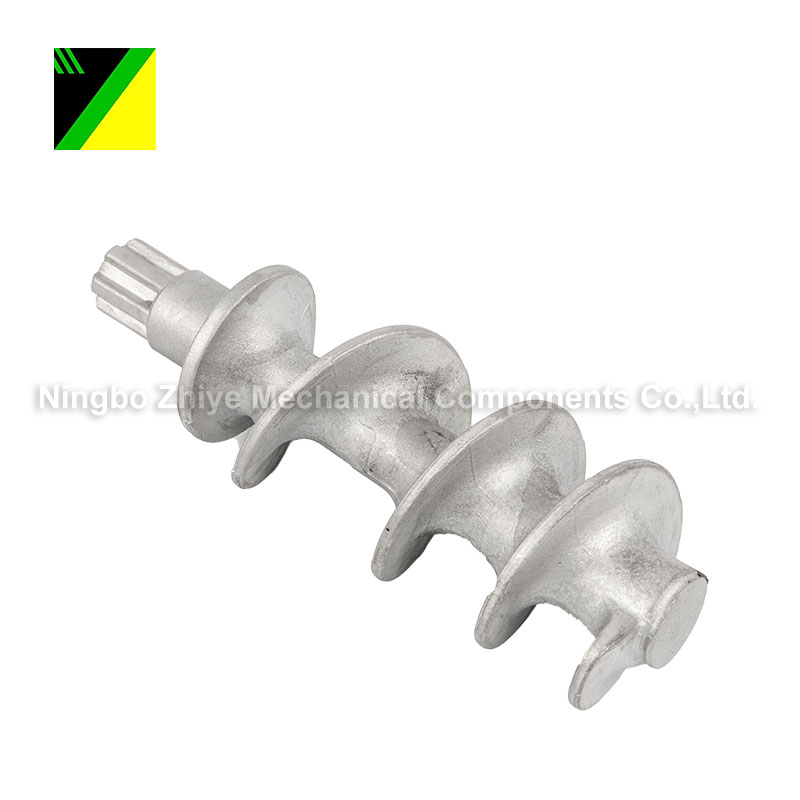
What is Silica Sol Precision Casting?
Silica sol precision casting is an advanced metal casting process that uses colloidal silica (silica sol) as a binder for fine ceramic particles to create highly detailed molds. This method ensures minimal shrinkage, excellent surface finish, and precise dimensional control, making it ideal for complex marine components like propellers.
Key process steps:
-
Pattern creation – a wax or resin model of the propeller
-
Ceramic shell building – layering silica sol with fine sand
-
Dewaxing – removing the wax/resin pattern
-
Metal pouring – filling the mold with molten metal
-
Finishing – precision machining and surface treatment
Why Choose Silica Sol Precision Casting Propellers?
Ningbo Zhiye Mechanical Components Co., Ltd. focuses on precision, reliability, and long-term performance. Their Silica Sol Precision Casting Propeller provides:
-
Superior hydrodynamic efficiency due to smooth surface and precise blade geometry
-
High strength and corrosion resistance, critical for seawater operation
-
Reduced vibration and noise, improving vessel stability and passenger comfort
-
Customization options for specific marine vessels, including yachts, cargo ships, and industrial boats
Silica Sol Precision Casting Propeller vs. Traditional Propellers
| Feature | Silica Sol Precision Casting Propeller | Traditional Cast Propeller |
|---|---|---|
| Surface Finish | Extremely smooth | Moderate, may require extra machining |
| Dimensional Accuracy | ±0.1 mm | ±0.5 mm |
| Material Density | Uniform, less porosity | Possible internal cavities |
| Corrosion Resistance | Excellent (marine-grade alloys) | Moderate |
| Lifespan | Longer service life | Shorter service life |
This table illustrates that silica sol precision casting propellers offer distinct advantages in efficiency, longevity, and reliability over traditional alternatives.
Key Benefits and Applications
Benefits:
-
High-precision blades – better propulsion efficiency and fuel economy
-
Noise reduction – smoother operation for quieter vessels
-
Enhanced durability – withstands extreme marine environments
-
Customizable design – tailored to vessel type and operating conditions
Applications:
-
Commercial cargo ships
-
Passenger ferries and yachts
-
Offshore oil and gas vessels
-
Industrial watercraft
Specifications and Materials
Common Specifications of Silica Sol Precision Casting Propellers:
| Specification | Typical Range |
|---|---|
| Diameter | 300 mm – 2500 mm |
| Blade Number | 3 – 7 |
| Material | Nickel-aluminum bronze, stainless steel |
| Weight | 50 kg – 2000 kg |
The flexibility in design and material selection ensures each propeller meets the exact requirements of its vessel.
Maintenance and Longevity
To maximize the lifespan of your Silica Sol Precision Casting Propeller, consider:
-
Regular inspection for cracks or cavitation damage
-
Cleaning to remove marine growth
-
Proper lubrication of the shaft and bearings
-
Using anti-corrosion coatings if necessary
With proper maintenance, these propellers can significantly outperform traditional cast alternatives, saving time and operational costs.
FAQs
Q1: What is the main advantage of silica sol casting over sand casting?
A1: Silica sol casting provides higher dimensional accuracy, smoother surface, and fewer defects, making it ideal for precision propellers.
Q2: Can these propellers be customized?
A2: Yes, Ningbo Zhiye Mechanical Components Co., Ltd. offers fully customizable propeller designs to meet different vessel requirements.
Q3: How long does a silica sol precision casting propeller last?
A3: With proper maintenance, these propellers can last 10–15 years or longer, depending on operating conditions.
Q4: Are these propellers suitable for saltwater environments?
A4: Absolutely, they are made with marine-grade corrosion-resistant alloys.
In conclusion, the Silica Sol Precision Casting Propeller from Ningbo Zhiye Mechanical Components Co., Ltd. represents a new standard in marine propulsion. With unmatched precision, durability, and efficiency, it is an investment that enhances vessel performance while reducing maintenance costs. For inquiries, specifications, or custom designs, contact us today to elevate your marine operations with our cutting-edge propeller solutions.