

What Makes Worm Gearbox Suitable for Heavy-Duty Industrial Applications?
2025-12-24
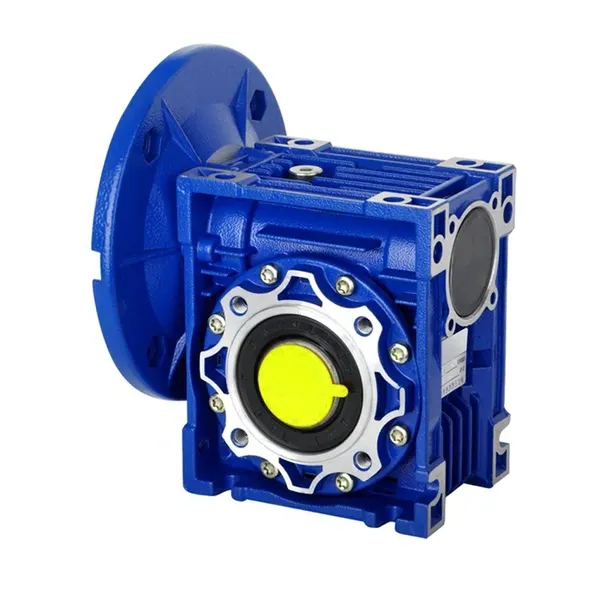
In heavy-duty industrial environments, power transmission components must deliver consistent torque, stable speed reduction, and long service life under continuous load. Over decades of field application, the worm gearbox has proven to be a reliable solution across manufacturing plants, material handling systems, mining equipment, and bulk processing lines. From an engineering perspective, its suitability comes from a combination of mechanical design, load-bearing capability, and operational stability. At Raydafon Technology Group Co., Limited, our engineering approach focuses on aligning gearbox structure with real industrial operating conditions developed through years of experience in our factory.
Why Does the Worm Gear Structure Support High Load Conditions?
The fundamental reason this transmission system performs well in heavy-duty applications lies in its gear geometry. The interaction between the worm and the worm wheel allows for a large contact area during power transfer. This distributes load more evenly compared to many parallel-shaft designs. In practical terms, this means lower surface stress and improved resistance to shock loads. Our engineers frequently evaluate contact patterns during assembly in our factory to ensure stable engagement under rated torque.
For industrial buyers evaluating a Worm Gearbox, the gear material selection is equally important. Bronze alloys and hardened steel combinations are commonly used to balance wear resistance and load absorption. Raydafon Technology Group Co., Limited, applies controlled heat treatment processes to ensure that the gear teeth maintain strength even during prolonged heavy-duty operation.
How Does High Reduction Ratio Benefit Heavy-Duty Industrial Systems?
One of the defining characteristics that makes this gearbox type suitable for heavy-duty use is its ability to achieve high reduction ratios within a compact footprint. High reduction allows equipment to convert motor speed into usable torque without additional transmission stages. In industrial conveyors, mixers, and crushers, this capability directly improves mechanical efficiency and system reliability.
From a system integration standpoint, our technical team often recommends a Worm Gearbox where space constraints and torque demand must be balanced. By reducing the number of mechanical components, maintenance complexity is lowered. In our factory, each reduction ratio is verified under load to ensure stable speed control and minimal vibration.
| Reduction Ratio Range | Typical Torque Output | Common Industrial Use | Operational Advantage |
| 20:1 to 40:1 | Medium torque | Packaging and assembly lines | Smooth speed control |
| 40:1 to 60:1 | High torque | Material handling systems | Compact drive configuration |
| 60:1 and above | Very high torque | Mining and bulk processing | Reduced motor load |
What Role Does Self-Locking Play in Industrial Safety?
Self-locking behavior is a major reason this transmission design is widely adopted in heavy-duty machinery. Under certain ratios and load conditions, the gearbox can prevent reverse motion when the driving force is removed. This feature enhances operational safety in lifting equipment, incline conveyors, and positioning systems.
In our engineering evaluations, safety is never treated as an afterthought. Our factory tests back-driving resistance to ensure that the system meets application-specific safety requirements. When customers operate a worm gearbox in vertical or inclined installations, this inherent locking characteristic reduces dependency on additional braking systems.
How Do Housing Design and Bearings Handle Continuous Operation?
Heavy-duty applications often require gearboxes to run continuously for extended periods. Housing rigidity and bearing arrangement directly influence thermal stability and alignment accuracy. A rigid housing minimizes deformation under load, while properly selected bearings support axial and radial forces generated during operation.
At Raydafon, housing materials and wall thickness are optimized to dissipate heat efficiently. In our factory, thermal performance is validated through endurance testing. This ensures that internal components maintain alignment even when subjected to sustained torque and elevated temperatures.
| Housing Feature | Function | Impact on Performance | Industrial Benefit |
| Reinforced casing | Structural stability | Reduced vibration | Longer service life |
| High-load bearings | Load distribution | Smoother rotation | Lower maintenance |
| Optimized lubrication paths | Heat control | Stable temperature | Consistent output |
Why Is Lubrication Critical for Heavy-Duty Performance?
Lubrication plays a decisive role in determining gearbox efficiency and longevity. Under heavy load, friction levels increase, making oil film stability essential. Proper lubrication reduces wear, controls temperature rise, and protects gear surfaces during start-stop cycles.
Our technical team places strong emphasis on lubricant selection and oil circulation design. In our factory, gearboxes are assembled with attention to oil seals and internal flow paths to ensure reliable lubrication under varying orientations. This approach allows a Worm Gearbox to maintain performance consistency even in demanding industrial environments.
How Does Customization Improve Application Fit?
No two industrial systems operate under identical conditions. Load cycles, ambient temperature, duty time, and mounting orientation all influence gearbox selection. Customization allows engineers to align design parameters with real operating demands rather than theoretical assumptions.
Raydafon Technology Group Co., Limited works closely with equipment manufacturers to adjust shaft dimensions, mounting interfaces, and sealing options. By tailoring configurations in our factory, customers receive solutions that integrate seamlessly into their systems while preserving the inherent strengths of the worm gearbox.
FAQ: What Makes Worm Gearbox Suitable for Heavy-Duty Industrial Applications?
Q1: How does this gearbox type handle shock loads in industrial equipment?
The gear geometry distributes load across a larger contact area, reducing localized stress. This allows the gearbox to absorb sudden load changes without immediate damage, which is essential in heavy-duty applications.
Q2: Why is thermal stability important for continuous industrial operation?
Stable operating temperature prevents lubricant breakdown and material deformation. Proper housing design and lubrication help maintain consistent performance during long duty cycles.
Q3: When should a self-locking gearbox be selected for industrial use?
Self-locking designs are ideal for applications involving vertical movement or load holding, where preventing reverse motion enhances safety and system reliability.
Conclusion
The suitability of this transmission solution for heavy-duty industrial applications comes from its structural strength, high reduction capability, safety characteristics, and thermal stability. When properly designed and matched to operating conditions, a worm gearbox delivers reliable torque transmission and long service life. Our engineering team continues to refine designs based on real industrial feedback. If you are planning to upgrade equipment or require a customized drive solution, contact our technical specialists today to discuss your application requirements and receive professional support.