

What Materials Are Commonly Used for Durable Mould for Concrete Block Manufacturing?
2026-08-20
1. Why Is Tool Steel the Preferred Choice for High Wear Resistance?
In our factory, we have produced thousands of Mould for Concrete Block for customers in over 50 countries. The most widely used material is tool steel, specifically grades such as 9CrSi, Cr12MoV, and SKD11. These steels offer excellent abrasion resistance because they contain hard carbides dispersed in a tough matrix. For a Mould for Concrete Block that produces pavers or hollow blocks, the abrasive action of sand and cement can wear down a standard steel plate in a matter of weeks. Our hardened tool steel moulds, on the other hand, can last for 1.5 to 2 million cycles before showing significant wear. At Quangong Machinery Co., Ltd., we use vacuum heat treatment to achieve a surface hardness of 58 to 62 HRC. This treatment also reduces distortion, ensuring that the cavity dimensions remain accurate over long production runs. Many local block plants in Southeast Asia prefer tool steel because it resists the wear from recycled aggregates, which are often sharper than natural sand.
2. How Does Carburizing or Nitriding Extend the Life of a Mould for Concrete Block?
Surface hardening treatments are essential for maximizing the durability of a Mould for Concrete Block. Carburizing adds carbon to the surface layer, creating a hard case of up to 60 HRC while the core remains tough. Nitriding uses ammonia gas to form a hard nitride layer without the need for quenching, which minimizes distortion. Our factory applies these treatments to critical areas such as the cavity walls and the wear plates. The table below compares the performance of different material treatments used in our Mould for Concrete Block.
| Material / treatment | Surface hardness (HRC) | Wear resistance (relative) | Typical service life (cycles) |
| Mild steel (as rolled) | 18 – 22 | 1.0 | 50,000 – 100,000 |
| Tool steel (Cr12MoV, hardened) | 58 – 62 | 6.0 | 1,500,000 – 2,000,000 |
| Carburized mild steel (case depth 1.2 mm) | 58 – 60 | 4.5 | 800,000 – 1,200,000 |
| Nitrided tool steel (SKD11) | 62 – 65 | 7.0 | 2,000,000 – 2,500,000 |
| Stainless steel (316L, hardened) | 45 – 50 | 2.5 | 300,000 – 500,000 |
| Property | Our hardened tool steel mould | Standard carbon steel mould |
|
Wear rate (mm per 100,000 cycles) |
0.02 | 0.15 |
| Dimensional stability over 1M cycles | ± 0.05 mm | ± 0.20 mm |
| Resistance to impact from large aggregates | Excellent (core toughness > 35 J) | Moderate (core toughness < 20 J) |
| Corrosion resistance (in humid environment) | Good (with rust preventive coating) | Poor (rusts easily) |
Our factory recommends nitrided tool steel for high volume production lines where consistency is critical. The nitrided layer provides a harder surface than carburizing and does not require a separate quenching step, which reduces the risk of distortion. Quangong Machinery Co., Ltd. uses a plasma nitriding process that ensures uniform case depth on complex mould geometries.
3. Why Is Stainless Steel Sometimes Used for Mould for Concrete Block in Specific Environments?
While tool steel is dominant, stainless steel is chosen for applications where corrosion is a concern. This is particularly true in coastal areas or where the concrete mix contains aggressive chemicals such as chloride based accelerators. Our Mould for Concrete Block made of 420 stainless steel offers a hardness of 50 HRC and good corrosion resistance. However, the wear resistance is lower than tool steel, so the service life is shorter. A stainless steel mould may last only 300,000 to 500,000 cycles, but it avoids pitting and rust staining on the block surface. Some local customers in the Caribbean have opted for stainless steel moulds to prevent the formation of rust spots on architectural pavers. At QGM, we offer a duplex coating that combines a hard base layer with a corrosion resistant top coat as an alternative to full stainless steel. This provides a cost effective compromise.
4. How Do Inserts and Liners Improve the Maintainability of a Mould for Concrete Block?
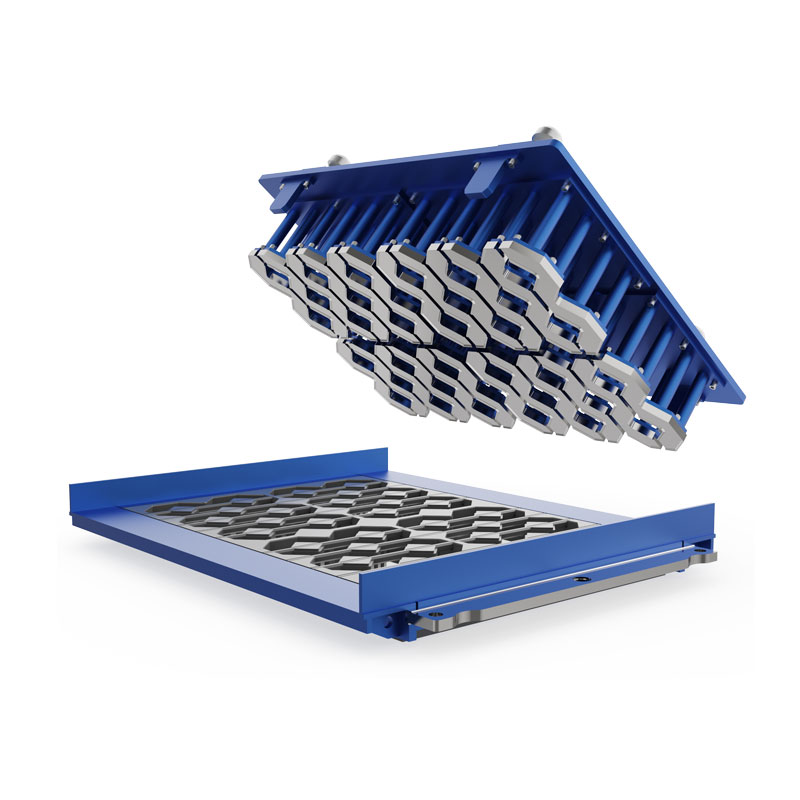
Replacing an entire Mould for Concrete Block is expensive. To reduce costs, we design our moulds with replaceable liners and wear plates. The main body is made of a tough, medium carbon steel, while the cavity liners are made of hardened tool steel. When the liners wear, you simply replace them without scrapping the entire mould. Our factory supplies liner sets that can be swapped in under 2 hours. This modular approach also allows you to change the block size or shape by just replacing the liners, rather than purchasing a completely new mould. We have observed that a Mould for Concrete Block with replaceable liners can have a total service life of over 10 years, while a monolithic mould usually needs replacement after 3 to 4 years. The initial cost is slightly higher, but the long term savings are significant. QGM provides detailed drawings and a liner replacement guide with every modular mould.
Frequently Asked Questions About Durable Mould for Concrete Block Materials
Final Summary
Selecting the right material for a Mould for Concrete Block is crucial for achieving consistent production and low cost per block. Tool steel with proper heat treatment offers the best combination of wear resistance and toughness, while stainless steel is suitable for corrosive environments. Modular designs with replaceable liners reduce long term costs. Our factory has extensive experience in manufacturing durable moulds tailored to various concrete block applications. Quangong Machinery Co., Ltd. is ready to help you choose the optimal material and design for your production needs.