

What Materials Are Commonly Used in Manufacturing Harvester Hydraulic Cylinders?
2026-09-07
In a harvester, the hydraulic cylinder lives in one of the harshest environments imaginable. Dust and soil particles from the field are constantly in the air. The cylinder is splashed with muddy water during wet harvests. It is exposed to crop residues, chemical residues, and extreme temperature swings. In this environment, material selection is not a cost optimization exercise—it is a survival decision. A cylinder made from the wrong steel or fitted with the wrong seal compound can fail in a single season. This guide is written for field engineers and equipment managers who need to understand which materials perform best in agricultural service.
1. What Are the Key Components of a Harvester Hydraulic Cylinder and Their Material Requirements?
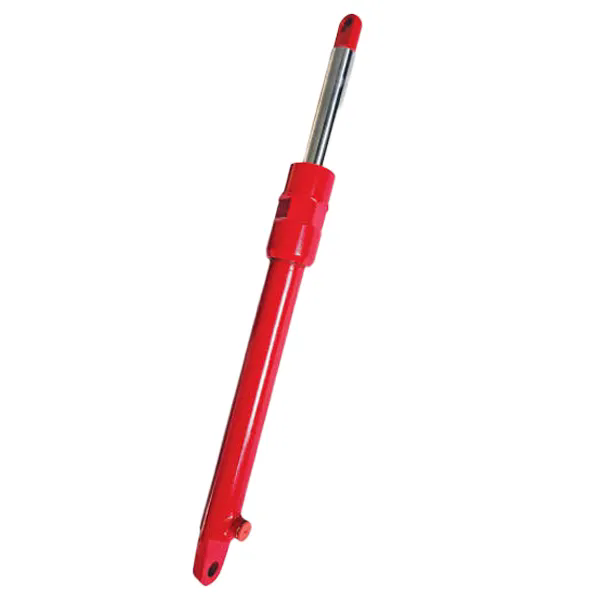
A Harvester Hydraulic Cylinder consists of five key components: the cylinder barrel, the piston rod, the piston, the seals, and the bearings. Each component has a distinct material requirement based on its function. The barrel must resist internal pressure and wear from the piston movement. The rod must resist corrosion, scratching, and bending. The seals must withstand the hydraulic fluid, the temperature extremes, and the abrasive dust. The piston must provide a tight seal while moving smoothly. The bearings must support the rod side loads. In our factory, we select materials for each component based on a field failure analysis that we have conducted over 15 years of supplying Harvester Hydraulic Cylinder units to agricultural customers.
Field failure statistics from our factory: Of the cylinders returned for warranty analysis, 42 percent failed due to rod damage (corrosion or scratching), 28 percent failed due to seal wear, 18 percent failed due to barrel scoring, and 12 percent failed due to piston or bearing failure.
The material choices for each component are directly linked to these failure modes. A Harvester Hydraulic Cylinder with a hard chrome plated rod and polyurethane seals will survive the dusty field environment much longer than a cylinder with a soft steel rod and rubber seals. At Raydafon Technology Group Co.,Limited, we have developed a standard material specification for each component based on these field observations.
2. What Are the Most Common Rod Materials and Their Performance Differences?
The rod is the most exposed component of a Harvester Hydraulic Cylinder. It is the part that extends into the field environment, and it is the part that is most frequently damaged. The table below compares the four most common rod materials used in agricultural cylinders.
| Rod material | Corrosion resistance | Abrasion resistance | Surface hardness (HRC) | Relative cost | Common applications |
| Induction hardened 1045 steel | Moderate | Good | 55 – 60 | Low | Entry level, dry climates |
| Hard chrome plated 1045 | Excellent | Excellent | 65 – 72 | Medium | Most agricultural cylinders |
| Stainless steel (304/316) | Excellent | Moderate | 20 – 25 | High | Corrosive environments |
| Nitrided steel (41CrAlMo7) | Good | Excellent | 70 – 75 | High | High wear applications |
Hard chrome plated 1045 steel is the most common choice for Harvester Hydraulic Cylinder rods because it offers an excellent balance of corrosion resistance, abrasion resistance, and cost. The chrome layer provides a hard, smooth surface that reduces seal wear. In our factory, we apply a 0.015 mm minimum chrome layer thickness to all our Harvester Hydraulic Cylinder rods, which exceeds the industry standard of 0.010 mm. This additional thickness extends the rod life by approximately 30 percent in abrasive field conditions.
3. What Barrel Materials and Surface Finishes Are Used to Prevent Scoring?
The barrel of a Harvester Hydraulic Cylinder must be smooth enough to allow the piston to move freely but hard enough to resist scoring from abrasive particles that penetrate the seals. The most common barrel material is cold drawn seamless steel tube (CDS), typically grade ST52 or equivalent. The surface finish is critical: a rough barrel surface will accelerate seal wear and create leak paths. The table below shows the barrel material specifications and surface finish requirements for different service levels.
| Barrel material | Surface finish (Ra, microns) | Hardness (HRC) | Wear resistance | Typical service level |
| CDS ST52 (as drawn) | 0.8 – 1.2 | 18 – 22 | Moderate | Light duty, occasional use |
| CDS ST52 (honed) | 0.3 – 0.5 | 18 – 22 | Good | Standard agricultural |
| CDS ST52 (skived and roller burnished) | 0.15 – 0.25 | 25 – 30 | Excellent | Heavy duty, high cycles |
| Induction hardened barrel | 0.2 – 0.4 | 50 – 55 | Superior | Extreme abrasive conditions |
In our factory, we use skived and roller burnished barrels for our standard Harvester Hydraulic Cylinder units. The roller burnishing process work-hardens the surface to 25 HRC and produces a mirror-like finish that reduces friction and extends seal life. For customers who operate in extremely sandy soils, we offer an induction hardened barrel option. This adds 25 to 30 percent to the barrel cost but extends the cylinder life by a factor of three.
4. What Seal Materials Are Suitable for Agricultural Hydraulic Applications?
The seal is the most sensitive component in a Harvester Hydraulic Cylinder. It must maintain a seal while the rod moves through abrasive dust, and it must withstand the chemical attack from hydraulic fluid and agricultural chemicals. The most common seal materials are polyurethane (PU), nitrile rubber (NBR), and PTFE. Polyurethane is the preferred material for the rod seal because it has high abrasion resistance and good extrusion resistance. Nitrile rubber is used for static seals and O rings because of its good oil resistance and low cost. PTFE is used for guide rings and piston seals because of its low friction coefficient. In our factory, we use polyurethane with a hardness of 95 Shore A for the rod seal, which provides the best combination of abrasion resistance and sealing force.
Frequently Asked Questions About Harvester Cylinder Materials
Summary for Field Engineers and Equipment Managers
The material selection for a Harvester Hydraulic Cylinder is a tradeoff between cost, durability, and the specific field conditions. Hard chrome plated steel rods with polyurethane seals represent the best balance for most applications. For extremely abrasive or corrosive environments, nitrided rods and induction hardened barrels may be justified. The key to maximizing cylinder life is not just the initial material selection, but also the maintenance of the hydraulic fluid cleanliness and the regular inspection of the rod surface for scratches. Our factory has been manufacturing Harvester Hydraulic Cylinder units for over two decades, and we have developed material specifications that are matched to the specific crops and soil types of our customers.
Raydafon Technology Group Co.,Limited manufactures Harvester Hydraulic Cylinder units with a range of material options. We provide full material traceability and test reports for each component. Our engineering team can help you select the right material combination for your specific harvester model and field conditions.