

What Materials Are Commonly Used in Modern Stamping Jacket Gasket Manufacturing?
2026-02-28
At Ningbo Kaxite Sealing Materials Co., Ltd., our team focuses on producing high-quality Stamping Jacket Gasket products that meet modern industrial standards. Selecting the right materials is crucial to ensure optimal sealing performance, durability, and resistance under varying operating conditions. In this article, we explore the commonly used materials in manufacturing stamping jacket gaskets and provide detailed insights into their specifications.
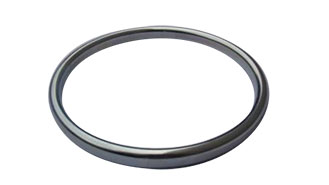
Which Metals Are Preferred for High-Performance Stamping Jacket Gaskets?
Our factory primarily uses stainless steel, carbon steel, and copper alloys for the metallic layers of Stamping Jacket Gasket. Stainless steel offers excellent corrosion resistance and high-temperature tolerance, making it suitable for chemical and energy industries. Carbon steel provides strength at a lower cost, ideal for standard industrial applications. Copper alloys are chosen when high thermal conductivity and flexibility are required.
| Material | Thickness Range (mm) | Temperature Tolerance (°C) | Primary Applications |
| Stainless Steel | 0.1 – 2.0 | -200 to 800 | Chemical processing, energy sector, food industry |
| Carbon Steel | 0.2 – 3.0 | -50 to 600 | General industrial equipment, automotive machinery |
| Copper Alloy | 0.1 – 1.5 | -50 to 400 | High thermal conductivity applications, heat exchangers |
By choosing these metals, our Stamping Jacket Gasket products provide reliable performance while reducing maintenance requirements for our clients.
How Do Non-Metallic Materials Enhance Stamping Jacket Gasket Performance?
In addition to metal components, our Stamping Jacket Gasket designs incorporate non-metallic layers such as graphite, PTFE, and aramid fibers. Graphite sheets are highly resistant to extreme temperatures and chemical corrosion, making them ideal for high-pressure applications. PTFE provides exceptional chemical inertness and low friction, which enhances gasket sealing under aggressive chemical exposure. Aramid fibers contribute to strength and dimensional stability, particularly in dynamic operating conditions.
| Material | Density (g/cm³) | Temperature Range (°C) | Key Benefits |
| Graphite | 1.8 – 2.2 | -200 to 500 | High-temperature resistance, chemical stability |
| PTFE | 2.1 – 2.3 | -100 to 260 | Chemical inertness, low friction, corrosion resistance |
| Aramid Fiber | 1.4 – 1.5 | -50 to 300 | High strength, dimensional stability, long service life |
Using these non-metallic materials allows our Stamping Jacket Gasket to meet strict industrial standards while maintaining consistent sealing performance in challenging conditions.
Why Is Material Selection Critical for Temperature and Pressure Resistance?
Our factory emphasizes precise material selection because Stamping Jacket Gaskets must endure extreme temperatures and pressures. For example, stainless steel layered with graphite can handle high-pressure steam systems, while a combination of carbon steel and PTFE suits chemical processing equipment. Our team customizes material combinations according to client requirements, ensuring optimal sealing, reliability, and compliance with industry norms.
What Role Does Material Thickness Play in Stamping Jacket Gasket Efficiency?
The thickness of materials in a Stamping Jacket Gasket directly impacts compression, elasticity, and sealing efficiency. Our engineers carefully select the thickness of both metallic and non-metallic layers to achieve ideal compression without compromising structural integrity. For instance, graphite layers of 0.5 to 1.5 mm combined with a 0.2 mm stainless steel backing can provide maximum sealing while reducing the risk of blowouts under pressure.
How Do Industry Standards Influence Material Choices in Gasket Manufacturing?
Our Stamping Jacket Gasket products comply with international standards such as ASME, API, and DIN. These standards dictate acceptable material types, thickness ranges, and performance characteristics. By adhering to these guidelines, our gaskets maintain reliable sealing across various industrial systems, ensuring client safety and reducing downtime in critical applications.
FAQ: What Materials Are Commonly Used in Modern Stamping Jacket Gasket Manufacturing?
Q1: Which metal is most commonly used for high-temperature Stamping Jacket Gaskets?
A1: Stainless steel is the preferred metal due to its excellent corrosion resistance and ability to withstand temperatures up to 800°C, making it suitable for energy and chemical applications.
Q2: Can non-metallic materials improve chemical resistance of gaskets?
A2: Yes, materials like PTFE and graphite layers provide superior chemical resistance, allowing gaskets to maintain integrity even under aggressive industrial chemicals.
Q3: How does material selection affect gasket longevity?
A3: Proper material selection, combining metals like carbon steel with durable non-metallic layers such as aramid fiber, ensures dimensional stability and reduces wear, extending the service life of the Stamping Jacket Gasket.
Conclusion and Next Steps
In summary, the performance of a modern Stamping Jacket Gasket depends heavily on careful material selection. Metals such as stainless steel, carbon steel, and copper alloys provide strength and thermal stability, while non-metallic materials like graphite, PTFE, and aramid fibers enhance chemical resistance and durability. At Kaxite Sealing, our team continuously optimizes material combinations and thicknesses to meet industry standards and client-specific requirements. By understanding the role of each material and selecting the appropriate combination, our Stamping Jacket Gasket ensures reliable sealing, safety, and longevity in various industrial applications. Contact our team today to learn more about how our factory can provide customized solutions for your sealing needs.