

What Materials Are Used in Corrugated Metal Gaskets for Corrosive Industrial Environments?
2026-08-07
1. Why Is Stainless Steel a Preferred Base Material for Corrugated Metal Gaskets?
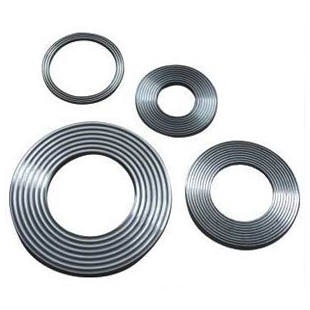
In our factory, we manufacture Corrugated Metal Gaskets for a wide range of chemical, petrochemical, and marine applications. The base material must withstand both corrosion and high compressive loads. Austenitic stainless steels, particularly 316L and 304, are the most common choices. 316L contains molybdenum, which gives it excellent resistance to chloride pitting and crevice corrosion. For many coastal refineries and offshore platforms, 316L is the default because it handles saltwater and sour gas services well. Our Ningbo Kaxite Sealing Materials Co., Ltd. uses 316L for over 60 percent of our standard Corrugated Metal Gaskets. The corrugations are formed by precision stamping, which work hardens the surface slightly, increasing the yield strength to about 240 MPa. This allows the gasket to maintain its spring back properties even after repeated thermal cycles. A 316L Corrugated Metal Gasket can typically operate at temperatures from -196°C to 550°C, making it suitable for cryogenic and high temperature applications. For less aggressive environments, 304 stainless steel is a cost effective alternative, offering good general corrosion resistance at a lower price point.
2. How Do Nickel Alloys and Duplex Grades Enhance Resistance to Severe Acids?
When standard stainless steels are not enough, we turn to high performance alloys. For environments with strong mineral acids like hydrochloric or sulfuric acid, Corrugated Metal Gaskets made from Hastelloy C‑276 or Inconel 625 provide superior resistance. These alloys have high molybdenum and chromium content, which forms a stable passive layer even in reducing conditions. Our factory has supplied Inconel 625 Corrugated Metal Gaskets to flue gas desulfurization units in power plants, where temperatures exceed 600°C and the gas contains chlorides. Duplex stainless steel 2205 is another excellent choice for environments where chloride stress corrosion cracking is a risk. It offers twice the yield strength of 316L, allowing for thinner gaskets that still provide a good seal. The table below compares the corrosion resistance and mechanical properties of materials we commonly use for Corrugated Metal Gaskets.
| Material | Corrosion resistance (general / chlorides) | Maximum temperature | Typical corrosive environment |
| 304 Stainless steel | Good / Moderate | 550°C | Water, steam, mild organic acids |
| 316L Stainless steel | Very good / Good | 550°C | Saltwater, dilute sulfuric acid, amines |
| Duplex 2205 | Excellent / Excellent | 650°C | Chloride rich, acidic brines, sour gas |
| Inconel 625 | Superior / Superior | 850°C | Hydrochloric acid, wet chlorine, nitric acid |
| Hastelloy C‑276 | Superior / Superior | 870°C | Sulfuric acid, phosphoric acid, mixed acids |
| Property (tested per ASTM) | 316L stainless | Duplex 2205 | Inconel 625 |
| Yield strength 0.2% (MPa) | 205 | 450 | 414 |
| Tensile strength (MPa) | 515 | 680 | 930 |
| Hardness (Rockwell B) | 80 | 95 | 88 |
| PREN (pitting resistance) | 26 | 35 | 51 |
| Cost index (relative to 304) | 1.8 | 3.5 | 8.0 |
Our Ningbo Kaxite Sealing Materials Co., Ltd. stocks all these materials in sheet form and can produce Corrugated Metal Gaskets in custom diameters up to 3000 mm. For extremely aggressive environments, we also offer titanium and zirconium alloys upon request.
3. What Role Do Coatings and Fillers Play in Sealing Performance?
Bare metal Corrugated Metal Gaskets can be prone to galling on stainless steel flanges. To overcome this, our factory applies a soft coating such as PTFE, graphite, or mica. The coating fills the microscopic grooves on the flange surface, creating a conformable layer that seals even with moderate bolt load. PTFE coated Corrugated Metal Gaskets are widely used in chemical plants where chemical inertness is required up to 260°C. For high temperature services, we use expanded graphite coating, which withstands up to 550°C in oxidizing atmospheres. In some designs, we embed a soft filler material, such as flexible graphite tape, in the corrugation grooves. This provides an additional sealing element and reduces the risk of leakage through the metal‑to‑metal contact. Our factory has tested these coated Corrugated Metal Gaskets on a helium leak detector and achieved a leakage rate below 10⁻⁵ mbar·L/s. The coating thickness is precisely controlled between 0.05 and 0.15 mm to ensure the corrugations still bite into the flange. We recommend coating for all services where the flange surface finish is rougher than Ra 3.2 µm. For vacuum services, a PTFE coated Corrugated Metal Gasket is the standard choice.
4. How Does the Corrugation Design Affect the Choice of Material?
The geometry of the corrugations influences the stress distribution on the gasket. Our factory uses a patented corrugation profile with a 90° peak angle and a radius of 0.3 mm at the crest. This profile concentrates the sealing force along a narrow line, which is effective even with high hardness materials. For harder alloys like Inconel or duplex, the forming tools must be made of carbide to withstand the higher forming loads. We adjust the pitch (distance between corrugations) based on the material thickness; for thin sheets (0.5 mm), we use a finer pitch to maintain flexibility. The corrugation height is typically 1.5 mm, which provides sufficient spring back after compression. In our factory, we perform a finite element analysis for each material to determine the optimal corrugation geometry. This ensures that the Corrugated Metal Gasket maintains its resilience even after multiple thermal cycles. For highly corrosive services, the material must also resist intergranular attack after the forming process; we use low carbon grades (316L, 304L) to avoid sensitization during welding or heat exposure.
Frequently Asked Questions About Corrugated Metal Gasket Materials
Final Summary
Selecting the right material for Corrugated Metal Gaskets in corrosive industrial environments requires a careful balance of corrosion resistance, mechanical strength, and cost. Stainless steel, duplex alloys, and nickel based superalloys each have their place depending on the chemical exposure and temperature. Coatings and fillers further enhance sealing performance and protect flange surfaces. Our factory has extensive experience in manufacturing Corrugated Metal Gaskets for the most demanding applications, and we offer a wide range of materials and finishes. Ningbo Kaxite Sealing Materials Co., Ltd. is your partner for safe, reliable, and long‑lasting sealing solutions.