

What Role Does Cork Rubber Sheet Play in Effective Noise and Vibration Dampening?
2026-01-23
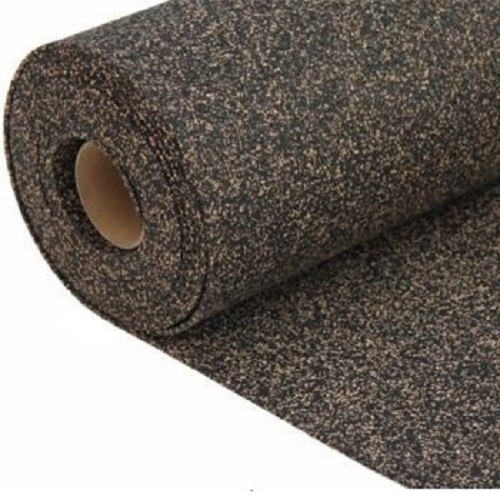
In mechanical engineering and architectural acoustics, controlling noise and vibration is not merely about blocking it requires a material that can actively manage and dissipate energy. The Cork Rubber Sheet is engineered to play this exact role. This composite material is not a simple barrier it is a sophisticated damping component with a dual function. At its core, the product from our factory acts as both an acoustic absorber and a vibration isolator, addressing two distinct but often co occurring problems with a single, integrated solution. The inherent value lies in its ability to convert problematic energy into negligible heat, thereby protecting system integrity and human comfort. Understanding the specific roles it plays is crucial for specifying the right material for demanding applications in automotive, industrial, and construction projects where performance is non negotiable.
The Dual Role: Absorber and Isolator
The fundamental role of a Cork Rubber Sheet is to serve as a hybrid damping medium. The cork component, with its millions of tiny, sealed air cells, is exceptionally effective at trapping and dissipating sound wave energy a role we define as the absorber. Simultaneously, the continuous rubber matrix, typically nitrile or EPDM, adds viscoelasticity and mass. This allows the sheet to deflect, stretch, and compress under dynamic loads, effectively isolating and decoupling vibrating sources from receiving structures a role we define as the isolator. Our production process at Ningbo Kaxite Sealing Materials Co., Ltd. precisely controls the bonding of these elements to optimize this dual performance. This synergy is what separates it from single purpose materials, allowing our clients to solve complex Noise, Vibration, and Harshness (NVH) issues with one reliable product.
Detailed Role in Noise Control Mechanisms
In the domain of noise control, the Cork Rubber Sheet plays three specific sub roles. First, for airborne noise, it acts as a broadband sound absorber. When sound waves penetrate the surface, they enter the labyrinth of cork cells. The friction and viscoelastic losses within these confined air pockets and cell walls convert acoustic energy into minimal heat, reducing sound reflection and transmission. Second, for impact and structure borne noise, it functions as a decoupling layer. Installed as an underlayment or within partitions, it breaks the physical "sound bridge" that would otherwise allow vibrations to travel freely as audible noise. Third, due to its impermeable rubber skin, it also serves as a minor mass barrier, adding to the overall Sound Transmission Class (STC) of an assembly. Our factory formulates the composite to balance these roles based on the target frequency spectrum of the noise problem.
Specific Role in Vibration Dampening Mechanisms
For vibration control, the sheet's primary role is that of an energy dissipater and decoupler. When vibrational energy from a machine or structural movement is introduced, the high internal damping (loss factor) of the composite material causes it to deform. During this cyclic deformation, a significant portion of the mechanical energy is converted and lost as heat within the material's microstructure. This is the damping action. Concurrently, by placing our Cork Rubber Sheet between a vibrating source and its foundation, it creates a flexible interface with high stiffness. This interface prevents the efficient transfer of vibrational forces, isolating the source. The technical parameters below, standardized in our production, are direct indicators of how well the material performs these critical roles.
| Performance Parameter | Typical Value | Direct Role Correlation |
| Density | 800 1000 kg/m³ | Governs mass law for airborne noise blocking (Barrier Role). |
| Dynamic Stiffness | Customizable | Determines isolation efficiency at specific frequencies (Isolator Role). |
| Loss Factor (Damping) | High (Material Dependent) | Indicates ability to dissipate vibrational energy as heat (Dissipater Role). |
| Compression Set (22h at 70°C) | Max 25% | Ensures long term stability of the decoupling interface (Durable Isolator Role). |
| Thickness Range | 1.5mm to 25mm | Affects low frequency isolation and absorption depth (Tunable Role). |
| Fire Rating | Class B1 | Maintains performance role in safe, compliant applications (Safety Role). |
Our engineering focus ensures these parameters are consistent, allowing the Cork Rubber Sheet to reliably perform its designated roles throughout its service life. The low compression set, for instance, is critical it means the isolation gap our material creates does not collapse over time, a common failure point for inferior products.
How This Role Translates to Application Success
The defined roles of the Cork Rubber Sheet dictate its success in real world applications. In automotive, its role as an absorber and isolator is used in dash insulators and floor mats to prevent road and engine noise (airborne and structure borne) from entering the cabin. In industrial machinery, its primary role as a vibration decoupler is critical when used as mounting pads for pumps, compressors, and generators, protecting building structures from damaging forces. In construction, its dual role is utilized in floating floor systems it absorbs impact sound from footfalls (absorber) while isolating the subfloor from the finished floor (isolator). By understanding and leveraging these specific roles, engineers can deploy our material from Ningbo Kaxite Sealing Materials Co., Ltd. strategically to achieve predictable and effective noise and vibration control outcomes.
Frequently Asked Questions on Function and Role
Q1:What is the main physical difference between the cork and rubber in terms of the role they play?
The cork and rubber play distinct and complementary physical roles. The cork granules are primarily responsible for the sound absorption role. Their cellular structure creates friction and turbulence for sound waves, converting acoustic energy into heat. They also contribute to the composite's compressibility. The rubber matrix plays the dominant role in vibration isolation and sealing. It provides the viscoelasticity that allows for energy dissipation through hysteresis (internal friction during deformation), and it binds the cork into a coherent, durable sheet that can resist compression set and environmental factors. In our composite, one cannot function optimally without the other for full spectrum dampening.
Q2: Can the Cork Rubber Sheet play an effective role in isolating very low frequency vibrations?
Isolating very low frequency vibrations (e.g., below 10 Hz) is challenging for any material and requires careful design. While our Cork Rubber Sheet has a significant role to play, its effectiveness is tuned by its dynamic stiffness and the installed static load. For low frequency isolation, we often recommend using a thicker sheet and/or engineering a lower dynamic stiffness in our compound. This allows the material to act as a softer spring, achieving a lower natural frequency for the isolation system, which is key to attenuating low frequency vibrations. Our technical team can advise on specification and installation geometry to optimize the sheet for this specific role in your system.
Q3: How does the material's role change if it is used in a compressed state?
When our Cork Rubber Sheet is used in a statically compressed state, as in a gasket or a heavily loaded mount, its primary role shifts. The vibration isolation and decoupling role remains critical, but it now operates within a pre stressed condition. The compression enhances the sealing role by ensuring full contact. Importantly, the energy dissipation (damping) role often improves with moderate compression due to increased internal friction. However, excessive compression can reduce its effectiveness as an absorber by closing off cork cells. Our product is designed with a controlled compression set to ensure it maintains its intended roles under sustained load, a key quality metric from our factory.
Ultimately, the Cork Rubber Sheet plays the indispensable role of a multifunctional, energy managing interface. It is neither purely a barrier nor a simple pad it is a precisely engineered composite designed to absorb, dissipate, and isolate. By defining its application around these core roles, engineers can achieve superior NVH performance. At Ningbo Kaxite Sealing Materials Co., Ltd., our expertise lies in manufacturing this versatile material to exacting standards, ensuring it reliably performs the roles your project demands for long term success. We provide the material science behind the solution.