

What Role Does Nitrile Rubber Content Play in Bonded Cork Sheet Performance?
2026-01-29
In sealing and vibration control applications across North America and Europe, engineers often look for materials that balance compressibility, recovery, and resistance to aggressive service conditions. Bonded cork materials have long been used in automotive gaskets, transformer pads, and industrial machinery due to their ability to absorb stress while maintaining dimensional stability. At Ningbo Kaxite Sealing Materials Co., Ltd., production decisions are guided by real operating environments, including oil exposure, temperature fluctuation, and long-term compression. In our experience, consistent material formulation allows our customers to meet ASTM and DIN performance expectations without overdesigning their systems. This practical approach reflects how our factory aligns product development with local engineering standards.
How Does Nitrile Rubber Content Influence Mechanical Strength and Recovery?
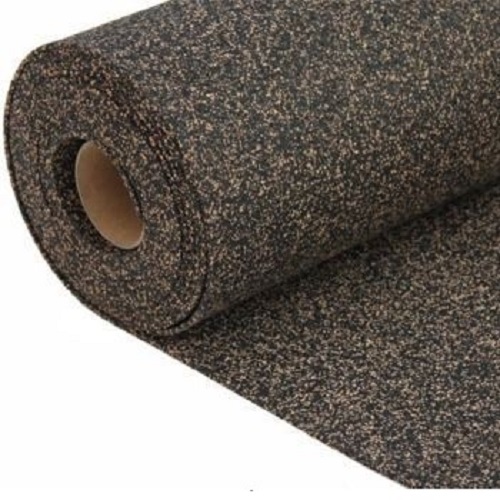
The mechanical behavior of Nitrile Rubber Bonded Cork Sheet is directly affected by the proportion of nitrile rubber within the composite. Higher rubber content improves tensile strength, elongation, and elastic recovery after compression. In automotive sealing, this translates into better bolt load retention and reduced risk of micro-leakage over time. Our testing shows that balanced rubber ratios help the material recover even after prolonged static loads, which is critical for flange gaskets and equipment bases. By adjusting formulations, our team ensures that our products deliver stable performance under both dynamic and static stress conditions.
| Rubber Content Range | Mechanical Impact | Typical Applications |
| Low to Medium | Good compressibility with moderate recovery | Transformer pads, light-duty gaskets |
| Medium to High | Improved tensile strength and rebound | Automotive flanges, pump housings |
Why Is Oil and Fuel Resistance Closely Linked to Rubber Formulation?
Nitrile rubber is widely recognized in local markets for its resistance to petroleum-based oils, fuels, and lubricants. In Nitrile Rubber Bonded Cork Sheet, increasing nitrile content enhances chemical compatibility, making the material suitable for engine compartments and hydraulic systems. Our evaluations confirm that optimized rubber levels reduce volume swell and maintain sealing integrity after prolonged oil immersion. For many buyers, this property is a deciding factor when comparing cork composites. By controlling raw material sourcing and mixing accuracy, our factory delivers consistent resistance profiles that align with common SAE and ISO requirements.
How Do Density and Compression Set Affect Long-Term Sealing Reliability?
Density and compression set are two parameters closely monitored by design engineers. A well-balanced Nitrile Rubber Bonded Cork Sheet offers sufficient density to support loads while retaining flexibility for surface irregularities. Lower compression set values indicate better ability to return to original thickness after unloading, which directly affects service life. Our internal data shows that proper rubber distribution within the cork matrix minimizes permanent deformation. This balance allows our customers to extend maintenance intervals and reduce downtime in industrial equipment.
| Property | Typical Range | Performance Benefit |
| Density | 0.9 to 1.2 g per cm3 | Stable load-bearing capacity |
| Compression Set | Below 20 percent | Improved sealing longevity |
What Role Does Material Consistency Play in OEM and Aftermarket Use?
Material consistency is critical for both OEM supply chains and aftermarket replacements. Variations in rubber content can lead to unpredictable sealing behavior and premature failure. Kaxite Sealing applies standardized batching and curing controls to ensure repeatable performance across production lots. This reliability supports our position as a long-term supplier for automotive and industrial clients. By maintaining strict process control, our solutions help distributors and equipment manufacturers meet warranty and quality assurance requirements in demanding markets.
FAQ: What Role Does Nitrile Rubber Content Play in Bonded Cork Sheet Performance?
Q1: How does rubber content affect sealing under fluctuating temperatures?
Higher nitrile rubber content improves flexibility at low temperatures and stability at elevated temperatures, allowing the material to maintain contact pressure during thermal cycling common in engines and industrial machinery.
Q2: Can increased rubber content improve vibration damping?
Yes, greater rubber presence enhances energy absorption, which helps reduce noise and vibration transmission in equipment bases and mounting pads without sacrificing structural integrity.
Q3: Is higher rubber content always better for industrial gaskets?
Not necessarily. While higher content improves elasticity and oil resistance, excessive rubber can reduce compressibility. Optimal balance depends on flange design, load conditions, and service media.
How Does Proper Material Selection Support Cost Efficiency and Performance?
Selecting the right Nitrile Rubber Bonded Cork Sheet formulation allows engineers to avoid unnecessary material upgrades while still achieving reliable sealing. Matching rubber content to application requirements reduces total lifecycle cost by minimizing failures and maintenance. Our collaborative approach focuses on understanding operating conditions first, then recommending suitable specifications. This method helps our partners achieve performance targets without overengineering components.
In summary, nitrile rubber content plays a defining role in mechanical strength, chemical resistance, and long-term reliability of cork-based sealing materials. By controlling formulation, density, and compression characteristics, manufacturers can tailor performance to real-world demands. Ningbo Kaxite Sealing Materials Co., Ltd. continues to refine these parameters to support automotive and industrial customers worldwide. For detailed specifications or application guidance, contact our technical team to discuss how our solutions can support your next project and request a quotation today.