
What Safety Standards and Regulations Are Evolving for Laser Cutting Operations?
2026-01-15
The landscape of industrial safety is perpetually shifting, and laser cutting operations are at the forefront of this evolution. As technology advances, so too do the frameworks designed to protect operators, maintenance personnel, and the facilities themselves. For any manufacturer, staying ahead of these regulatory changes is not just about legal compliance—it's a core component of operational excellence and product reliability. At our factory, we embed these evolving principles into every Laser Cutting system we design, ensuring that performance never comes at the expense of safety.
The primary standards governing laser safety, such as the IEC 60825 series internationally and ANSI Z136.1 in the United States, have seen significant updates to address new laser classes, fiber laser technologies, and integrated automation. These updates increasingly mandate built-in safety by design, moving beyond mere protective housings to comprehensive risk assessment protocols. This means our engineering process begins with hazard analysis, ensuring every Laser Cutting machine we produce meets or exceeds the latest required control measures for radiation, fumes, and fire hazards.
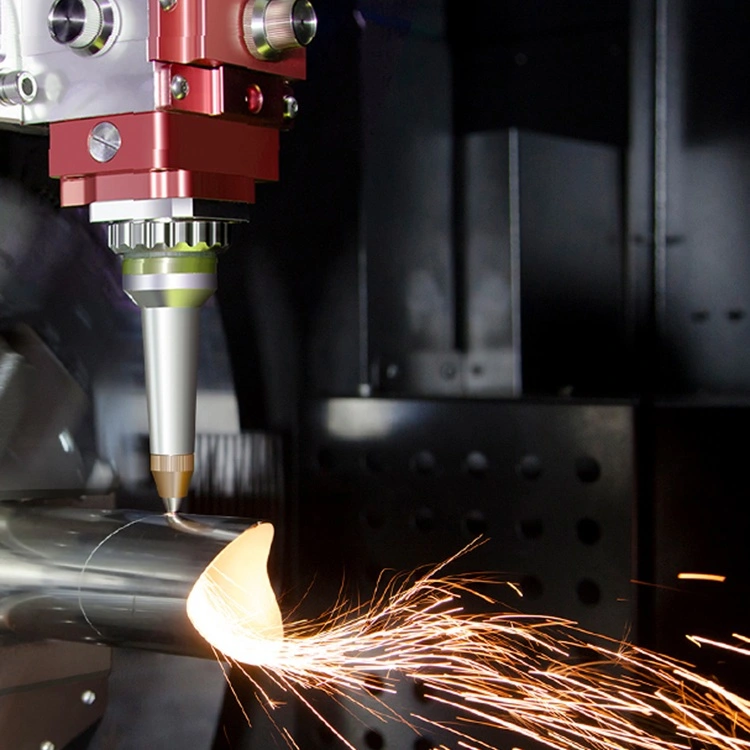
Key Regulatory Shifts Impacting Modern Laser Cutting
Recent years have witnessed a tightening of regulations concerning airborne contaminants generated during Laser Cutting. Standards like EN ISO 2313:2019 and OSHA's guidelines on ventilation are placing greater emphasis on integrated fume extraction systems with real-time monitoring. Our response at Tianjin Shenghui Metal Products Co., Ltd. has been to develop proprietary extraction interfaces that are seamlessly built into our machine architecture, not added as an afterthought. This ensures optimal capture of particulates at the source, safeguarding our air quality.
Furthermore, the integration of collaborative robotics (cobots) with Laser Cutting cells has introduced new considerations under ISO/TS 15066. This standard outlines safety requirements for collaborative operations, where human and machine share workspace. Our systems incorporate state-of-the-art safety-rated monitored stop and hand-guiding functionalities, allowing for flexible, productive, and utterly safe interaction. This evolution in regulation directly shapes how we conceive the workflow in our production units, prioritizing adaptive safety measures.
Engineering Safety into Our Laser Cutting Product Parameters
At Tianjin Shenghui Metal Products Co., Ltd., our philosophy is that true safety is engineered into the product's DNA. It is reflected in every specification and operational parameter. The following table outlines key aspects of our Laser Cutting systems where regulatory compliance and advanced safety converge directly with performance. These parameters are the result of our relentless focus on creating equipment that operators can trust implicitly.
| Feature Category | Our Specification & Technology | Safety & Compliance Benefit |
| Laser Enclosure Integrity | Full, interlocked safety enclosure with laminated viewing windows. | Exceeds IEC 60825 requirements for contained laser radiation; prevents access during operation. |
| Fume Extraction Integration | High-pressure, direct-draft extraction system with auto-adjusting flow. | Ensures compliance with EN ISO 2313 air quality standards; minimizes exposure to hazardous fumes. |
| Fire Prevention System | Integrated nozzle air-assist and bed-temperature monitoring with automatic shutdown. | Mitigates fire risk per NFPA standards; provides critical early warning and response. |
| Control System Safety | Safety-rated PLC with dual-circuit emergency stop and door interlock validation. | Meets Category 3, PLd per ISO 13849-1, ensuring control reliability fails to a safe state. |
| Training & Documentation | Comprehensive risk assessment dossier and VR-assisted operation training modules. | Fulfills mandatory documentation requirements and ensures effective user competency. |
These are not just isolated features; they represent a holistic system where each component reinforces the other. For instance, our integrated fume extraction directly supports compliance with workplace exposure limits, a growing focus for inspectors. By detailing these parameters, we demonstrate how our factory translates abstract regulations into concrete, reliable engineering solutions for every Laser Cutting application.
Frequently Asked Questions on Laser Cutting Safety Evolution
Question: How are international standards like IEC 60825 adapting to new high-power fiber lasers?
Answer: The IEC 60825 standard is continuously revised to address the unique hazards of newer laser technologies. For high-power fiber lasers, the updates place greater emphasis on the integrity of beam enclosures over their entire path, including fiber optic cables. They also mandate more rigorous labeling for service access points and require safety functions that can detect faults in the beam delivery system. In our Laser Cutting machines, we implement redundant enclosure monitoring and beam path sealing that specifically align with these evolving directives, ensuring safety even during maintenance procedures.
Question: What is the significance of "Safety by Design" in current regulations?
Answer: "Safety by Design" is a paradigm shift now embedded in regulations like the EU Machinery Directive 2006/42/EC. It moves the primary responsibility for risk reduction from the end-user (relying on PPE and procedures) to the manufacturer, requiring hazards to be eliminated or reduced as much as possible during the machine's design phase. This means our engineering team must integrate physical guards, interlocked doors, and automated shutdowns as inherent features. It profoundly influences our design process, leading to Laser Cutting systems where safety is a default, inseparable condition of operation, not an add-on.
Question: Are there new regulations concerning the materials that can be safely cut with lasers?
Answer: Yes, regulations are increasingly material-specific, particularly regarding fume generation. Cutting certain materials, such as PVC, coated metals, or composites, can release toxic or carcinogenic substances. Updated standards and occupational exposure limits (OELs) now strictly govern permissible airborne concentrations. This evolution forces a closer partnership between machine builders and clients. We provide detailed material compatibility guides and configure our fume extraction and filtration systems specifically to handle the particulates and gases expected from the materials our client intends to process, ensuring our factory's solutions are tailored for safe, compliant operation.
Our Proactive Approach to Compliance and Innovation
Navigating the evolving regulatory environment requires a proactive stance. We maintain a dedicated compliance team that monitors global standard revisions, from ANSI and ISO to local national regulations. This intelligence feeds directly back into our R&D department, allowing us to anticipate changes and incorporate them into our next-generation Laser Cutting platforms. It is our firm belief that regulatory evolution is a catalyst for innovation, pushing us to develop safer, smarter, and more efficient machines.
This commitment extends beyond the hardware. We consider comprehensive training and clear documentation—covering everything from routine operation to emergency response—as critical deliverables. Each system from Tianjin Shenghui Metal Products Co., Ltd. includes a complete safety package that empowers users to operate with confidence. By viewing regulations as a baseline rather than a ceiling, we ensure our Laser Cutting technology remains at the industry's forefront, offering not just cutting-edge performance but also unparalleled peace of mind. Our goal is to set the benchmark, ensuring that every product leaving our facility exemplifies the highest standards of safety and engineering.