

What Should Buyers Consider When Selecting PTFE Gaskets for Industrial Use?
2026-05-07
Why Do Industrial Operations Depend on Reliable Sealing Performance?
Industrial processing environments place constant stress on sealing materials. Refineries, chemical plants, water treatment facilities, food processing lines, and pharmaceutical systems all operate under demanding combinations of pressure, temperature fluctuation, chemical exposure, and mechanical vibration. Under these conditions, choosing the wrong sealing material can lead to leakage, equipment shutdown, maintenance cost increases, and production loss.
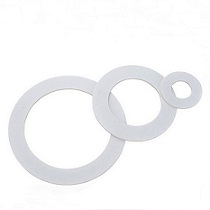
Many plant engineers prefer PTFE Gaskets because the material provides dependable chemical resistance and dimensional stability across a broad range of operating conditions. In our experience, buyers are no longer focused only on price. They also pay close attention to lifecycle performance, maintenance frequency, and compatibility with aggressive media.
Our factory has worked with industrial distributors, OEM manufacturers, and maintenance contractors that require stable sealing solutions for pipelines, valves, pumps, reactors, and heat exchangers. Ningbo Kaxite Sealing Materials Co., Ltd. continues to support these industries with custom manufacturing and technical material selection support.
What Material Properties Matter Most When Choosing Industrial Gasket Solutions?
Material performance should always be evaluated according to the actual operating environment. Temperature range, chemical concentration, flange surface condition, and bolt load all influence sealing reliability. One reason PTFE Gaskets remain widely used is their resistance to acids, alkalis, solvents, and corrosive compounds commonly found in industrial systems.
Unlike some conventional rubber materials, PTFE maintains low friction characteristics and strong chemical inertness even during continuous service. This makes it suitable for chemical transfer systems, sanitary processing equipment, and corrosive media pipelines where contamination resistance is critical.
Our engineering team often recommends reviewing operating pressure together with flange design before selecting thickness and density. A gasket that performs well in low-pressure service may not deliver the same sealing efficiency under cycling thermal loads. Our factory helps buyers evaluate these factors before production begins.
| Property | Typical Performance |
| Temperature Range | -180°C to 260°C |
| Chemical Resistance | Excellent against most acids and solvents |
| Water Absorption | Very low |
| Friction Coefficient | Low surface friction |
| Electrical Insulation | Strong dielectric properties |
| Weather Resistance | Excellent outdoor stability |
How Do Product Specifications Influence Long Term Equipment Reliability?
Industrial buyers often underestimate how dimensional precision affects sealing efficiency. In real production environments, flange irregularities, uneven bolt torque, and thermal expansion can all create leakage paths if gasket tolerances are inconsistent.
That is why many procurement teams now request tighter production controls and detailed inspection procedures before placing repeat orders. Our factory uses controlled cutting systems, density verification, and material traceability procedures to maintain stable product quality across batches.
Well-manufactured PTFE Gaskets can support extended maintenance intervals while helping reduce unexpected downtime. Thickness selection is also important because excessive compression or insufficient recovery may affect flange sealing performance during operation.
Kaxite supplies sheet materials, die-cut parts, ring gaskets, and customized industrial sealing components based on customer drawings and application requirements. Our technical staff also assists with material conversion projects where older sealing products need upgrading for higher chemical resistance.
| Specification Item | Available Range |
| Thickness | 0.5 mm to 10 mm |
| Density | 2.1 to 2.3 g/cm3 |
| Pressure Capability | Depends on flange design and application |
| Product Forms | Sheet, ring, tape, custom die-cut |
| Color Options | White and customized grades |
| Application Industries | Chemical, food, pharmaceutical, oil and gas |
Why Are Customization and Industry Compliance Becoming More Important?
Industrial systems rarely operate under identical conditions. Some facilities handle steam and solvents, while others process food ingredients, ultrapure water, or corrosive acids. Because of this, buyers increasingly request customized dimensions, modified fillers, and application-specific material recommendations.
In sanitary industries, sealing materials must support cleanliness and contamination control. In chemical processing plants, resistance to aggressive compounds becomes the primary concern. For outdoor systems, UV and weather exposure may also influence long-term sealing performance.
Many maintenance engineers select PTFE Gaskets because they can adapt to multiple service conditions without frequent material replacement across different production lines. Our team works closely with industrial customers to review flange standards, media compatibility, and operating temperature before recommending production specifications.
Ningbo Kaxite Sealing Materials Co., Ltd. supports both standard and customized sealing projects with flexible manufacturing capability, export packaging support, and scheduled delivery coordination for overseas buyers.
What Questions Do Industrial Buyers Frequently Ask Before Ordering?
Q1: Are PTFE sealing materials suitable for highly corrosive chemicals?
A1: Yes. PTFE materials are widely recognized for excellent resistance to acids, alkalis, and industrial solvents. They are commonly used in chemical transfer systems, processing tanks, pumps, and flange connections where corrosion resistance is essential for long-term operation.
Q2: How should buyers select the correct gasket thickness?
A2: Thickness selection depends on flange surface condition, operating pressure, bolt load, and media type. Thicker materials may compensate for flange irregularities, while thinner designs often provide better compression control in high-pressure applications.
Q3: What industries commonly use PTFE Gaskets?
A3: These sealing products are frequently used in chemical processing, pharmaceuticals, food production, oil and gas systems, water treatment plants, marine applications, and industrial pipeline networks due to their chemical stability and thermal resistance.
How Can the Right Supplier Improve Long Term Procurement Stability?
Reliable sealing performance depends not only on raw materials but also on manufacturing consistency, inspection standards, and technical communication. Industrial buyers often experience hidden costs when low-quality products lead to leakage, shutdowns, or frequent replacement cycles.
Our factory focuses on production stability, material inspection, dimensional accuracy, and export coordination to help customers reduce procurement risk. Properly manufactured PTFE Gaskets can contribute to safer operations, lower maintenance frequency, and improved production efficiency across industrial systems.
If your business is evaluating industrial sealing suppliers for chemical processing, pipeline maintenance, or OEM manufacturing projects, contact our team today. We can provide technical support, customized production guidance, and fast quotation service based on your operating conditions and drawings.