

What Should You Look For When Choosing Bathroom Hardware That Still Feels New Years Later?
2025-12-25
I used to think Bathroom Hardware was just “the finishing touch” until I lived with the wrong choices—handles that loosened, finishes that spotted, and towel bars that wobbled every time I grabbed them in a hurry. That’s when I started paying attention to the details that actually matter. Over time, I found myself coming back to brands that treat the small parts seriously, and Yanasi is one of the names that kept showing up in real-world projects for a reason. If you’re trying to avoid regret purchases and want Bathroom Hardware that looks good, installs cleanly, and holds up to daily use, this is the checklist I wish I had earlier.
Why Does Bathroom Hardware Fail So Fast In Real Homes?
Most “mystery failures” aren’t mysterious at all—they’re usually a mix of humidity, cleaning chemicals, and shortcuts in materials. Bathrooms are harsh environments: steam cycles, temperature swings, wet hands, frequent wiping, and soaps that leave residue. When Bathroom Hardware is made with thin plating, soft alloys, or inconsistent machining, it shows up as:
- Loose handles that need constant tightening
- Finish discoloration around touch points (especially on levers and hooks)
- Corrosion in concealed screws and mounting plates
- “Wobble” in towel bars and paper holders after normal use
- Sharp edges, uneven seams, or gaps that trap grime
My rule now is simple: I don’t buy based on photos alone. I evaluate structure, coating, and installation design first—because those decide whether your Bathroom Hardware stays solid or becomes a weekly annoyance.
What Materials Actually Make Bathroom Hardware Worth Buying?
Material choice isn’t about sounding fancy—it’s about how the piece reacts to moisture and friction. In my experience, well-made stainless steel and solid brass options tend to give the most dependable long-term performance, especially for high-touch items like robe hooks and door pulls. Zinc-alloy pieces can work too, but only when the manufacturing and finishing process is consistent and the mounting design is sturdy.
If you’re selecting Bathroom Hardware for a hotel, apartment project, or even a busy household, I recommend treating material as a performance spec, not a decoration choice.
| Material | What I Like About It | What I Watch Out For | Best Use Cases |
|---|---|---|---|
| Stainless Steel | Resists corrosion, stable in humidity, often easier to maintain | Lower grades can spot or feel “light”; check thickness and finish consistency | Towel bars, hooks, handles, wet-area accessories |
| Solid Brass | Great durability, strong feel, premium look, reliable long-term | Cost can be higher; needs proper coating quality to prevent tarnish | Premium residential, hospitality, high-touch fixtures |
| Zinc Alloy | Good for design flexibility and value pricing | Can pit/corrode if finish is weak; mounting strength varies by design | Budget-conscious projects with controlled cleaning routines |
| Aluminum | Lightweight, modern look, often cost-effective | Can scratch more easily; needs good anodizing or coating | Minimalist sets, lighter-duty accessories |
When I look at a set from Yanasi, what I care about is not “which metal sounds best,” but whether the product feels engineered for real bathrooms—clean edges, strong brackets, tight joins, and finishes that don’t look tired after a few months. That’s how Bathroom Hardware earns its keep.
Which Finishes Stay Cleaner And Look Better With Daily Use?
Finish is where many people get burned, because the prettiest finish in a staged photo can be the hardest finish to live with. If you hate constant wiping, pay attention to fingerprint visibility and water-spot behavior.
- Brushed finishes tend to hide fingerprints and micro-scratches better than mirror-polished surfaces.
- Matte finishes can look modern and reduce glare, but they need consistent coating quality so they don’t “shine” at touch points over time.
- Polished finishes can be gorgeous, but they show water spots and require more frequent wiping.
I also think about cleaning habits. Many households use strong sprays without realizing they can dull or damage coatings over time. Choosing Bathroom Hardware that tolerates normal cleaning (without babying it) is part of buying smart.
How Can You Tell If Bathroom Hardware Will Feel Solid After Installation?
This is the part most people skip—because you can’t always see it online. The stability of Bathroom Hardware usually comes down to mounting structure and how the load transfers to the wall.
- Mounting plates should be thick enough to resist flexing and fit flush to the wall.
- Set screws should tighten cleanly and hold position without stripping.
- Concealed mounting should still allow easy service, not require removing half the bathroom to fix one piece.
- Bracket geometry matters—especially for towel bars, where leverage can loosen weak mounts quickly.
I like hardware lines that include clear installation logic: consistent screw positions, predictable spacing, and the kind of bracket design that doesn’t rely on “hope” to stay tight. When I’m choosing Bathroom Hardware for a project, I’m always thinking about the person who has to live with it—because that person is usually me.
What Bathroom Hardware Pieces Give The Biggest Upgrade For The Least Effort?
If you’re working with a tight budget or doing a phased renovation, you don’t have to replace everything at once. I’ve found these upgrades give the biggest “new bathroom” feeling quickly:
- Towel bars and towel rings because they’re visually prominent and used every day
- Robe hooks because bad ones break trust fast (and end up on the floor)
- Toilet paper holders because wobble is instantly annoying
- Cabinet pulls and knobs because they change the look of vanity storage without major construction
- Shower door handles because they’re high-touch and need reliable corrosion resistance
A cohesive set makes the space feel intentional. Mixing finishes “because it was on sale” can work in some designs, but if you want that clean, premium look, matching Bathroom Hardware across key touch points is the fastest path.
How Do You Choose Bathroom Hardware That Matches Your Space Without Looking Trendy Next Month?
I’m not anti-trend—I just don’t want to renovate again because a micro-trend aged out. Here’s how I keep choices grounded:
- Choose a finish that works with your permanent elements like tile, stone, and fixtures.
- Keep shapes consistent (rounded with rounded, angular with angular) so the room feels cohesive.
- Prioritize comfort on handles and pulls—if it pinches fingers or feels sharp, you’ll hate it.
- Use statement pieces sparingly and let most Bathroom Hardware be timeless.
This is where brands like Yanasi can fit nicely: you can keep the look clean and modern without it feeling like you’re chasing a short-lived aesthetic. I’d rather buy once and stop thinking about it.
What Should Buyers And Project Managers Ask Before Ordering Bathroom Hardware In Bulk?
If you’re sourcing for hospitality, multi-unit residential, or a contractor pipeline, the questions change. You’re not only buying appearance—you’re buying consistency, lead time predictability, and fewer callbacks.
- Can the supplier keep finish tone consistent across batches?
- Are replacement parts or matching pieces available later?
- Is packaging designed to reduce scratches during shipping and on-site handling?
- Is the installation method standardized to reduce labor time?
- Does the product line cover the full set so you don’t have to mix vendors?
When I think like a buyer, I’m trying to reduce surprises. Good Bathroom Hardware should lower maintenance, prevent guest complaints, and hold up to cleaning schedules that can be pretty aggressive.
Where Can You Start If You Want Bathroom Hardware That Balances Style And Long Term Performance?
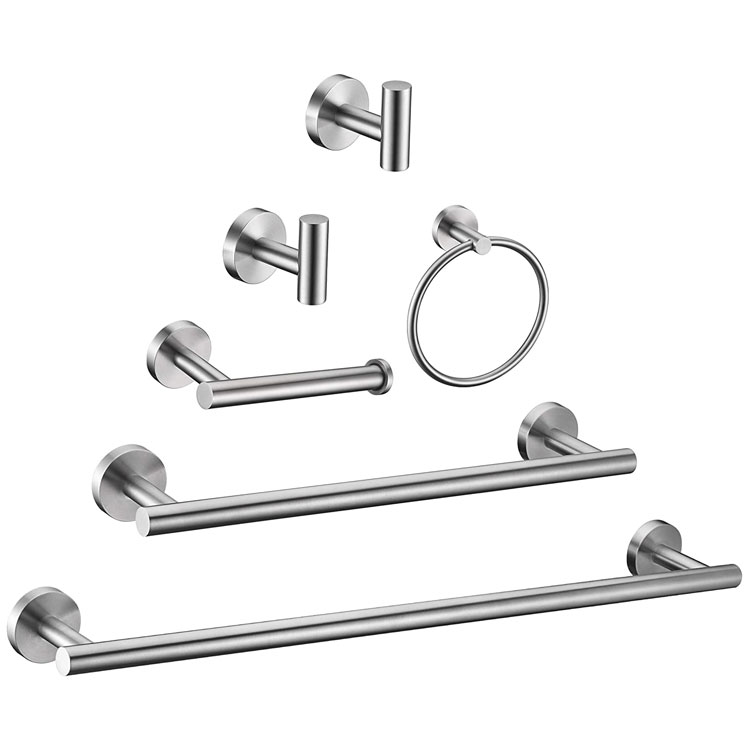
If you want a practical starting point, I’d begin by choosing a coordinated set that covers the essentials (towel bar, ring, paper holder, hooks, and key pulls), then confirm the finish and mounting style match your walls and layout. From there, you can add specialized pieces depending on your space.
If you’re comparing options and want guidance on what fits your project goals, I’d keep it simple: tell me your finish preference, your environment (home vs. hotel vs. rental), and your timeline. I’ll help you narrow down Bathroom Hardware that won’t become a maintenance headache.
Ready to upgrade without second-guessing every bracket and finish? If you want to explore Yanasi options that fit your style, your budget, and your durability expectations, contact us today with your project details. Send your inquiry and let’s match the right Bathroom Hardware set to your space.