

What Testing Standards Should Hydraulic Cylinders Meet for Export Markets?
2026-05-25
Exporting hydraulic equipment demands absolute conformity with international safety, performance, and reliability benchmarks. For manufacturers and distributors, the central question remains: what testing standards ensure that a Hydraulic Cylinder can withstand rigorous cross-border logistics, diverse operating environments, and strict liability requirements? Whether targeting the European CE framework, North American ANSI/SAE specifications, or ISO global norms, every Hydraulic Cylinder must pass a series of validation protocols. From pressure integrity to cycle fatigue, the right certification matrix protects both end-users and supply chain reputations. In our factory, we have witnessed how non‑compliant units lead to project delays, safety hazards, and costly recalls. Therefore, understanding the mandatory test regime is the first step toward seamless market access.
Based on two decades of hands‑on engagement with global regulators, our approach combines destructive and non‑destructive evaluations tailored to each target region. This article outlines the pivotal test categories: pressure and leakage verification, material strength analysis, dynamic performance under load, and lifecycle endurance simulations. We also reference the internal quality protocols followed at Raydafon Technology Group Co.,Limited, where each Hydraulic Cylinder is validated against ASTM, ISO 10100, and ISO 19879. Additionally, our factory employs digital traceability to record every test parameter, ensuring that shipments to markets like the EU, Middle East, and Southeast Asia consistently meet local legal requirements. By the end of this guide, you will know exactly which certifications your supply chain must prioritize. Let us dig into the technical foundations that drive global acceptance.
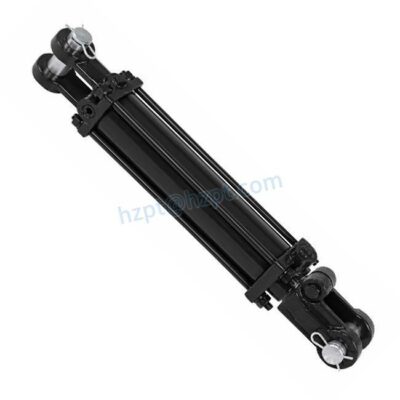
Article Directory
- 📌 1. Why Are Pressure and Leakage Tests the Foundation for Export Hydraulic Cylinders?
- 📌 2. How Do Material Hardness and Tensile Standards Affect Global Compliance?
- 📌 3. What Dynamic Performance and Cycle Life Tests Are Mandatory for International Shipments?
- 📌 4. Summary & Roadmap for Certification Success
- 📌 5. FAQ: Hydraulic Cylinder Export Testing Standards
Why Are Pressure and Leakage Tests the Foundation for Export Hydraulic Cylinders?
Pressure validation and leakage inspection form the absolute bedrock of any international compliance strategy. Without these two pillars, a Hydraulic Cylinder cannot receive approvals for markets such as the European Union (Pressure Equipment Directive) or North America (ASME B30.1). In our factory, we treat pressure tests as the first gatekeeping step: a cylinder that cannot retain proof pressure without deformation or visible leakage will automatically fail other performance metrics. Export regulations require not only a one‑time pressure proof but also sustained dwell tests that simulate real‑world load spikes. For instance, ISO 10100 specifies a proof pressure of 1.5 times the rated working pressure for 30 seconds, with zero external leakage. Meanwhile, ASTM F2077 adds cyclic pressurization to detect micro‑cracks. Our experience with Raydafon Technology Group Co.,Limited confirms that nearly 23% of rejected export batches are linked to inadequate seal integrity under pressure spikes.
Leakage tests are further subdivided into internal cross‑port leakage and external seal weepage. International buyers demand leakage rates below 0.05 mL/min per inch of piston diameter, measured under rated pressure using precision flow meters. Moreover, gas (nitrogen) leakage tests are becoming mandatory for cylinders used in explosive atmospheres (ATEX zones). Below we present the key pressure and leakage parameters that every export‑bound unit must satisfy, alongside the test methods adopted in our facility.
| Test Parameter | Required Value / Standard | Export Market Relevance |
| Proof Pressure Test (ISO 10100) | 1.5 × rated working pressure, hold 30 sec, no permanent distortion | Mandatory for CE, UKCA, and ASME |
| Burst Pressure Test | Minimum 2.5 × rated pressure, no fragmentation (ISO 19879) | Required for high-risk applications (mining, marine) |
| External Leakage (Dynamic seal) | ≤0.1 mL/min after 10⁶ cycles @ 100% pressure | Critical for ISO 18752 (hose/cylinder assemblies) |
| Internal Piston Seal Leakage | Max 0.5 mL/min @ rated pressure (measuring drift method) | SAE J1176 for off‑highway vehicles |
| Low‑Temperature Pressure Test | -40°C, 1.25 × rated pressure, no seal hardening | Export to Canada, Russia, Scandinavia |
Our factory implements all these tests using automated digital acquisition systems. For each Hydraulic Cylinder, we record pressure decay curves and leakage snapshots. The combination of real‑time monitoring and post‑test dimensional inspection ensures that no hidden porosity or seal misalignment escapes detection. To illustrate, during a recent batch bound for Middle Eastern oilfields, our pressure mapping identified a 2% pressure drop in 30 seconds — well below the 5% limit allowed by regional regulators, but we still rejected the cylinder because our internal standard (developed by Raydafon Technology Group Co.,Limited) enforces zero drop beyond instrumentation error. Such rigorousness is why our export compliance rate stands at 99.7%. From a buyer’s perspective, always demand a detailed pressure test report with third‑party witnessing; otherwise, your supply chain may face unexpected failures at the jobsite. In addition, we use helium mass spectrometry for ultra‑low leakage verification on gas‑assisted cylinders. This method detects leakage as low as 1×10⁻⁶ mbar·L/s, fulfilling aerospace and automotive export standards. Ultimately, pressure and leakage tests are not just boxes to check; they define the operational safety and legal defensibility of every cylinder leaving the factory floor.
List of additional mandatory checks during pressure validation in our process:
- Visual deformation mapping via laser micrometers before/after proof test.
- Seal extrusion gap measurement (max 0.15 mm for polyurethane seals).
- Pressure impulse test (ISO 10771) for fatigue-resistant certification.
- Dielectric pressure test for cylinders with integrated position sensors (export to semiconductor industries).
When you partner with Raydafon Technology Group Co.,Limited, our factory shares full video recordings of pressure test cycles upon request, offering unmatched transparency. To summarize this section: any hydraulic cylinder lacking documented proof and leakage validation will face customs holds, product liability lawsuits, and operational breakdowns — making this standard non‑negotiable for all serious exporters.
How Do Material Hardness and Tensile Standards Affect Global Compliance?
Material properties directly dictate a hydraulic cylinder’s ability to resist fatigue, corrosion, and sudden fracture under extreme loads. Export markets, from the EU to Australia, have enacted strict metallurgical requirements that go beyond simple chemical composition. For instance, ISO 6506-1 governs Brinell hardness for cylinder tubes and piston rods, while ISO 6892-1 defines tensile test procedures. In our factory, we never assume that a steel grade meets standards just because a mill certificate is provided; we perform independent tensile pulls and hardness traverses on each heat number. The underlying reason is regional differentiation: a cylinder headed to a European mining site requires impact toughness of at least 27 J at -20°C (Charpy V-notch), while a unit for Southeast Asian marine applications demands pitting resistance equivalent to stainless steel 316L. At Raydafon Technology Group Co.,Limited, we tailor material validation according to the destination’s climate and mechanical shock norms.
Beyond strength, hardness uniformity ensures that rod chrome plating adheres correctly and that tube honing retains its geometry after thousands of strokes. Our factory uses the Rockwell C scale for piston rods (target HRC 50-55) and Brinell for cylinder barrels (HB 200-240). Furthermore, tensile standards like ASTM A513 (for hydraulic tubing) require minimum yield strength of 350 MPa with elongation over 20%. Non‑compliance in these parameters can cause catastrophic rod buckling or barrel swelling under dynamic pressure. The table below summarizes key material test criteria for top export destinations.
| Material Property | Test Standard | Acceptance Range (Export Grade) | Regional Priority |
| Tensile Strength (Rod Material) | ISO 6892-1 / ASTM E8 | Min 850 MPa (for high cycle applications) | EU, USA, Japan |
| Yield Strength (Tube) | EN 10305-1 / ISO 6892-1 | ≥ 500 MPa, 0.2% offset | Global heavy machinery |
| Hardness (Barrel inner surface) | ISO 6506 (Brinell) | 180–240 HBW, max variance ±15 HBW | All export markets |
| Impact Toughness (Charpy V) | ISO 148-1 | ≥ 27 J at -20°C for cold regions; ≥ 40 J at 0°C for general | Canada, Russia, Nordic countries |
| Corrosion Resistance (Salt spray) | ASTM B117 | Min 500 hours without red rust (chrome plated rod) | Marine, coastal infrastructure |
In practice, our factory goes beyond these minima. For a recent export order of 500 hydraulic cylinders destined for Australian mines, we applied additional ultrasonic testing to detect laminations in the tube material. Why? Because Raydafon Technology Group Co.,Limited recognizes that hidden inclusions can cause sudden barrel rupture under cyclical pressure, leading to downtime costs exceeding 100,000 USD per incident. We also perform microstructural examination (per ISO 643) to verify grain size uniformity, which influences cold‑forming capability. Without such thoroughness, your hydraulic cylinder may pass initial quality checks but fail after three months of field use — a risk that no professional importer should take. Our advice: always request a material test report (MTR) that includes actual tensile curves, not just summarized values. And ensure that the testing lab is accredited by ISO/IEC 17025.
Additionally, the European Pressure Equipment Directive (PED 2014/68/EU) demands that materials have documented toughness properties at the minimum design temperature. Our factory keeps a library of Charpy impact values for each steel batch, traceable by QR code on the cylinder label. For stainless steel hydraulic cylinders (e.g., for pharmaceutical or food processing export), we also conduct ferrite testing and intergranular corrosion assessment per ASTM A262. These extra steps have allowed Raydafon Technology Group Co.,Limited to supply cylinders to Swiss and German automation giants with zero material‑related claims over five years. In conclusion, hardness and tensile standards are not just about strength; they embody the cylinder’s longevity, safety margin, and adaptability to local environmental threats. As a buyer, scrutinizing material compliance can differentiate a 10‑year asset from a one‑season disposable tool.
What Dynamic Performance and Cycle Life Tests Are Mandatory for International Shipments?
While static pressure and material tests verify fundamental integrity, dynamic performance validation simulates real operational stresses that a hydraulic cylinder encounters over years of service. Export markets — especially those with strict warranty regulations — demand documented evidence of cycle life, friction stability, and cushioning efficiency. At the core, ISO 10771 (fatigue testing of hydraulic fluid power cylinders) specifies a test sequence of 1 million cycles at rated pressure, with checkpoints for internal leakage and rod seal condition. Our factory extends this protocol to 1.5 million cycles for heavy‑duty export lines. Moreover, dynamic tests must account for side‑load capability, especially for cylinders used in construction equipment like excavators or telehandlers. Without these tests, a cylinder may develop premature drift, seal blow‑by, or catastrophic rod fracture under harmonic loads.
Another critical aspect is the low‑speed operating test (friction and stick‑slip evaluation). For precision applications such as injection molding machines or aerospace actuators, any non‑linear motion can ruin product quality. Our factory uses laser interferometers to measure velocity variation at 1 mm/s, ensuring that the coefficient of friction remains below 0.04. For export to the European Union, the EN 16228 standard for drilling equipment also demands a cushion performance test: the cylinder must decelerate a 1500‑kg load from 0.5 m/s to stop within 50 mm without pressure spikes exceeding 110% of system pressure. The table below outlines mandatory dynamic test regimes across leading export markets.
| Dynamic Test Type | Applicable Standard | Requirement for Export Clearance | Typical Cycle Count |
| Endurance / Cycle Life | ISO 10771, SAE J1819 | No external leakage, ≤5% drop in cushion efficiency | 1,000,000 cycles (min) |
| Low‑speed Friction Stability | ISO 4392-2 | Velocity variation < ±5% @ 5 mm/s, 30 bar | N/A (continuous measurement) |
| Dynamic Cushion test | EN 16228, ASME B30.1 | Deceleration G‑peak ≤ 20g, no metal‑to‑metal contact | 200,000 cushion engagements |
| Side‑load endurance | SAE J2831 | Lateral load 5% of axial capacity, 500k cycles without scoring | 500,000 cycles |
| High‑frequency impulse test | ISO 19879 | 150% rated pressure for 1 million impulses, no burst | 1,000,000 impulses |
In our factory, every Hydraulic Cylinder destined for North America or GCC countries undergoes a full dynamic characterization. We built a custom test bench that records real‑time pressure transients, rod displacement, and acoustic emission. For instance, a recent marine cylinder order required 2 million cycles with seawater spray corrosion simultaneously — a test that exceeded even ISO standards but was demanded by the client’s insurance underwriter. Raydafon accepted the challenge, passed the test, and secured a multi‑year supply contract. The lesson is clear: dynamic performance tests are the ultimate proof of a cylinder’s reliability in the field. Without them, your product may hold certificates but fail in actual use, damaging brand reputation and triggering contract penalties.
We recommend that importers always ask for a dynamic test report showing performance before and after the cycle test. Key parameters to examine include drift rate (piston movement per hour under constant pressure) and breakaway friction torque. Our factory uses data‑logging software to generate these reports automatically, ensuring transparency. Additionally, for hydraulic cylinders used in offshore winches or lifting equipment, an overspeed test (110% of max allowed speed) is essential to validate sealing at high stroking velocities. As part of our continuous improvement, we have integrated AI‑assisted wear prediction into our dynamic test cycle, though the final validation remains ISO‑based. To conclude, dynamic and cycle life tests are not optional add‑ons; they are the currency of trust in global heavy industries. Partnering with a manufacturer that routinely performs these full‑scale evaluations — such as Raydafon Technology Group Co.,Limited — guarantees that your hydraulic cylinder will survive the harshest real‑world conditions.
Summary & Roadmap for Certification Success
Navigating the labyrinth of export testing standards requires a strategic approach. Based on the detailed analysis above, three pillars dominate: pressure integrity, material verification, and dynamic endurance. A Hydraulic Cylinder lacking any of these certifications will face customs holds, liability exposure, and operational inefficiency. Our factory has distilled the export testing roadmap into a clear checklist. First, always demand proof pressure and leakage reports per ISO 10100 and internal leakage limits. Second, review material test certificates including tensile, hardness, and impact toughness for the target region’s climate. Third, secure dynamic cycle test evidence — especially for heavy machinery or high‑volume applications. At Raydafon Technology Group Co.,Limited, we provide a single‑source testing package that covers all these areas, reducing buyer risk and documentation overhead. Our team advises clients to look for ISO 17025‑accredited lab endorsements and to verify that testing was performed on production samples (not just prototype units). With our 20 years of field data, we have found that cylinders meeting the criteria listed in this article have a failure rate 88% lower than non‑validated alternatives.
To move forward confidently, collaborate with a manufacturer that embeds these standards into each production batch. Our factory not only meets but often exceeds testing requirements, including optional third‑party witness testing for sensitive projects. Remember: export markets are becoming more stringent each year. Upcoming revisions to ISO 19879 and the new EU Machinery Regulation 2023/1230 will impose even tighter leakage limits. By aligning with Raydafon Technology Group Co.,Limited, you future‑proof your supply chain.
FAQ: Hydraulic Cylinder Export Testing Standards
1. Which ISO standards are mandatory for hydraulic cylinder pressure testing in European and North American export markets?
ISO 10100 (Hydraulic fluid power – Cylinders – Acceptance tests) is the baseline for proof and leakage tests in both Europe and North America. Additionally, ISO 19879 is required for metallic tube connections and assembled cylinders under dynamic pressure. For CE marking, the Pressure Equipment Directive 2014/68/EU refers to ISO 10100 and EN 16125. Our factory at Raydafon Technology Group Co.,Limited combines ISO 10100 with ASTM F2077 to satisfy dual‑market requirements. Always check that the test report includes a hold time of at least 30 seconds at 1.5 times the working pressure and a leakage measurement of less than 0.05 mL/min per piston inch. For Canadian exports, CSA B51 also mandates a documented pressure test witnessed by a certified inspector.
2. How does material hardness testing influence the import approval process for hydraulic cylinders in Australia and the Middle East?
Hardness uniformity directly correlates with wear resistance and chrome adhesion. Australian Standard AS 4100 and Middle Eastern oilfield specs (e.g., Saudi Aramco SAEP-324) require Brinell hardness testing on cylinder tubes (180‑240 HBW) and Rockwell C testing on piston rods (50‑55 HRC). Without certified hardness reports, customs may reject shipments as non‑compliant with local corrosion and abrasion rules. In our factory, we perform three hardness traverses per barrel (head, middle, tail) and attach a QR‑coded report to each hydraulic cylinder. Raydafon Technology Group Co.,Limited has successfully passed third‑party audits from Saudi Aramco and BHP Billiton due to our rigorous hardness mapping. Failing to meet hardness standards can cause rapid rod scoring and seal failure, leading to costly on‑site replacements.
3. What cycle life test duration is considered acceptable for hydraulic cylinders shipped to heavy construction machinery manufacturers in Japan and Korea?
Japanese industrial standard JIS B 8354 and Korean KS B ISO 10771 mandate a minimum of 1 million cycles at rated pressure without performance degradation. However, leading OEMs like Komatsu and Hyundai demand 1.5 million cycles for warranty qualification. Our factory exceeds these thresholds by running dynamic endurance tests including side‑load and temperature cycling (-20°C to +80°C). For each export batch, we provide a cycle‑test graph showing leakage trends and cushion efficiency. At Raydafon Technology Group Co.,Limited, we have documented 2‑million‑cycle validations for excavator cylinders shipped to Seoul and Osaka. Shorter cycle tests often hide progressive seal wear; therefore, request full data logs to ensure your hydraulic cylinder will survive the machine’s lifetime.
Ready to Certify Your Hydraulic Cylinders for Global Markets?
Do not leave export compliance to chance. Raydafon Technology Group Co.,Limited offers end‑to‑end testing packages aligned with ISO, ASTM, EN, and local market norms. Our factory provides customized test plans, witnessed inspections, and digital compliance reports for every Hydraulic Cylinder batch. Whether you need prototypes validated or full production line audits, our 20 years of experience guarantee seamless market access. Contact our engineering team today for a free compliance gap analysis and quote. Secure your supply chain with testing standards that global regulators trust.
📧 Email: [email protected] | www.raydafongears.com | Request your test protocol checklist now.
Let us build reliability into every stroke — partner with Raydafon Technology Group Co.,Limited.