

What The Key Factors to Consider When Choosing Stainless Steel Nuts for Your Project?
2026-01-05
Selecting the correct stainless steel nuts is not merely a purchasing decision it is a critical engineering choice that directly impacts the safety, longevity, and integrity of your assembly. With decades of experience in the industry, we understand the nuances that separate a successful project from a problematic one. This guide will walk you through the essential factors you must evaluate, detailing our product parameters to empower your decision-making process.
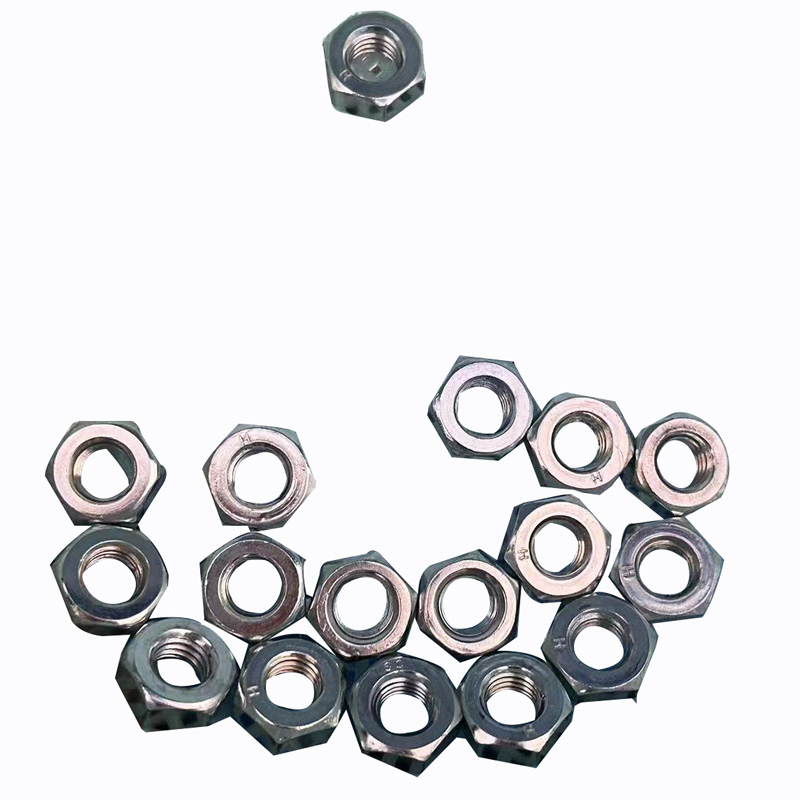
Material Grade and Corrosion Resistance
The primary advantage of Stainless Steel Nuts is their corrosion resistance, which varies significantly by alloy grade. The two most common grades are 304 and 316. Grade 304 offers excellent general corrosion resistance in most environments. For projects exposed to chlorides, saline conditions, or harsh industrial chemicals, Grade 316 with its molybdenum content is the superior choice. At Ningbo Qihong Stainless Steel Co., Ltd., we meticulously control the alloy composition in our factory to ensure each batch meets strict material certifications, providing you with reliable and predictable performance.
Mechanical Strength and Load Specifications
Understanding the strength class or grade of the nut is paramount for load-bearing applications. This is typically defined by property classes such as 70, 80, or A2-70, A4-80. The number indicates the nominal tensile strength in MPa. Matching the strength class of the nut with that of the mating bolt is essential to prevent thread stripping or premature failure. Our engineering team verifies that our Stainless Steel Nuts consistently achieve their rated mechanical properties through rigorous in-house testing.
Thread Type, Dimensions, and Tolerances
Precision in threading ensures a secure and vibration-resistant fit. You must consider the thread series (e.g., UNC, UNF, metric), diameter, and pitch. Furthermore, adherence to international tolerance standards like ISO or ANSI guarantees interchangeability and proper thread engagement. We take pride in our advanced threading machinery, which produces threads with exceptional accuracy and surface finish, minimizing the risk of galling during installation.
Product Parameters Overview
To aid in your technical evaluation, below is a detailed overview of standard parameters for our Stainless Steel Nuts. We can also provide custom solutions tailored to your specific project requirements from our factory.
| Parameter Category | Specifications & Options |
| Material Grades | AISI 304, 304L, 316, 316L, 316Ti, 321, 310S, Duplex 2205 |
| Property/Strength Class | A2-50, A2-70, A2-80, A4-70, A4-80, A4-90 (Metric) |
| Standards | DIN, ISO, ANSI, ASME, JIS, GB |
| Thread Types | Metric Coarse/Fine, UNC, UNF, BSW, BSF |
| Sizes (Metric Example) | M2 to M100, and larger custom sizes |
| Styles | Hex Nuts, Nylock Nuts, Flange Nuts, Wing Nuts, Cap Nuts, Square Nuts |
| Surface Finish | Natural Mill Finish, Bright Polish, Passivated, Electropolished |
| Certifications | ISO 9001, Material Test Certificates 3.1, RoHS Compliant |
Nut Style and Application-Specific Design
The style of the nut dictates its functionality. Standard hex nuts are ubiquitous, but specific challenges demand specialized designs. Nylon insert lock nuts provide prevailing torque for vibration resistance. Flange nuts distribute load over a wider area. Wing nuts allow for hand-tightening in applications requiring frequent adjustment. Our extensive catalog includes all common and specialized types of Stainless Steel Nuts, and our design team can collaborate on modifications to meet unique application demands.
Surface Finish and Environmental Suitability
The surface finish affects both aesthetics and performance. A standard mill finish is often sufficient for industrial applications. A bright polished finish is chosen for architectural visibility. Passivation, a chemical process we perform diligently in our facility, enhances the natural oxide layer, improving corrosion resistance. For ultra-hygienic or high-purity environments, electropolishing provides a smooth, easy-to-clean surface. Choosing the right finish extends the service life of your Stainless Steel Nuts.
Supplier Reliability and Quality Assurance
The technical specifications are meaningless if the manufacturer cannot guarantee consistency. A reputable supplier like Ningbo Qihong Stainless Steel Co., Ltd. provides full traceability and material certifications. Our commitment to quality is embedded in our production process, from raw material sourcing to final inspection. We invest in our factory infrastructure and staff training to ensure every shipment of Stainless Steel Nuts meets our high standards and your project's critical needs.
Frequently Asked Questions (FAQ)
Q1: What is the difference between Grade 304 and Grade 316 stainless steel nuts, and how do I choose?
Grade 304 is an austenitic stainless steel with excellent corrosion resistance in most atmospheric and mild chemical environments. Grade 316 contains additional molybdenum, which dramatically increases its resistance to pitting and crevice corrosion, especially from chlorides like saltwater or de-icing salts. For marine, coastal, chemical processing, or high-humidity industrial applications, 316 is the recommended choice. For general indoor or non-aggressive outdoor uses, 304 is a cost-effective and reliable option. We can advise on the best grade for your specific environment.
Q2: How do I prevent galling (cold welding) when installing stainless steel nuts?
Galling is a form of adhesive wear common with austenitic stainless steels under high friction and pressure. To prevent it, first ensure threads are clean and free of debris. Use a lubricant specifically designed for stainless steel, such as a molybdenum disulfide-based paste. Avoid over-torquing; use a controlled, gradual tightening process. Where applicable, consider using nuts and bolts from different hardness grades or a nut with an anti-galling coating. Our technical team has extensive experience in solving installation challenges and can provide best-practice guidelines.
Q3: Can I use a stainless steel nut with a bolt made from a different material?
While technically possible, it requires careful consideration due to galvanic corrosion. When two dissimilar metals are in electrical contact in the presence of an electrolyte (like water), one metal can corrode preferentially. Using a stainless nut on a carbon steel bolt in a wet environment will lead to rapid corrosion of the carbon steel bolt. If dissimilar metals must be used, ensure isolation with non-conductive washers or sleeves, or choose metals close together on the galvanic series. For optimal performance and longevity, we strongly recommend using matching stainless steel fasteners for all components.
In conclusion, the selection of Stainless Steel Nuts involves a careful balance of material science, mechanical engineering, and practical application knowledge. By partnering with an experienced and reliable manufacturer like Ningbo Qihong Stainless Steel Co., Ltd., you gain access to not only premium products but also deep technical expertise. We stand behind the quality of our output and are committed to supporting your projects with reliable components and informed guidance. Contact our team today to discuss how our products can meet the precise demands of your next project.