

When Should PTFE Gaskets Be Replaced with Reinforced or Filled Materials?
2026-05-13
Why Do PTFE Gaskets Require Material Upgrades in Certain Conditions?
PTFE Gaskets are widely recognized for their chemical resistance, low friction, and high-temperature performance. However, in demanding industrial applications involving pressure spikes, thermal cycling, or abrasive media, standard PTFE may exhibit cold flow or deformation over time. In such cases, upgrading to reinforced or filled PTFE gaskets can prevent leakage, reduce maintenance downtime, and extend service life.
Our factory specializes in evaluating operational conditions to determine when standard PTFE components should transition to enhanced formulations. Ningbo Kaxite Sealing Materials Co., Ltd provides technical consultation for applications ranging from chemical processing plants to food and pharmaceutical equipment.
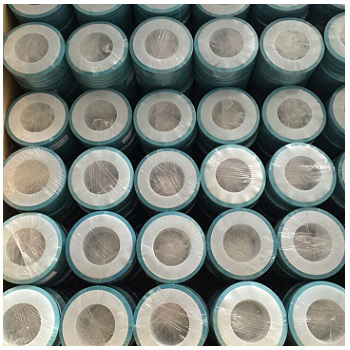
What Reinforcements or Fillers Are Typically Used to Improve PTFE Gaskets?
Reinforced PTFE gaskets integrate materials like glass fiber, carbon, or aramid to increase mechanical strength and dimensional stability. Filled PTFE gaskets incorporate additives such as bronze, graphite, or mica to enhance thermal conductivity, reduce creep, and improve sealing performance under load.
Our engineers recommend choosing the reinforcement or filler type based on the operating environment, including temperature, pressure, chemical exposure, and mechanical stress. By assessing these parameters, our factory ensures that PTFE Gaskets maintain integrity under long-term use.
| Type | Reinforcement / Filler | Benefit |
| Glass Fiber Filled PTFE | Glass fibers 10-25% | Improved dimensional stability and creep resistance |
| Carbon Filled PTFE | Carbon 15-30% | Enhanced chemical resistance and friction reduction |
| Bronze Filled PTFE | Bronze 20-40% | Better thermal conductivity and compressive strength |
| Graphite Filled PTFE | Graphite 15-25% | High temperature performance and wear reduction |
How Can Operational Conditions Signal the Need for Replacement?
PTFE Gaskets are subjected to chemical attack, high pressure, and thermal expansion cycles. Signs that replacement with reinforced or filled materials is necessary include persistent leakage, deformation, extrusion into flange gaps, and loss of compressive strength. Our monitoring protocols at Kaxite allow our engineers to provide data-driven recommendations for gasket upgrades.
In our factory, we assess the frequency of thermal cycling, exposure to aggressive media, and mechanical stress to determine if PTFE Gaskets can continue in service or require an upgraded formulation. Early identification of these signals reduces maintenance costs and operational downtime.
| Operational Factor | Replacement Indicator |
| Pressure Cycling | Excessive creep or extrusion beyond flange gaps |
| Temperature Extremes | Material deformation or loss of sealing integrity |
| Chemical Exposure | Swelling, discoloration, or reduced mechanical strength |
| Mechanical Stress | Compression set exceeding acceptable limits |
| Operational Duration | Service life approaching specified maximum hours |
What Are the Key Benefits of Replacing Standard PTFE with Reinforced or Filled Gaskets?
Upgrading to reinforced or filled PTFE Gaskets enhances sealing reliability, reduces maintenance frequency, and extends service life. Our factory experiences show that reinforced gaskets maintain dimensional stability in high-pressure lines, while filled gaskets offer superior thermal performance and wear resistance. Our clients in chemical, pharmaceutical, and food processing industries report significant improvements in system uptime after implementing reinforced or filled gaskets.
Our engineers work with custom formulations and precise cutting processes to meet flange tolerances and operating requirements. Ningbo Kaxite Sealing Materials Co., Ltd ensures our clients receive gaskets optimized for their specific industrial applications.
When Should PTFE Gaskets Be Replaced with Reinforced or Filled Materials?
Q1: How do I know if a PTFE gasket needs upgrading?
A1: Indicators include consistent leakage, visible deformation, extrusion beyond flange gaps, or repeated maintenance interventions. Our factory evaluates pressure, temperature, and chemical exposure to determine the optimal time for replacement.
Q2: Can reinforced or filled PTFE gaskets handle higher pressure and temperature?
A2: Yes. Reinforced PTFE Gaskets with glass fiber or carbon maintain dimensional stability under higher pressures, while bronze or graphite filled gaskets provide improved thermal conductivity and wear resistance. Our products are tested in operational simulations to confirm performance.
Q3: What factors should be considered when selecting a replacement gasket material?
A3: Consider chemical compatibility, mechanical load, thermal cycling, and operational duration. Our engineers at Ningbo Kaxite Sealing Materials Co., Ltd recommend materials based on these criteria to ensure reliable sealing performance and extended service life.
Why Is Supplier Expertise Critical in Choosing PTFE Gasket Materials?
Supplier expertise ensures that upgraded gaskets meet both material specifications and operational requirements. Our factory provides guidance on compound selection, custom cutting, and quality assurance. Working with a trusted partner reduces installation errors and maximizes gasket performance. Our PTFE Gaskets are engineered to withstand challenging industrial conditions, minimizing downtime and maintenance costs.
Our team ensures each order meets strict dimensional tolerances, consistent hardness, and chemical resistance. Investing in reinforced or filled PTFE Gaskets with expert supplier support protects the long-term integrity of your systems.
Conclusion
Replacing standard PTFE Gaskets with reinforced or filled materials is a strategic decision for high-pressure, high-temperature, or chemically aggressive applications. Our factory ensures that these gaskets deliver reliable performance, extend service life, and reduce maintenance costs. Contact our team at Ningbo Kaxite Sealing Materials Co., Ltd to discuss your operational requirements and receive guidance on selecting the optimal gasket solution. Upgrade to reinforced or filled PTFE Gaskets for enhanced durability and industrial efficiency.