
When Should You Consider Replacing Your Brick Production Pallets?
2026-01-16
Brick production pallets are the unassuming workhorses of any manufacturing line. Their condition directly impacts your operational efficiency, product quality, and long-term costs. Understanding the precise moment to replace them is a strategic decision that separates profitable, smooth-running operations from those plagued by downtime and waste. This guide draws on decades of industry observation to outline the critical signs and considerations for pallet replacement.
Persistent and widespread cracking or splintering, especially along the edges or in high-stress areas where bricks are ejected, is a primary red flag. These flaws directly compromise the dimensional stability of your bricks, leading to inconsistencies in size and shape. Warping or bending is another critical failure point. A warped pallet cannot provide a flat, stable surface, causing alignment issues in the curing and stacking processes. This often results in crooked stacks that are unsafe and inefficient to handle.
Extreme and irreversible surface wear is a gradual killer of efficiency. Over thousands of cycles, the smooth surface of a new pallet can become rough and pitted. This increased friction makes it difficult to automatically destack green bricks or smoothly transfer pallets through the production line, causing jams and slowdowns. If you are constantly repairing pallets with nails, epoxy, or splints, you are investing labor and materials into a losing battle. The cumulative cost of these repairs often surpasses the investment in new, reliable equipment.
Specifications of a High-Performance Replacement
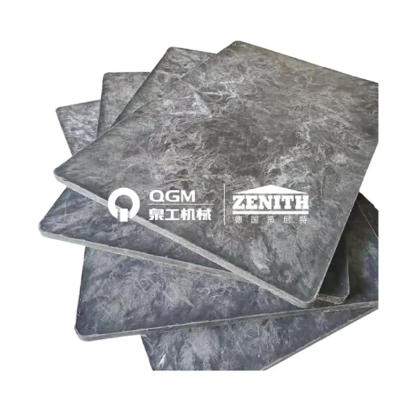
At Quangong Machinery Co., Ltd., we engineer our Brick Machinery Pallets to withstand the relentless demands of modern production. The specifications below highlight what defines a superior, long-lasting pallet.
| Material Composition | High-Grade, Reinforced Steel or Special Alloy Steel for exceptional strength and longevity. |
| Surface Treatment | Precision Grinding and Special Anti-Wear Coating to ensure a smooth, low-friction release and resist corrosion. |
| Load Capacity | Engineered for dynamic loads significantly exceeding standard operational weight to prevent fatigue and deformation. |
| Dimensional Tolerance | Precision-machined with strict tolerances (e.g., ±0.5mm) to guarantee consistent brick geometry and seamless line integration. |
| Structural Design | Reinforced ribbing and strategic bracing at stress points to resist warping and maintain flatness. |
| Expected Service Life | Designed for a minimum of 15,000 to 20,000 cycles under normal operating conditions, far exceeding conventional pallets. |
The Tangible Benefits of Upgrading
Investing in high-specification Brick Machinery Pallets from a trusted manufacturer like Zenith translates into direct operational benefits. The precision and durability of our pallets minimize brick damage and waste, directly improving your yield. Their consistent performance reduces line stoppages, jams, and manual intervention, allowing for higher throughput. While the upfront cost is a consideration, the total cost of ownership is lower due to the dramatically extended service life and reduced maintenance needs.
Conducting Your Pallet Audit and Selection Criteria
How do you evaluate your current pallets? Conduct a systematic audit. Pull a random sample from your active rotation and inspect them thoroughly for the signs mentioned. Track your production data metrics like downtime frequency, brick rejection rates, and maintenance hours dedicated to pallet repair over a quarterly period. A clear negative trend is a powerful indicator. Furthermore, assess if your current pallets are compatible with any new machinery or automation you plan to introduce outdated pallets can be a bottleneck to modernization.
When selecting replacements, prioritize quality engineering over price alone. The specification table above serves as a checklist. The material and structural design are non-negotiable foundations for durability. Ensure any new Brick Machinery Pallets are perfectly compatible with your existing press, transfer systems, and stackers. In our factory, we often work with clients to provide custom-fit solutions that integrate seamlessly. Finally, choose a supplier with proven expertise and a commitment to after-sales support. Our team at Quangong Machinery Co., Ltd. provides detailed technical guidance to ensure you get the right pallet for your specific production environment.
FAQ When Should You Consider Replacing Your Brick Production Pallets
Q1: How does a worn pallet physically affect the quality of the bricks being produced?
A worn pallet directly compromises brick quality in several ways. Cracks or warping prevent a perfectly flat forming surface, leading to bricks with uneven thickness, warped edges, or inconsistent dimensions. A rough, pitted pallet surface increases friction, causing green bricks to stick and potentially crack during destacking. This dimensional instability and surface damage result in higher rates of customer rejects, structural weaknesses, and a poorer overall finish on your final product.
Q2: Can we just repair our old pallets instead of replacing the entire set?
Minor, localized repairs can extend a pallet's life temporarily. However, widespread repairs are a sign of systemic failure. Constantly welding cracks or patching surfaces is labor-intensive and costly. More importantly, a repaired pallet rarely regains its original structural integrity and flatness it remains a weak point. The cumulative cost of repeated repairs, coupled with the ongoing production losses they cause, almost always exceeds the investment in new, reliable Brick Machinery Pallets designed for long-term performance.
Q3: What are the hidden costs of continuing to use pallets that are past their prime?
The hidden costs are substantial and often underestimated. They include increased energy consumption from machinery struggling to handle warped pallets, higher labor costs for manual sorting and handling of jams, and greater wear and tear on your press and conveyor systems. The largest hidden cost is lost opportunity the production downtime from breakdowns and the reduced output speed limit your factory's overall capacity and profitability. Replacing pallets on a strategic schedule is an investment in predictable, efficient production.
Making the Strategic Decision
Procrastinating on pallet replacement is a false economy. The degradation in product quality, the rise in operational inefficiencies, and the mounting repair costs silently erode your bottom line. By recognizing the critical failure signs and understanding the superior specifications of a professionally engineered replacement, you can make a data-driven decision. Investing in high-performance Brick Machinery Pallets is an investment in the stability, quality, and profitability of your entire brick production operation. For a solution built on decades of engineering expertise, consider the durable, precision-crafted pallets from our factory at Quangong Machinery Co., Ltd.