

Which Block Machine Pallet Material Is Best for High-Temperature Conditions?
2026-08-07
1. How Does Heat Affect the Performance of a Block Machine Pallet?
In our factory, we have tested pallets in curing chambers and tropical environments where temperatures exceed 45°C. Heat can cause dimensional changes, surface softening, and accelerated wear. A Block Machine Pallet that expands or warps under heat will produce blocks with uneven thickness and poor surface finish. The thermal expansion coefficient of the material is the key factor. Steel expands at 12 µm per meter per degree Celsius, while wood can expand 5 times more. Composite materials fall somewhere in between but may soften at high temperatures. Our Quangong Machinery Co., Ltd. has developed a Block Machine Pallet with a special alloy that maintains flatness up to 150°C. In many regions like the Middle East and parts of Africa, ambient heat combined with the heat from concrete curing can reach 60°C on the pallet surface. Choosing the right material ensures consistent block quality and reduces downtime for pallet adjustments.
2. Why Does Steel Remain the Preferred Material for High-Temperature Block Production?
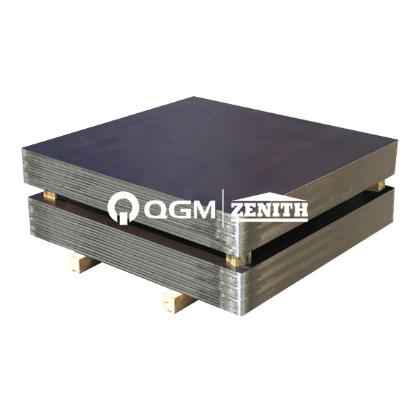
Steel has the best high-temperature performance among all pallet materials. Our hardened steel Block Machine Pallet can withstand continuous exposure to 120°C without losing its hardness or flatness. The thermal conductivity of steel also helps dissipate the heat from the concrete, promoting faster and more uniform curing. In our factory, we use a low alloy steel with a small percentage of molybdenum to enhance creep resistance at elevated temperatures. This steel does not soften like carbon steel at 100°C. Many customers in Arizona and Saudi Arabia have reported that our steel Block Machine Pallet lasts over 10 years in high-temperature environments, whereas wood pallets failed within 6 months. Steel also resists the chemical attack from alkaline concrete, which can degrade other materials. For plants that operate in hot climates or use steam curing, steel is the undisputed champion.
3. What Are the Limits of Wood and Composite Pallets in Hot Conditions?
Wood is the worst performer in high heat. It dries out, shrinks, and splits. When a wooden Block Machine Pallet loses moisture, it becomes unstable, causing the blocks to crack. We have tested wood pallets at 50°C and observed a 0.5 mm warp across the length, which is unacceptable for precision blocks. Composite pallets, such as fiberglass-reinforced plastics, can handle up to 70°C, but they suffer from creep under the weight of concrete and vibration. At 80°C, the resin in composites can soften, leading to permanent deformation. Our QGM does not recommend composite pallets for any facility that uses accelerated curing. The table below compares the heat-related properties of different Block Machine Pallet materials.
| Material | Max continuous service temperature | Thermal expansion (µm/m·°C) | Heat deflection temperature (HDT) |
| Hardened steel (our standard) | 150°C | 12 | N/A (steel does not deflect) |
| Stainless steel | 180°C | 16 | N/A |
| FRP composite | 70°C | 30 | 90°C |
| Hardwood (oak) | 40°C (practical limit) | 60 | N/A (shrinks and cracks) |
| Aluminum alloy | 120°C | 23 | N/A (softens above 150°C) |
| Performance factor at 80°C | Steel pallet | Composite pallet | Wood pallet |
| Flatness retention (over 1 meter) | ±0.1 mm | ±0.5 mm | ±1.2 mm |
| Surface hardness (Rockwell) | 48 HRC (stable) | Softens 20% | N/A |
| Wear rate (mm per 1000 hours) | 0.05 | 0.25 | 1.0 (plus cracking) |
| Resistance to concrete alkali | Excellent | Good (with coating) | Poor |
Our factory uses an infrared thermometer to monitor pallet temperature during production. If the temperature exceeds 80°C, we recommend switching to our heat-treated steel Block Machine Pallet.
4. How Does Surface Coating Improve Heat Resistance of a Block Machine Pallet?
Even steel can benefit from a protective coating. Our Quangong Machinery Co., Ltd. applies a ceramic-based thermal barrier coating to some Block Machine Pallet models. This coating reflects radiant heat and reduces the surface temperature by up to 20°C. It also prevents concrete from adhering, which reduces cleaning time. In high-heat environments, this coating extends the life of the steel by reducing thermal fatigue. We have tested coated pallets in a steam curing chamber at 90°C and found that the coating remained intact after 2,000 cycles. Without the coating, steel can oxidize and form scale, which roughens the surface. The coating also provides a smoother finish, which improves the block's bottom surface quality. For plants that use accelerated curing at 70°C or above, we strongly recommend our coated steel Block Machine Pallet.
Frequently Asked Questions About Block Machine Pallets for High-Temperature Conditions
Final Summary
For high-temperature conditions, steel is the best material for a Block Machine Pallet. It maintains flatness, resists wear, and does not soften or warp under heat. Wood and composites have significant limitations that lead to poor block quality and frequent replacement. A coated steel pallet offers the best performance in hot climates and steam curing environments. Our factory has designed pallets that meet the demands of the hottest regions on earth. Quangong Machinery Co., Ltd. is your reliable partner for durable block machine pallets.