

Which Hydraulic Cylinder Is Suitable for Combine Harvester Header Lifting Systems?
2026-08-31
1. How Does Header Weight Determine the Required Cylinder Size?
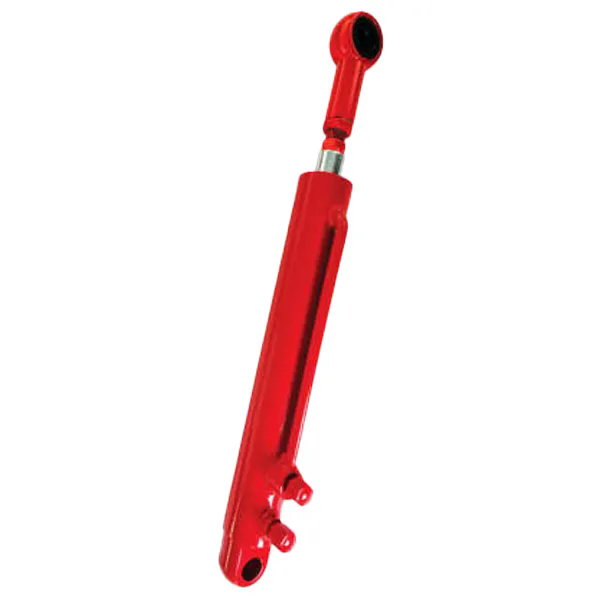
The most fundamental parameter for selecting a Harvester Hydraulic Cylinder is the header weight. Combine headers vary significantly in mass based on width, crop type, and construction material. A 30 foot small grain header typically weighs 1,500 to 2,000 kg, while a 40 foot corn header can weigh over 4,000 kg. The cylinder must be capable of lifting this weight at a system pressure that is typically between 180 and 210 bar. Our rule of thumb is to select a cylinder with a theoretical lifting force at least 25 percent higher than the actual header weight. This margin accounts for debris accumulation, moisture absorption, and shock loads. For a 2,500 kg header, we recommend a cylinder with a bore diameter of 80 mm and a rod diameter of 50 mm. This combination provides a lifting force of approximately 3,200 kg at 200 bar. Our Raydafon Technology Group Co.,Limited has a sizing calculator that accounts for cylinder mounting angle and friction losses. We recommend using this tool during the specification phase.
2. Why Is Stroke Length Critical for Header Tilt and Float Functions?
Stroke length is not simply the distance between full raise and full lower. Modern combine headers require precise control of tilt and float to follow ground contours. A typical header lift cylinder has a stroke between 400 and 600 mm, but the exact length depends on the combine model and the linkage geometry. If the stroke is too short, the header cannot fully raise for transport. If it is too long, the cylinder may bottom out or interfere with other components. Our factory has reverse engineered over 50 combine models, and we maintain a database of stroke lengths for most major brands. When a customer asks us about a Harvester Hydraulic Cylinder for a specific combine, we verify the stroke length and the retracted dimensions before making a recommendation. We have also developed a spacer ring system that allows a standard cylinder to be adapted to different stroke requirements without custom manufacturing.
3. What Sealing System Prevents Contamination in Harvest Conditions?
Combine harvesters operate in some of the most challenging environments for hydraulic components. Dust, chaff, and soil particles can enter the cylinder through the rod seal and contaminate the oil. In our factory, we have tested dozens of seal configurations on our contamination rig. The most effective system for a Harvester Hydraulic Cylinder is a combination of a rod scraper, a primary U cup seal, and a secondary buffer seal. The scraper removes large debris before it reaches the primary seal. The buffer seal absorbs pressure spikes that would otherwise damage the U cup. Our Raydafon uses seals made from polyurethane with a hardness of 95 Shore A. This material offers excellent resistance to abrasion and extrusion. The table below compares the performance of different seal configurations under our standard contamination test.
| Seal configuration | Ingress of fine dust (mg per 1000 cycles) | Leakage after 500,000 cycles (ml) | Recommended for harvest conditions |
| Single U cup seal (no scraper) | 45 | 12 | No |
| Scraper + U cup seal | 12 | 4 | Yes, moderate duty |
| Scraper + U cup + buffer seal | 3 | 0.5 | Yes, heavy duty |
| Double U cup (no scraper) | 38 | 8 | No |
| Scraper + Vee packing set | 5 | 2 | Yes, special applications |
Our factory recommends the scraper plus U cup plus buffer seal configuration for all harvest applications. This system has been proven to extend the service life of a Harvester Hydraulic Cylinder by three times compared to a basic seal setup.
4. How Does Rod Material and Finish Affect Cylinder Longevity?
The piston rod is the most exposed part of a Harvester Hydraulic Cylinder. It must resist corrosion, abrasion, and bending. In our factory, we produce rods from induction hardened chrome plated steel with a surface hardness of 58 HRC and a chrome thickness of 0.020 mm. This combination provides exceptional wear resistance. The rod surface finish is ground to 0.2 Ra, which reduces seal friction and extends seal life. We have tested rods with a standard ground finish against our premium finish under a high cycle test. The premium finish rods showed no measurable wear after 1 million cycles, while the standard finish rods required replacement after 600,000 cycles. Our Raydafon also offers a nitrided rod option for extremely corrosive environments, such as those with high soil salinity or fertilizer residue. The table below summarizes the rod options we offer for our Harvester Hydraulic Cylinder.
| Rod type | Surface hardness (HRC) | Chrome thickness (mm) | Corrosion resistance | Typical application |
| Standard induction hardened | 55 – 58 | 0.015 – 0.020 | Good | Small grain harvesters |
| Premium induction hardened | 58 – 62 | 0.020 – 0.025 | Excellent | Corn and sunflower headers |
| Nitrided steel | 60 – 64 (surface) | Not applicable | Superior | High salinity or corrosive environments |
| Stainless steel (304) | 30 – 35 | Not applicable | Excellent | Specialized applications |
| Chrome plated with ceramic coating | 55 – 58 | 0.030 + ceramic | Exceptional | High abrasion applications |
For most harvest operations, our premium induction hardened rod offers the best balance of cost and durability.
Frequently Asked Questions About Harvester Header Lift Cylinders
Final Summary
Selecting the right Harvester Hydraulic Cylinder requires careful consideration of header weight, stroke length, sealing system, and rod material. A properly specified cylinder will provide years of reliable service in the harshest harvest conditions. Our factory has engineered and supplied thousands of cylinders for combines from all major manufacturers. We understand the challenges of harvest operations and build cylinders that meet those demands. Our Raydafon Technology Group Co.,Limited is committed to helping you find the perfect cylinder for your header lifting system.