

Which Servo Motor Technologies Are Best Suited for Harsh Environment Applications?
2026-03-03
When industrial operations demand precision under extreme conditions, selecting the right drive technology becomes a critical engineering decision. At Saifu Vietnam Company Limited, our engineering team has spent years working alongside manufacturers in heavy industry, offshore energy, food processing, and chemical production to understand exactly what makes a motion control solution thrive where others fail. The answer lies not just in raw power output, but in a combination of sealing standards, thermal management, feedback resolution, and materials science. This guide breaks down the core technologies and specifications that define reliable performance in demanding field environments.
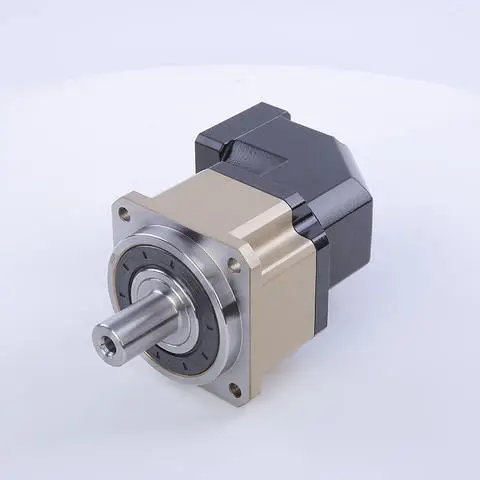
What Makes Servo Motor Technology Fundamentally Different for Harsh Environment Use?
Standard industrial drives are designed for controlled factory floors with stable temperatures, clean air, and predictable load profiles. Harsh environment applications introduce variables that standard units simply cannot handle over the long term. Moisture ingress, abrasive particulate, corrosive gases, shock loading, and wide thermal swings all accelerate wear and trigger premature failure in conventional designs.
Our approach at Saifu Vietnam Company Limited centers on selecting and supplying units that are purpose-engineered from the ground up for these conditions. This means stainless steel shaft options, double-sealed bearing arrangements, conformal-coated electronics, and high-ingress-protection enclosures. The rotor and stator materials are chosen not just for magnetic efficiency but for resistance to thermal cycling and moisture absorption. When our factory evaluates a product line for harsh environment suitability, every component in the mechanical and electrical assembly comes under review.
Which Ingress Protection and Enclosure Standards Should Buyers Prioritize?
The IP rating system is the most universally recognized benchmark for enclosure integrity. For washdown environments such as food and beverage lines, IP67 or IP69K certification is the baseline requirement. For submersible or continuously wet applications, IP68 is the standard our team recommends. In explosive atmospheres, ATEX or IECEx certification adds a separate but equally critical layer of safety compliance.
Our factory sources Servo Motors that carry independently verified IP and hazardous area certifications, not self-declared ratings. The distinction matters enormously when plant engineers are writing maintenance reports or when insurance assessors are reviewing equipment records. Below is a breakdown of the key technical parameters our team recommends for harsh environment selection.
| Parameter | Standard Environment | Harsh Environment Specification |
| Ingress Protection | IP40 to IP54 | IP67 / IP69K / IP68 |
| Operating Temperature Range | 0 degrees C to 40 degrees C | -40 degrees C to 85 degrees C |
| Shaft Seal Type | Single lip seal | Double contact seal or V-ring |
| Bearing Arrangement | Standard open bearing | Sealed double-row bearing |
| Housing Material | Aluminum alloy | Stainless steel or anodized aluminum |
| Encoder Protection | Basic housing | Potted or hermetically sealed encoder |
| Corrosion Resistance | Standard paint finish | Electroless nickel or epoxy coating |
| Hazardous Area Certification | None | ATEX Zone 1 or Zone 2 rated |
How Do Feedback Technology and Control Precision Hold Up Under Extreme Conditions?
One of the most overlooked failure points in harsh environment motion control is the feedback device. Standard optical encoders are vulnerable to contamination from oil mist, fine dust, and condensation. When the feedback signal degrades, positioning accuracy deteriorates and the drive system enters fault states that shut down production lines at the worst possible moments.
Our factory recommends magnetic absolute encoders for environments where optical feedback is unreliable. These devices use magnetic field detection rather than optical disc reading, which makes them inherently immune to the contamination issues that plague traditional encoders. Single-turn and multi-turn absolute variants are available depending on whether the application requires position retention across power cycles. For high-vibration environments such as presses or heavy CNC machinery, our team also specifies encoder designs with reinforced bearing arrangements and damped mounting brackets to isolate the feedback device from mechanical shock.
The resolver is another feedback technology worth considering. As an analog device with no internal electronics, a resolver can survive temperature extremes and vibration levels that would destroy a digital encoder. Saifu Vietnam Company Limited supplies drive and feedback packages where the resolver option is matched to compatible drives that handle the analog-to-digital conversion in a protected control cabinet rather than at the motor itself.
What Are the Core Performance Specifications Buyers Need to Compare?
Selecting Servo Motors for demanding applications requires a detailed side-by-side comparison of performance data across the operating range, not just at nominal conditions. Peak torque at low speed, continuous torque at elevated temperature, and response bandwidth under load are the three parameters our engineering team examines first. A unit that performs well in a catalog test environment may deliver significantly reduced output when ambient temperatures are elevated or when mounting configurations restrict heat dissipation.
Our factory provides full derating curves and thermal resistance data with every product submission so that plant engineers can model real-world performance before committing to a design. The table below summarizes the core performance specifications for our recommended harsh environment series.
| Specification | Value |
| Continuous Stall Torque Range | 0.5 Nm to 150 Nm |
| Peak Torque Multiplier | Up to 3x continuous rating |
| Rated Speed Range | 500 RPM to 6000 RPM |
| Power Range | 100 W to 22 kW |
| Feedback Resolution | 17-bit to 23-bit absolute |
| Insulation Class | Class H (180 degrees C) |
| Vibration Resistance | 15G shock, 5G continuous vibration |
| Thermal Protection | Embedded PTC thermistor |
| Voltage Compatibility | 200V, 400V, 480V AC |
| Connector Standard | M23 or M17 military-grade circular |
How Does Preventive Maintenance Strategy Extend Service Life in Demanding Applications?
Even the most robust drive technology requires a structured maintenance program to deliver its rated service life. Our team at Saifu Vietnam Company Limited works with plant maintenance managers to develop inspection schedules that are practical within production windows. The key maintenance activities for harsh environment Servo Motors include periodic seal integrity checks, bearing lubrication or replacement intervals aligned with actual operating hours, encoder signal quality monitoring through the drive diagnostic interface, and connector pin inspection for corrosion or fretting wear.
Remote condition monitoring has become an increasingly important tool in our factory recommendations. Modern servo drives include built-in vibration monitoring, thermal history logging, and insulation resistance trending. When these data streams are connected to a plant SCADA or IIoT platform, maintenance teams receive advance warning of developing faults weeks or months before a failure would occur. This transition from reactive to predictive maintenance reduces unplanned downtime and extends mean time between replacements significantly in the harsh environment applications our customers operate.
Frequently Asked Questions
Question 1: What is the most important certification to verify when purchasing Servo Motors for food and beverage washdown environments?
Answer: The most critical certification for food and beverage washdown use is IP69K, which confirms that the unit can withstand high-pressure hot water jets applied at close range from multiple angles. This test goes well beyond standard IP67 submersion testing and is the benchmark that food safety auditors and equipment validators look for when approving drive components on processing lines. Our team at Saifu Vietnam Company Limited also recommends verifying that shaft seals, connector bodies, and cable entry points carry the same IP69K rating as the motor housing itself, since the weakest seal in the assembly determines the real-world protection level. Stainless steel housing construction and food-grade lubricants in sealed bearings are additional specifications worth confirming before final selection.
Question 2: How do extreme temperature swings affect encoder accuracy and what technologies are most resistant to this failure mode?
Answer: Temperature cycling causes differential thermal expansion between the encoder disc or magnetic target and its mounting components, which gradually shifts calibration zero points and introduces positional error that grows over time. In optical encoders, thermal stress can also cause micro-cracking in the glass disc substrate, leading to intermittent signal loss that is difficult to diagnose. Magnetic absolute encoders using a steel target wheel are significantly more resistant to thermal cycling because the coefficient of thermal expansion is matched between the target and housing materials. Our factory strongly recommends specifying absolute encoders with a working temperature range that exceeds the actual application range by at least 20 degrees C on both the high and low ends, and verifying that the encoder manufacturer provides thermal error specifications rather than just an operating temperature range.
Question 3: What connector and cabling standards should be specified for servo systems installed in high-vibration or high-moisture environments?
Answer: Standard rectangular connectors with plastic latches are prone to fretting corrosion and intermittent contact in high-vibration environments, which causes drive fault codes that are often misdiagnosed as encoder or motor failures. The correct specification for harsh conditions is a circular M23 or M17 connector with a threaded coupling ring and gold-plated contacts, which maintains consistent contact pressure regardless of vibration amplitude. For high-moisture environments, connectors should carry an IP67 or IP68 rating in the mated condition, not just the plug half alone. Cable jackets should be specified in PUR rather than PVC when exposure to oils, coolants, or UV is expected, since PVC becomes brittle and cracks under these conditions. Our team works directly with customers to create connector and cabling specifications that match the actual installation environment rather than relying on default catalog selections.
Conclusion
Selecting the right servo drive technology for harsh environment applications is a multi-dimensional engineering decision that goes far beyond comparing peak torque ratings. Enclosure integrity, feedback device robustness, materials compatibility, thermal management, and a structured maintenance strategy all contribute to long-term reliability in the field. Saifu Vietnam Company Limited has built our product offering and technical support capability around exactly these requirements, working with customers across heavy industry, food processing, offshore, and chemical sectors to deploy drive solutions that deliver full rated performance over extended service lives. Whether you are specifying a new installation or evaluating replacements for a system that has underperformed, our factory team is ready to provide a detailed application review and product recommendation tailored to your specific operating environment. Contact our technical sales team today to begin the specification process and ensure your next servo drive installation is engineered to last.