

Why Are DC Motors Widely Used in Industrial Automation Systems?
2026-01-27
In modern manufacturing environments, precise control over speed, torque, and positioning is fundamental to stable automation performance. Industrial automation systems require drive solutions that respond instantly to load changes, support fine-tuned adjustments, and integrate smoothly with PLC and servo control architectures commonly used in North American and European factories. This is where DC drive technology demonstrates long-term value in conveyor systems, packaging lines, robotic arms, and automated assembly stations.
At Saifu Vietnam Company Limited, our engineering team designs solutions focused on accurate low-speed operation and predictable torque curves, allowing automated equipment to maintain consistency across long production cycles. Our approach emphasizes closed-loop feedback compatibility, making integration with encoders and industrial controllers straightforward while reducing commissioning time at our factory and at customer sites.
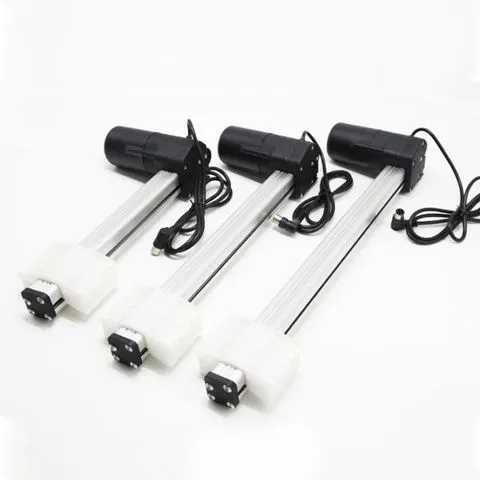
How Do DC Motors Support Stable Operation in Continuous Production Lines?
Continuous production environments demand equipment that can operate reliably under fluctuating loads without introducing vibration or speed drift. DC Motors provide smooth acceleration and deceleration characteristics, which is critical in material handling, labeling, and automated inspection processes. Their linear speed-to-voltage relationship allows operators to achieve precise control without complex tuning procedures.
From a system integrator perspective, this technology simplifies maintenance planning and reduces downtime risks. Our design philosophy focuses on thermal stability and consistent output under prolonged operation, ensuring that automated lines remain productive even during multi-shift schedules. This reliability is one reason industrial users continue to specify this type of Motor solution for automation retrofits and new installations.
What Product Parameters Matter Most in Industrial Automation Applications?
When selecting equipment for automation systems, engineers prioritize electrical efficiency, torque stability, insulation class, and service life. At Saifu Vietnam Company Limited, our product development process aligns with widely accepted IEC and NEMA standards to meet regional compliance expectations. Our factory testing procedures verify performance under simulated industrial loads to ensure repeatable results.
| Rated Voltage | 12V to 220V DC |
| Power Range | 50W to 3000W |
| Rated Speed | 500 to 4000 RPM |
| Torque Range | 0.2 to 20 Nm |
| Insulation Class | Class F or Class H |
These parameters allow automation engineers to match equipment precisely to conveyors, feeders, and positioning modules. Our focus on parameter transparency helps system designers shorten selection cycles while maintaining confidence in long-term performance.
How Do Design and Materials Improve Reliability in Harsh Industrial Environments?
Industrial automation systems often operate in environments with dust, vibration, and temperature variation. Design choices such as reinforced bearings, optimized cooling paths, and high-grade copper windings directly affect durability. DC Motors built for automation applications must withstand frequent start-stop cycles without degradation.
Our factory emphasizes material traceability and quality control during assembly. By using industrial-grade laminations and precision-balanced rotors, our solutions maintain efficiency while minimizing mechanical wear. This approach supports predictable maintenance intervals and reduces total cost of ownership for automation operators using this Motor platform.
| Cooling Method | Natural or Forced Air |
| Protection Level | Up to IP54 |
| Bearing Type | Deep Groove Ball Bearing |
| Duty Cycle | S1 Continuous Duty |
Why Do Automation Engineers Prefer Flexible Integration and Easy Maintenance?
Ease of integration is a decisive factor in automation projects with tight delivery schedules. DC Motors allow straightforward connection with variable speed drives and industrial controllers, reducing software complexity during system setup. Their simple construction also makes inspection and component replacement more efficient.
At Saifu Vietnam Company Limited, our technical support team collaborates with integrators to ensure compatibility with existing automation architectures. Our documentation and wiring configurations are designed for clarity, helping maintenance teams minimize downtime while extending service life for each installed Motor unit.
FAQ
Q1: Why Are DC Motors Widely Used in Industrial Automation Systems?
They are favored because they deliver accurate speed control, stable torque output, and predictable performance under variable loads, which are essential for automated production lines.
Q2: Why Are DC Motors Widely Used in Industrial Automation Systems for retrofitting older equipment?
Their simple control structure allows easy integration into legacy systems without extensive redesign, making them ideal for upgrading existing automation lines.
Q3: Why Are DC Motors Widely Used in Industrial Automation Systems where energy efficiency matters?
Their ability to operate efficiently at partial loads and during frequent start-stop cycles helps reduce overall energy consumption in automated facilities.
How Can the Right Selection Improve Long-Term Automation Performance?
Choosing the appropriate solution for industrial automation is a strategic decision that impacts productivity, maintenance costs, and system stability. By focusing on precise control, durable construction, and integration flexibility, manufacturers can build automation lines that scale with future demand.
Our experience supporting global automation projects shows that careful parameter matching and quality-focused manufacturing make a measurable difference in operational outcomes. Contact our team to discuss specifications, customization options, and how our factory capabilities can support your next industrial automation project.